ALLPCB


Market drivers
The commercial drivers for smart energy are straightforward: the estimated saving from conserving 1 kWh is about 1.7 US cents, while the cost to produce 1 kWh is now considered to be around 10 US cents. In any case, there are potential cost savings. Legislation is also a factor, as governments seeking to demonstrate progress are implementing smart energy requirements that suppliers must meet.
Because utilities are required to install and maintain smart energy networks, they will incur upfront costs even though they may realize benefits later. To make those benefits feasible for vendors, smart meters must be low-cost while providing comprehensive functionality.
Pressures and opportunities for semiconductor vendors
These market requirements create pressure and opportunity for semiconductor manufacturers to produce the right solutions. Increasingly, those solutions are based on microcontrollers (MCUs) that include features tailored to this fast-evolving market.
In your network
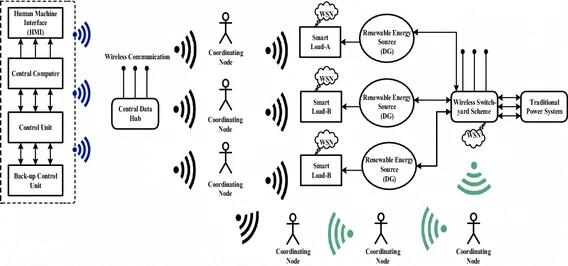
The key to a smart grid is not a single network but a hierarchy of networks sized to monitor all required devices. This produces layers such as home area networks (HANs) and neighborhood area networks (NANs), which in turn connect to local area networks (LANs) and/or wide area networks (WANs).
At each point, protocol and physical interfaces may differ, so devices must maintain security, performance, and data integrity by understanding and operating within these constraints.
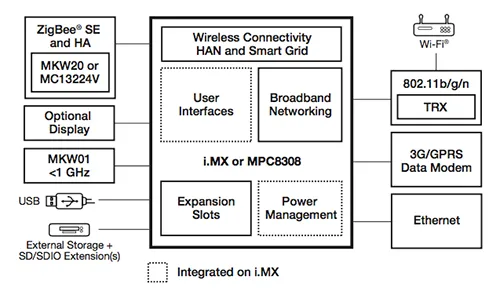
Figure 1: Freescale offers a range of MCUs targeted at specific smart grid domains.
Figure 1 illustrates a suggested home energy management system that collects real-time energy use from smart meters and other in-home devices, provides feedback to users on local energy usage, allows control of connected devices, and offers ubiquitous broadband links. While the system core is processor-based, the wireless interface can be provided by devices such as the MKW20.
The MKW20 MCU with wireless capability integrates an ARM Cortex-M4 core coupled with a fully compatible 802.15.4 transceiver that can operate on one of 16 selectable channels in the 2.4 GHz ISM band.
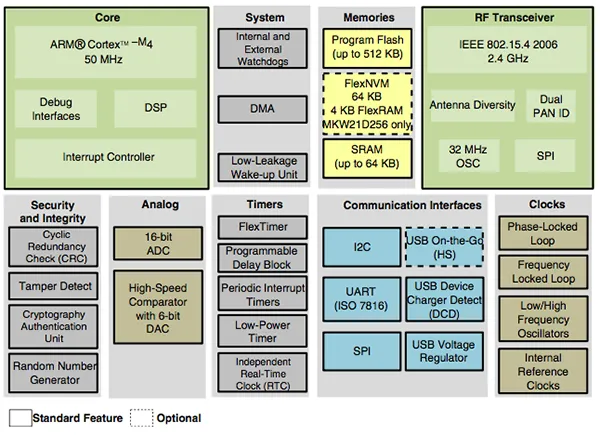
Figure 2: MCUs with integrated RF transceivers, such as Freescale's MKW20 series, are expected to be in high demand in smart grid applications.
Similar MCUs based on 8-bit 8051 cores are available from Silicon Labs. Silicon Labs states that the Si106x/108x series is suitable for smart metering, particularly in battery-powered designs, because the series can run on a single battery for up to 20 years. That endurance can be valuable for devices expected to form part of a HAN.
Integration
Meters will take many forms and sizes and will monitor not only energy usage but also other utilities and their effects. Typical utilities include gas and water, so flow meters will make up a large portion of HAN devices. Devices such as the Si106xx/8xx can work alongside MCUs dedicated to metering functions, but some manufacturers will seek to consolidate these functions into a single device.
For some MCUs, this consolidation is challenging, but Atmel has developed a solution targeted at this application: the SAM4C series. These MCUs are described as SoCs for smart energy applications, and it is clear why. The series integrates two ARM Cortex-M4 cores: one application or main core running at 120 MHz with a memory protection unit and DSP instructions, and a coprocessor intended for metering functions that is a Cortex-M4F with a single-precision floating point unit. The SAM4C series uses this dual-core architecture to separate application code from communications and security functions.
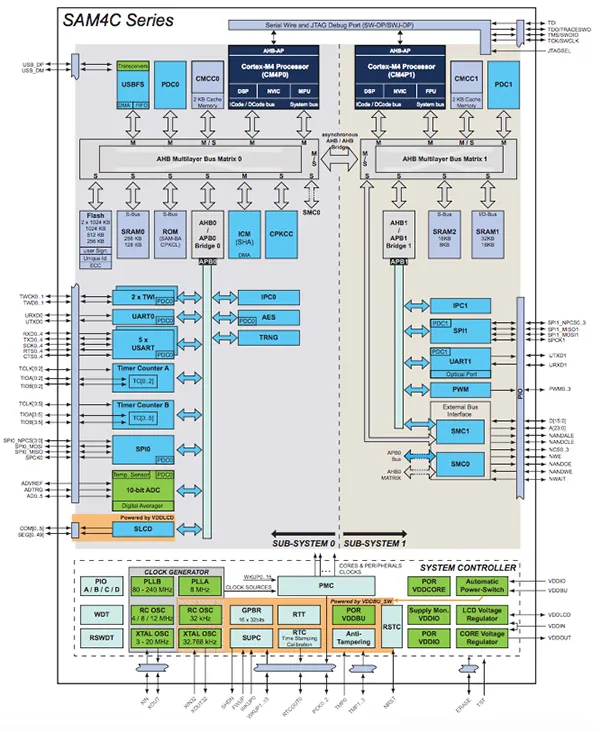
Figure 3: Atmel's SAM4C series provides dual ARM Cortex-M4 cores, allowing application code to be separated from communications and security processing.
The SAM4C series supports high-performance AES encryption (128 to 256 bits), includes a true random number generator (TRNG), provides public-key acceleration and integrity check modules based on secure hash algorithms (SHA1, SHA224, SHA256), and offers up to four physical tamper-detection I/Os with timestamping and immediate-clear universal backup registers. These features allow SAM4C devices to integrate application, communications, and security functions in a single device.
Security considerations
Security requirements for smart energy applications are significant, and many MCU vendors are advancing technology to meet them. Today, many MCUs provide on-chip cryptography that conforms to standards such as 3DES, AES, RSA, and ECC, and these accelerators are already used in protocols like ZigBee, Wi-Fi, and Bluetooth. Hardware acceleration for cryptographic algorithms is becoming increasingly common, especially in MCUs targeted at the smart energy sector.
Secure key storage is a key part of running cryptographic algorithms. Texas Instruments' FRAM-based MSP430 devices are notable in this context. Unlike flash, FRAM does not require a charge pump, which has two advantages: first, FRAM read/write operations need less power, which benefits battery-powered applications by extending time between battery replacements for smart devices such as flow meters or heat meters. Second, and from a security perspective perhaps more important, the absence of a charge pump avoids power spikes that could be exploited by attackers to extract stored keys.
Another advantage of the MSP430FR6xx series in security-sensitive applications is its ability to complete FRAM writes even if power is interrupted. The devices achieve this by integrating an on-chip capacitor that stores sufficient energy to finish a write operation. This contrasts with flash- or EEPROM-based devices that must store a copy of data in case of power loss during a write. From a security standpoint, avoiding incomplete writes and potential data leakage is preferable, and FRAM provides that advantage.
Conclusion
The smart grid and smart metering industry is governed by standards such as IEC 62056, which covers widely accepted specifications like DLMS (Device Language Message Specification) and COSEM (Companion Specification for Energy Metering). Protocols including ZigBee, Bluetooth, and Wi-Fi, along with newer options such as Thread and Weightless, are also part of the landscape. Supporting these standards and protocols while retaining differentiation is essential for semiconductor vendors to remain competitive and continue developing effective solutions.
The convergence of smart home, Internet of Things, and industrial automation is bringing new use cases into reach. This shifting landscape will affect supply reliability and can play an important role in reducing energy costs.
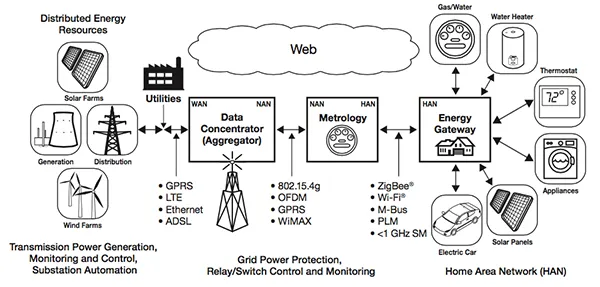
Figure 4: Overview of Freescale's smart grid and metering solutions.