ALLPCB


Overview
Smart electricity meters are intelligent endpoints of the smart grid. Besides basic energy measurement, they can support bidirectional multi-rate metering, user-side control, multiple data transmission modes for two-way data communication, and anti-tampering features. At present, smart meters in the Chinese market are generally classified into two structural types: direct-connected (electromechanical-integrated) and fully electronic (CT-connected) meters. The following explains common ways to view meter data and how to read different meter types.
Common Ways to View Meter Data
There are two common methods to view smart meter information:
1. Mobile app: Many meter manufacturers provide mobile apps. After installing the app, users can view real-time metrics such as energy consumption, voltage, current, and power. Apps often provide consumption statistics and analysis to help manage and adjust usage.
2. Television display: Some utilities can route meter data to a user’s TV. On-screen displays show consumption and billing details, which can be useful for users who prefer not to use mobile apps.
Related Reading: Smart Meter Installation and Operation
How to Read Different Meter Types
1. Direct-connected single-phase and three-phase meters: For direct-connected meters, read the meter display and subtract the previous reading to get the energy consumed during the interval. Direct-connected meters have thicker incoming conductors and are not connected through current transformers.
2. Three-phase meters connected via current transformers (CTs): CT-connected three-phase meters typically have 10 wiring terminals. Check the CT ratio printed on the CT nameplate, indicated as a number over 5, for example 100/5 or 150/5. Multiply the reading shown on the meter by the CT ratio to obtain the actual metered energy. For precise billing, account for CT burden and line losses.
3. Single-phase meters used to measure three-phase energy: If a single-phase meter is used to meter three-phase energy, read the meter display and multiply the value by 3 for direct-connected installations. If the meter is CT-connected, multiply the meter reading by the CT ratio and then by 3.
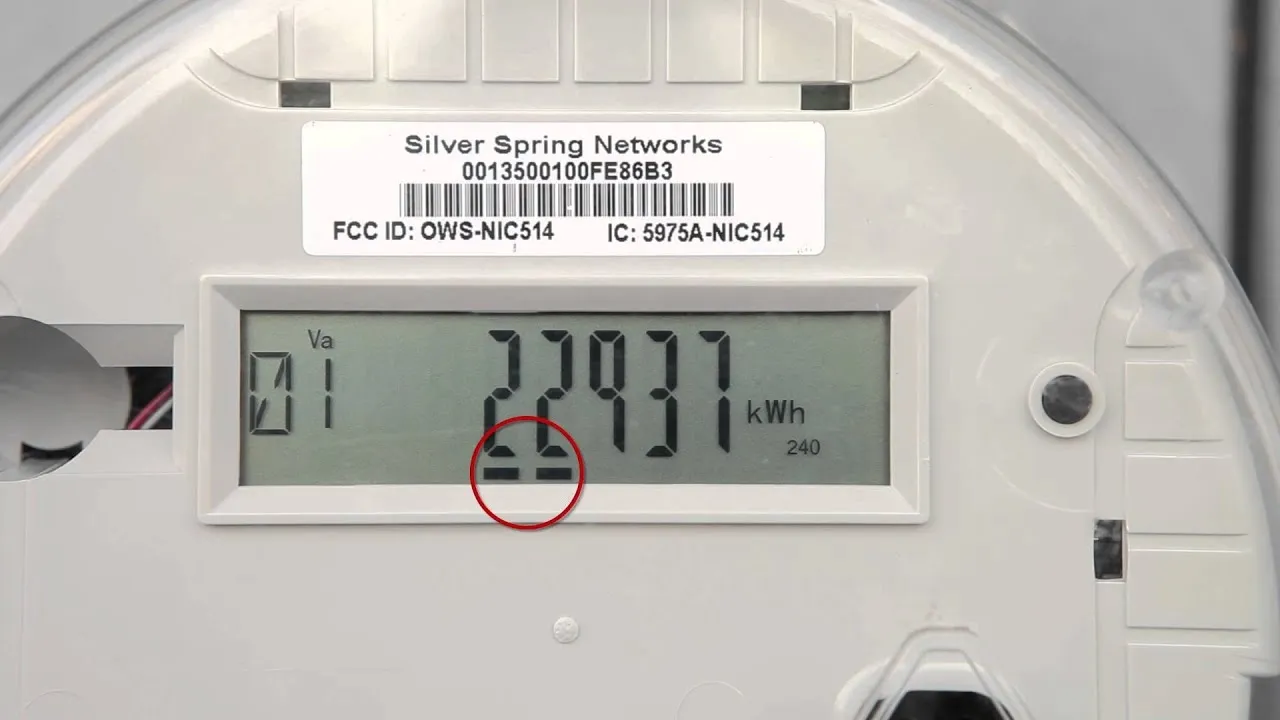
Household smart meters typically have a single LCD. For single-phase meters the display usually shows total consumption and remaining credit; read these values directly. IC card prepaid meters with only light indicators are single-display card meters. A small red dot on the meter indicates which value is shown: when the dot is next to "total" it indicates total consumption; when next to "remaining" it indicates remaining credit. For dual-display card meters you can read either the upper or lower display. For three-phase prepaid meters, read direct-connected meters directly; for CT-connected meters multiply the meter reading by the CT ratio.
Related Reading: Benefits and Drawbacks of Smart Meters
Conclusion
Smart meters provide convenient, near-real-time visibility into energy usage. By using a mobile app or a television display and understanding whether a meter is direct-connected or CT-connected and any applicable CT ratios, users can accurately read consumption and manage household energy use to reduce waste and costs.