ALLPCB


Overview
It is increasingly clear that the smart grid is not defined by new devices, but by services enabled by adding secure, reliable two-way communications at as many points of the distribution network as possible.
The term smart grid has gained traction among people outside utilities and related industries. Ongoing legislation, investments, and research focused on improving energy generation and distribution, plus growing awareness of how people will view and manage their energy use in the future, have driven significant market activity. Many analysts forecasted that between 2008 and 2013 more than $200 billion would be invested in new grid technologies globally, with over $53 billion in the United States . These investments cover a wide range of products and services, but almost all aim to enable enhanced monitoring and control across the distribution network. That includes capturing finer-grained information related to power quality, consumption, and grid performance by enabling two-way communication and distributed generation across the distribution system.
Four Core Functions
Digi International identified four capabilities required to deliver smart grid benefits:
- Create: devices and sensors to capture information and provide control services.
- Collect: communications devices and networks that allow data exchange and control services to occur.
- Manage: a network operations environment to manage all connected devices.
- Use: business applications that convert data into actionable information and benefits.
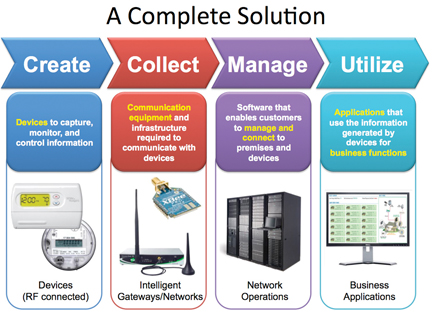
Functions required for a successful smart grid.
Observations
Reviewing these functions yields several observations. First, they do not define specific network technologies, devices, or sensors. They are functions that must be enabled for all devices in the energy distribution framework, whether new or legacy. These functions will need to be present in equipment at substations, feeders, metering points, and even within homes or businesses on the extended grid.
Second, value is not defined by devices but by the business applications that leverage communications and control capabilities. In other words, whether the asset was installed five years ago or is newly deployed, these capabilities can deliver benefits. Those benefits are generally defined by business functionality rather than by the device itself. Recognizing this makes it easier to assess which technical gaps must be filled. Those gaps tend to be in machine-to-machine management platforms that can readily connect devices to the appropriate business applications. Making the right decisions at this level will accelerate deployment of smart grid technologies that can leverage both new and existing distribution equipment.
Although forecasts anticipated large investments in smart grid technologies, existing grid assets far exceed those figures. Can these legacy assets be enhanced to support two-way communications, control, and distributed generation services? Can utilities and ratepayers capture a sufficient portion of the projected smart grid benefits without replacing existing assets? Increasingly, communications companies are addressing these questions to accelerate smart grid service deployment and to support a variety of utility business cases.
Value Comes from Business Functions, Not Devices
Smarter AMR and consumer engagement
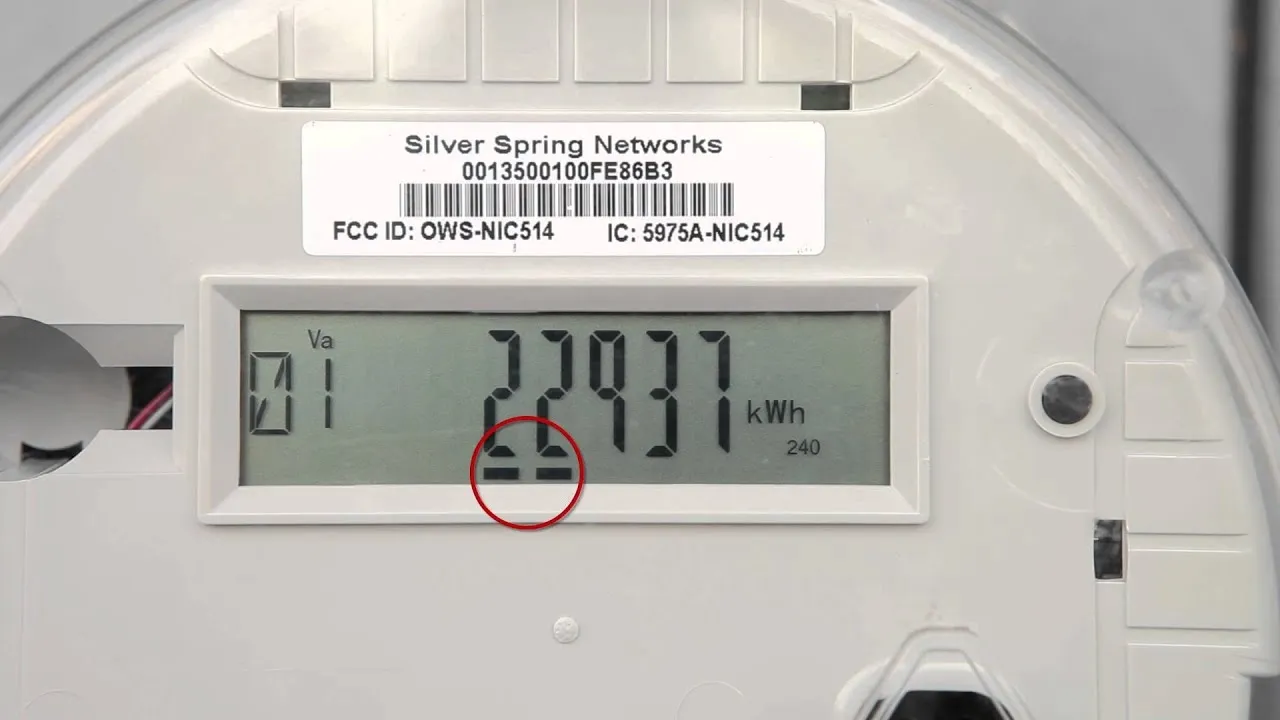
The industry has closely watched early adopters of smart metering technology, with several utilities announcing deployments exceeding 1 million meters. While impressive, nearly 150 million meters have already been automated using AMR communications technologies. Those devices do not provide full interval data collection, remote disconnect, or other enhanced communications services envisioned for smart grid deployments. However, it is possible today to add communications over public networks, such as cellular or broadband, to provide full HAN support and enable consumer engagement and energy management services.
These capabilities allow utilities to leverage existing metering investments to offer a range of demand-side services. For example, ERT-enabled gateways can allow owners of ERT meters to communicate over IP networks. This enables utilities to use their existing metering assets to provide customer energy management services, validate demand response measurements, or observe coincident loads across a group of meters for load forecasting. Although this is not a full smart metering platform, it supports a range of services consistent with many smart grid business cases.
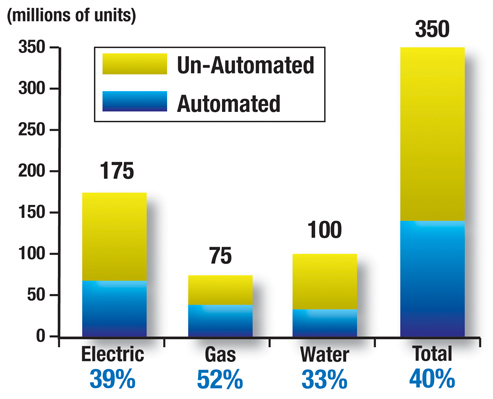
Figure 3: North American AMR penetration. There are also products that convert these AMR devices to industry-standard protocols such as the ZigBee Smart Energy Profile. By connecting ERT modules to a variety of certified smart energy devices, the stranded asset risk can be minimized and the transition from AMR to smart grid can be smoothed.
The industry will continue to develop and expand use cases supported by these technologies, but tools that enable flexible, future-proofed distribution deployments are critical to driving early adoption. AMR gateways are one example of using machine-to-machine management services to connect utility applications, such as customer energy management portals and demand response platforms, with customer metering devices. That connectivity is a key development for making the technology commercially viable.
Responding to Network and Other Technology Changes
On February 18, 2008, operators shut down Advanced Mobile Phone System, the analog cellular networks. That change forced the industry to find new ways to communicate with thousands of metering and distribution devices deployed across many utilities in North America. The industry did not adopt a single approach. Instead, innovative solutions that meet individual business requirements emerged. For some utilities this helped accelerate smart grid deployments. Other utilities sought to avoid meter replacements by enabling existing dial-up modems over IP. These decisions are driven by business factors rather than by a single best technical option.
The reality is that no single software or communications solution meets all utility business functions for smart grid deployments. Many communication solutions—public, private, wired, and wireless—can and will contribute to the overall smart grid ecosystem. Each technology offers a distinct set of performance, cost, reliability, and security trade-offs that can be selected without undermining its contribution to the system as a whole.
The industry challenge is not choosing communication solutions but developing efficient, secure, and scalable connectivity across a broad set of networks. This middleware management platform will be a key part of the smart grid. It must support new technologies while also managing deployed devices and technologies. Crucially, many M2M management platforms decouple utility applications from specific communication networks, allowing new technologies to be deployed without disrupting existing systems.
Conclusion: Device Management Is Key to Future-Proofing
All network technologies used in the smart grid are intended to gather time-sensitive energy consumption data. Whether using power-line carrier, fiber, cellular, or proprietary wireless communications, the goal is to determine how much energy is used and, importantly, when it is used. If I commute during peak hours, my gasoline usage and associated environmental and economic costs are higher than if I commute at off-peak times. Energy consumption behaves similarly. When power is used during peak periods, the utility's cost is significantly higher, but in most cases those costs are not directly passed through to consumers.
The smart grid aims to help utilities better map costs to prices, thereby supporting and enabling time-based rate structures. That will increase demand for "energy dashboard" tools that convey rates and consumption data to customers, and it will expand the number of customers who actively participate in load-shifting programs.
Again, these challenges do not prescribe specific network technologies but an information and control ecosystem that will use many networks, wired and wireless, to enable interactive, reliable, and efficient energy delivery. Choosing software services that allow applications to operate independently of the communication network will maximize a utility's ability to leverage existing assets while helping to future-proof investments.