ALLPCB


Introduction
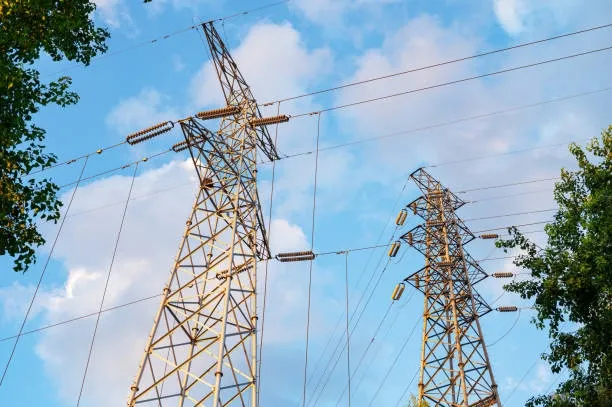
A tree's age can be estimated from its rings. Similarly, the operational age of a distribution grid can be inferred from its earliest installed components, which may be decades old.
In many cases grid components remain in service for more than 50 years, and some original, critical parts continue to function. Given a "do no harm" approach to grid evolution, a key challenge is achieving interoperability. How can operators transition to modern Ethernet technology and adopt wireless technologies such as Sub-1 GHz, Bluetooth, and Wi-Fi while still leveraging mature, reliable wired connections such as RS-232 and RS-485- With the growth of IoT in power systems, most of the wired and wireless building blocks needed for smart grid deployments already exist. What is needed now is a framework that integrates these technologies.
Current status and future direction
Today, most distribution grids are an assembly of technologies that support monitoring, protection, and control of major grid assets. They are accretive systems that have expanded over time to meet new requirements. Even when modern connectivity is available, it must coexist with robust legacy equipment.
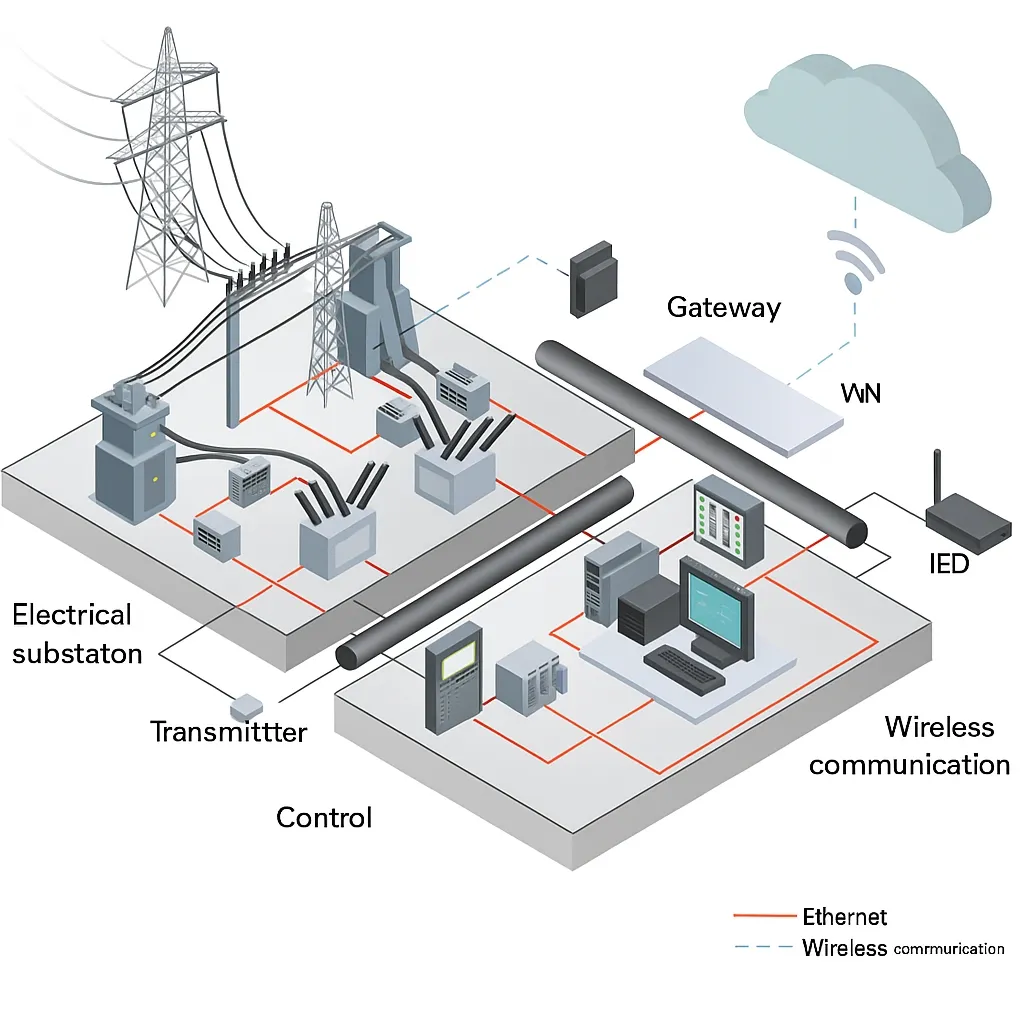
Large grids today closely follow regional best practices. As an international standard, IEC 61850 aims to standardize substation-level communications for intelligent electronic devices. As towns and cities expand, grid infrastructure with transmission lines, distribution lines, and substations extends to interconnect power generation with end users. Devices in substations require secure and reliable means to exchange protection and control information. For decades, hard-wired serial links such as RS-232 and RS-485 were the best practice until higher-bandwidth wired Ethernet became more prevalent. Wireless connectivity was historically limited to fault monitoring in transmission and distribution, while the transition to low-power RF for asset monitoring in distribution is only beginning.
Grid assets and monitoring devices were installed over the past 20 to 30 years. When devices must intercommunicate, older wiring often still provides reliable links. Although integrating wireless technology can reduce costs in some cases, it is not economically sensible to replace an entire network infrastructure that has functioned for decades. Security is also a key concern for any wireless deployment. Wireless may eventually supplant older methods, but successors must interoperate with equipment that has been in service for many years.
Like U.S. highways, the underlying wired grid may add one or two new exits but is rarely fully replaced. Even when building new solar plants or microgrids that use modern wireless connectivity, interoperability with decades-old infrastructure is still required. Legacy devices are replaced only when they no longer perform their primary functions.
IEC 61850 originated in Europe, so European manufacturers and systems often follow it for deployments within European markets. Although this global connectivity standard influences substation design for data collection, management, and transfer, incompatibilities remain because additions to the grid were designed around the maturity of available technologies. In the absence of mandated standards, substations built in older urban areas may lack mechanisms to collect asset data. As distribution systems are aggregated, interoperability becomes challenging because the underlying infrastructure connecting each substation device was designed differently.
On the same feeder, the oldest substations may have only a few breakers, transformers, regulators, and other protection and monitoring devices, while introducing new lines can add breakers and modern protection relays that must operate alongside units installed 20 years earlier.
All components can still perform useful functions, yet they operate with differing capabilities. This situation creates both the impetus and the challenge for enabling smart-grid and IoT connectivity that can scale data up and down as needed.
An advanced distribution grid is one that can self-heal during faults. It enables scalability and interoperability between grid assets and end devices, ideally powered increasingly by distributed renewable energy. Smart grids address traditional grid challenges by providing monitoring, analytics, control, and communication to improve efficiency, reduce energy use and costs, and increase transparency and reliability. IoT-enabled distribution systems provide on-demand data by integrating more ultra-low-power sensors and wireless communication nodes.
Wired technologies have not progressed dramatically, but they remain functional and reliable. Some argue for deprecating these traditional technologies, yet wired infrastructure continues to be a backbone of modern smart grids.
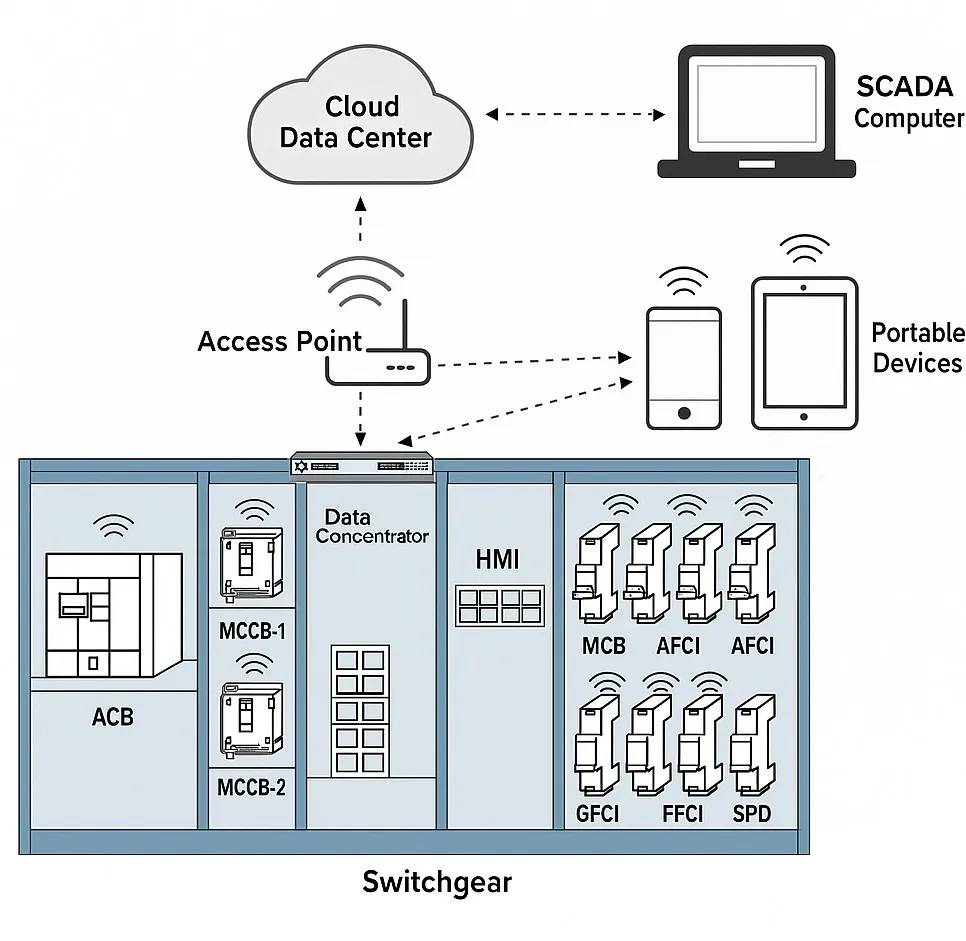
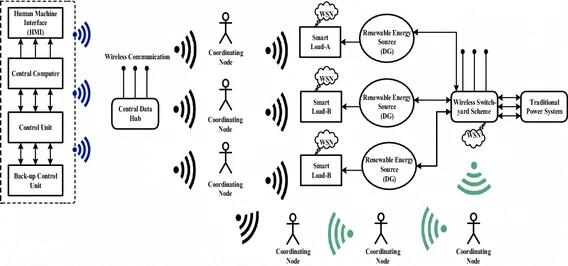
Figure 1. Grid interoperability with wired and wireless technologies
Debate and trade-offs of wired technologies
Hard-wired grid infrastructure dates back decades and, since it still performs, replacement costs often outweigh benefits. Many legacy communication protocols, circuits, and wiring remain part of today’s grids. Robust universal asynchronous receiver-transmitters (UARTs) transfer data between devices using only two wires. The RS-232 protocol dates back about 60 years and was once the de facto standard for data exchange. The voltage levels defined by RS-232 make it resilient to noise and reduce exchange errors. It can still be found in many modern computers.
RS-485 is a versatile communication standard widely used in multi-node data acquisition and control applications. Unlike RS-232 single-ended signaling, RS-485 uses differential signaling to reduce sensitivity to line noise, enabling longer distances and higher communication reliability.
The PROFIBUS fieldbus standard dates to the mid-1980s and remains a popular instrumentation connection method. Although aged, these standards and protocols still provide advantages because of simplicity, reliability, and security: unlike modern Ethernet or Wi-Fi networks, they are less exposed to common cyberattack vectors. They can also be cost-effective when exchanging limited amounts of data. However, their lower speed and bandwidth limit flexibility and functionality, opening opportunities for Ethernet to support megabytes-per-second data rates. Modern Ethernet MAC and PHY interfaces support dual ports for redundancy, higher bandwidth and speed, and additional features.
TI wired-technology reference designs
Texas Instruments (TI) has developed reference designs that describe how to incorporate specific communication technologies into grid devices to exploit their strengths and explain how to interoperate with other technologies, including legacy protocols.
TI provides reference designs for RS-232 and RS-485 requirements. An isolated RS-232 reference design with integrated signal and power provides a compact solution capable of generating an isolated DC supply while supporting isolated RS-232 communication. It uses enhanced digital isolators with integrated power and RS-232 transceivers.
For RS-485, TI offers two reference designs. A communication module reference design for functionally isolated RS-485, CAN, and I2C data transfer targets low-cost, efficient communication modules for industrial systems that require isolated communication and isolated power. This design has been validated for robust data transmission in harsh environments, making it suitable for grid applications. An isolated RS-485 reference design with integrated signal and power provides a compact solution capable of generating an isolated DC supply while supporting isolated RS-485 communication, using enhanced digital isolators with integrated power and RS-485 transceivers.
For Ethernet, TI's reference design for substation automation high-availability seamless redundancy (HSR) Ethernet provides a framework for reliable, low-latency network communication for transmission and distribution substation automation devices. It supports the HSR specification in IEC 62439 and the Precision Time Protocol (PTP) specification in IEEE 1588, and can support the IEC 61850 standard without additional components.
A brick-module reference design for 10/100 Mbps Ethernet with fiber or twisted-pair interfaces and EMI/EMC compliance eliminates the need for multiple daughter cards to support copper or fiber interfaces. It uses small, low-power 10/100-Mbps Ethernet transceivers to reduce board size, optimize cost and scalability, and lower power dissipation in high-temperature environments. Of course, Ethernet shares some deployment challenges with legacy wiring: fiber must be trenched and installed like copper, and underground fiber installation is expensive. This is why modern smart grids often extend wired technologies with wireless options such as Sub-1 GHz, Bluetooth, and Wi-Fi.
Figure 2. Wireless connections for devices in protection and monitoring switches
Principles of wireless technologies
Wireless communications add redundancy and resilience to networks. Depending on the application, wireless options such as Bluetooth Low Energy, Sub-1 GHz, and Wi-Fi are chosen to balance range, bandwidth, power consumption, and noise sensitivity.
A Wi-Fi-based grid IoT reference design demonstrates how to configure a Wi-Fi network, data transport scheme, and power-minimization strategies. It integrates Wi-Fi capabilities via TI's SimpleLink CC3220 wireless MCU, which combines a network processor and application processor to enhance device connectivity for asset monitoring.
For longer ranges or when Wi-Fi is unavailable, the wireless spectrum (Sub-1 GHz and 2.4 GHz) can be used. A Sub-1 GHz grid IoT reference design connects fault indicators, data collectors, and micro-RTUs using Sub-1 GHz wireless in a star topology between multiple sensor nodes and collectors. The design optimizes for low power and short-range operation, for example using overhead fault-channel indicators and data collectors.
These wireless technologies add flexibility to grid interoperability. They enable large-scale, on-demand data collection to improve asset health monitoring. Wi-Fi, Bluetooth Low Energy, and Sub-1 GHz frequencies allow faster deployment of primary and auxiliary devices in smart grids without the time and expense required for wired Ethernet installations.
Charting a path toward wireless smart grids
Digital grids and IoT-enabled systems are inevitable, but they must accommodate legacy protocols and modern wired technologies.
Modern technologies can improve management of legacy assets. Wireless sensors will be able to monitor transformers installed decades ago and enable proactive interventions to manage their health. Data analytics are driving demand for faster sharing of richer grid state information.
Because legacy devices have long service lifetimes, the transition will be gradual, and the grid's nature means functional components will remain in use for decades. TI's reference designs and product offerings provide a framework for managing this transition. Over time, more wireless technologies will replace hard-wired legacy infrastructure, but today's smart grids will continue to be a coordinated mix of old and new technologies.