ALLPCB


Preface
In January 2020, the Bluetooth Special Interest Group (SIG) published the Bluetooth 5.2 specification. This update served as a reminder that a wireless technology that has accompanied us for 25 years continues to evolve with market demands.
Bluetooth was created in 1994 by Ericsson with the initial goal of enabling wireless audio transmission for headsets. It later evolved into a wireless standard that allows data transfer between devices, simplifying data exchange and avoiding loss when switching or sharing devices.
Today Bluetooth is ubiquitous: speakers, wireless headsets, cars, wearables, medical devices and even some footwear incorporate Bluetooth. With the rapid development of the Internet of Things, Bluetooth’s role has become more prominent and it has become a common feature in many smart products.
Why Is It Called "Bluetooth"?
Looking back to Bluetooth’s origin 25 years ago, one detail often overlooked is the origin of the name. Bluetooth is managed by the Bluetooth Special Interest Group (SIG), but the name itself did not derive from SIG.
The name "Bluetooth" came from a Viking leader. Jim Kardach proposed and adopted it in 1997 after reading the book The Long Ships, which features King Harald Bl?tand Gormsson, who united parts of Denmark and Norway. The English rendering of Harald Bl?tand is Harald Bluetooth. Kardach named the new standard after the king, and the Bluetooth logo combines the initials H and B.
Whether the name implied ambitions to "become a king" is unknown, but reviewing Bluetooth’s evolution over the past two decades shows it is among the most active and persistently developed wireless technologies.
Bluetooth Technology Evolution
Over more than 20 years, Bluetooth has evolved to version 5.2. The following table summarizes key milestones and performance indicators.
| Bluetooth Version | Release Year | Max Throughput | Range |
|---|---|---|---|
| Bluetooth 1.0 | 1998 | 723.1 Kbps | 10 m |
| Bluetooth 1.1 | 2002 | 810 Kbps | 10 m |
| Bluetooth 1.2 | 2003 | 1 Kbps | 10 m |
| Bluetooth 2.0 + EDR | 2004 | 2.1 Kbps | 10 m |
| Bluetooth 2.1 + EDR | 2007 | 3 Kbps | 10 m |
| Bluetooth 3.0 + HS | 2009 | 24 Kbps | 10 m |
| Bluetooth 4.0 | 2010 | 24 Kbps | 50 m |
| Bluetooth 4.1 | 2013 | 24 Kbps | 50 m |
| Bluetooth 4.2 | 2014 | 24 Kbps | 50 m |
| Bluetooth 5.0 | 2016 | 48 Kbps | 300 m |
| Bluetooth 5.1 | 2019 | 48 Kbps | 300 m |
| Bluetooth 5.2 | 2020 | 48 Kbps | 300 m |
Table 1: Bluetooth technology roadmap
Observing only throughput and range does not capture the full picture of Bluetooth’s evolution. Below is a concise overview of the most important milestones and technical advances.
Early Bluetooth 1.0 and 1.1 had multiple issues and poor interoperability across vendors. Version 1.2 was the first commercially viable release and provided backward compatibility with 1.1. The technology began seeing broad market adoption with Bluetooth 2.0 in 2004.
In July 2007 the Bluetooth SIG ratified the Bluetooth Core Specification 2.1 + EDR, which remained backward compatible with 1.2 and added power-saving features such as Sniff mode, significantly reducing power consumption. Bluetooth 2.1 achieved three main goals that shaped its future: secure simple pairing to create encrypted links for data exchange; Sniff mode hierarchy to extend battery life by up to five times; and extended inquiry response to prevent unintended pairings and improve connection accuracy.
Bluetooth 3.0 + HS, launched in 2009, significantly increased data rates and addressed the long transfer times for large files. That version introduced unicast connectionless data, improving response speed and modernizing the technology to remain competitive.
Bluetooth 4.0, released in 2010, extended data transfer range and improved connection performance. Its most significant change was the introduction of Bluetooth Low Energy (BLE), which accelerated adoption in power-sensitive applications and enabled Bluetooth to expand from traditional IT peripherals and audio devices into many smart device categories.
From Bluetooth 4.0 onward, the technology bifurcated into two branches: Classic Bluetooth, for wireless speakers, in-vehicle infotainment systems and headsets; and BLE, which excels in battery-operated and low-data applications such as sensors. Because many IoT systems involve small devices and sensors, BLE has become a common IoT protocol. The market responded with dual-mode Bluetooth chips supporting both modes.
Bluetooth 4.1, published in 2013, made it easier to maintain Bluetooth connections when devices are not in close proximity. It also allowed any two devices sharing the same hub to exchange data via Bluetooth, improving the user experience beyond traditional master-peripheral relationships.
Bluetooth 4.2, released in 2014, improved security, speed and data range, protecting devices against unwanted tracking and increasing data rates by about 2.5 times over the previous version.
In December 2016 Bluetooth 5.0 introduced double the transfer speed, quadruple the coverage, and eight times the broadcast message capacity, along with further low-power improvements. The Bluetooth SIG later deprecated versions 4.1 and earlier. Over time, industry adoption moved toward Bluetooth 5.0 and BLE dual-mode implementations in laptops, tablets and mobile phones.
Subsequent updates continued to add capabilities: Bluetooth Mesh networking was standardized; Bluetooth 5.1 introduced direction finding for centimeter-level positioning; and Bluetooth 5.2 added LE Audio. These features expanded Bluetooth’s applicability across diverse markets.
Expanding Bluetooth Application Areas
The Bluetooth SIG estimated device shipments could reach 6.2 billion annually by 2024. Two-thirds of Bluetooth devices are expected to come from non-phone, non-tablet, and non-PC categories, a notable reversal from 2015 when such devices made up only 33% of shipments. This highlights the increasing diversity of Bluetooth-enabled products.
Several application areas stand out for future Bluetooth growth.
Audio Transmission
Audio is Bluetooth’s largest application area. By 2024 annual shipments in this segment are expected to exceed 1.5 billion devices. True wireless stereo (TWS) has been a major market driver and will continue to advance Bluetooth’s role in audio.
Cordless Desktop
Bluetooth enables wireless peripherals such as mice, keyboards, printers and speakers to connect to computers. Innovations like virtual keyboards, which operate anywhere like physical keyboards, rely on Bluetooth for reliable wireless connectivity.
IoT Device Connectivity
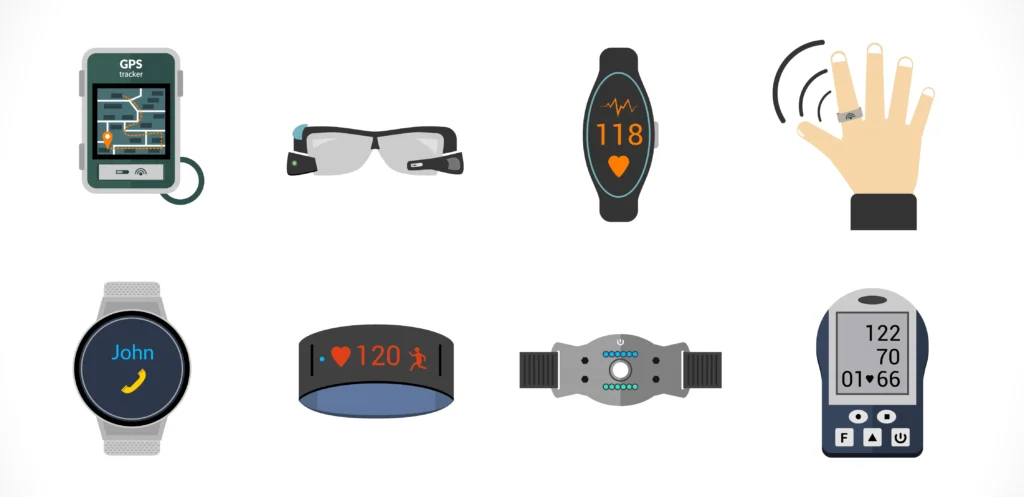
Bluetooth’s low-power data transmission makes it a preferred interconnect for wearables, fitness and health monitors, and certain implantable devices. With Bluetooth 5.0, the protocol offers greater potential for IoT and industrial IoT applications.
Bluetooth Mesh Networking
Bluetooth 5.0 integrated the Mesh standard, enabling devices to form networks without a hub. This allows Bluetooth Mesh to compete with other low-power networking technologies such as Thread and Zigbee. As a result, Bluetooth can support smart building, industrial automation, smart home and smart city applications. Bluetooth Mesh certified products have been reported to grow rapidly.
Bluetooth Location Services
Although not the largest category by shipment, Bluetooth location services are among the fastest-growing solution areas, benefiting from enhancements in Bluetooth 5.1 including direction finding. Forecasts predict widespread adoption in handheld devices and growth in tags for inventory tracking and personal tags used for positioning.
Bluetooth LE Audio
LE Audio, introduced in Bluetooth 5.2, supports multi-stream audio allowing audio signals to reach multiple devices simultaneously. In TWS, LE Audio can send audio directly to two earbuds rather than routing through a primary earbud, improving connection stability and reducing latency. LE Audio also enables new use cases such as private audio sharing, one-to-many audio teaching, and real-time multilingual translation. LE Audio is expected to further increase Bluetooth audio device shipments.
Conclusion
Although Bluetooth is a technology that many of us are familiar with, its continued evolution can still introduce surprises. That ongoing change keeps the technology vital. The more one studies Bluetooth, the more its potential becomes apparent.