ALLPCB


Overview
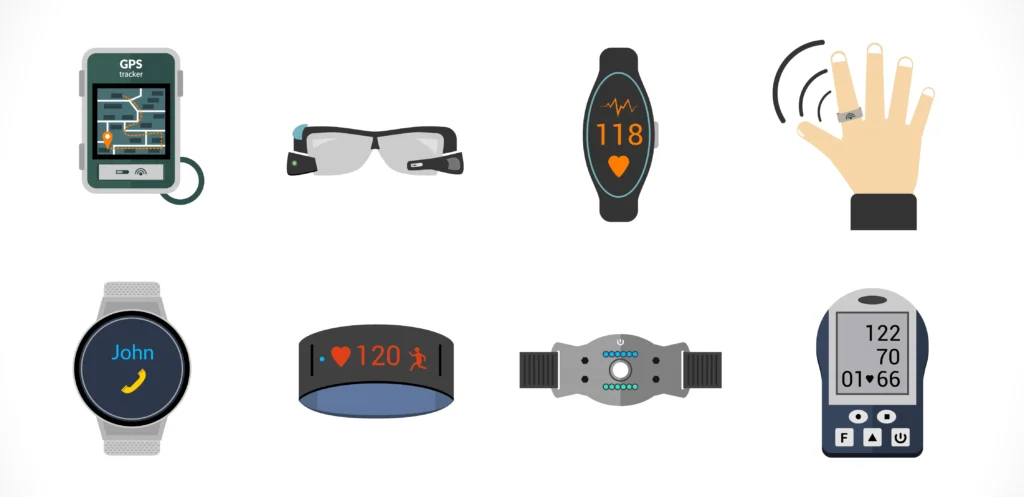
IoT is affecting many aspects of modern life. By collecting and analyzing large amounts of data, IoT can support health monitoring, reduce energy use in homes and workplaces, and monitor environmental conditions. Devices that collect data are expected to be small, easy to use, and available almost continuously. These requirements are particularly evident for wearable devices, which are used worldwide to track activity, monitor physiological signals, and support health-related applications.
Because wearables must be worn continuously to collect the required data, they need to be small, comfortable, and able to operate for extended periods. Smart home sensor nodes and other IoT endpoints face similar constraints. These constraints raise the question of how to power such devices. Ideally, devices would harvest enough energy from their environment to remain continuously powered. Although advances in low-power design and energy harvesting have been significant, batteries will remain the primary power source for the foreseeable future. In particular, rechargeable batteries are expected to reduce energy waste across billions of devices and are therefore the preferred option for many applications.
Wearable constraints and battery selection
Wearables impose strict limits on size and weight because they must be comfortable for long-term use. As a result, batteries must be as small and light as possible without compromising runtime. Market studies by IDC and GMI found that battery life is a primary consideration for consumers purchasing battery-powered portable products, so high battery capacity is important for product acceptance.
Meeting both size and runtime requirements is challenging. Many characteristics of lithium-based batteries make them suitable for wearable applications:
- High energy density, enabling smaller, lighter batteries while maintaining long operating time.
- Higher nominal voltage, typically around 3.7 V per cell, compared with 1.2 V for NiMH or NiCd cells, which reduces the number of cells required and helps shrink system size.
- Lower self-discharge, around 2% per month for lithium batteries versus up to 5% per day for some nickel-based chemistries, reducing recharge frequency and improving usability after long storage.
There are drawbacks. Lithium-ion cell manufacturing is more complex than nickel-based rechargeable cells, so unit cost can be higher. However, large-scale production and ongoing improvements have been reducing costs over time. Recent incidents in the news also highlight that lithium-ion cells present greater safety risks than some other chemistries because of flammable electrolytes. Incorrect charging can lead to thermal runaway, fire, or explosion. Many lithium-ion cells include internal protection circuits to mitigate overvoltage or undervoltage conditions, but the charging process is more complex than for nickel-based cells and requires appropriate charging control.
Why lithium-ion works for wearables
- Small size and long runtime due to high energy density
- Higher operating voltage, reducing cell count and enabling smaller systems
- Low self-discharge, allowing less frequent charging and better readiness after storage
Charging challenges for lithium-ion cells
Lithium-ion batteries require a constant-current/constant-voltage (CC/CV) charging profile for safe operation. In CC/CV charging, the battery is first charged with a constant current until it reaches a set voltage. The charger then switches to constant-voltage mode to maintain the set voltage while the current tapers off.
Choosing current and voltage levels requires careful trade-offs. Charging at a slightly higher voltage increases capacity but risks overvoltage, which can cause permanent damage and safety issues. Higher charge currents speed up charging but can reduce usable capacity; reducing charge current by about 30% can increase stored charge by up to 10% in some cases. Typical practice sets charge current around 0.5C (half the battery capacity as current) and per-cell voltage to 4.2 V, but using slightly lower current and voltage can slow aging and extend usable capacity over more cycles.
To address these issues, charging implementations must closely monitor current and voltage and implement stable control loops to maintain CC during the first phase and CV during the second. Comprehensive testing against applicable standards is also necessary. Test conditions for lithium-ion charging are broader than for nickel-based cells and often include tests specific to the cell itself.
JEITA guidelines
The Japan Electronics and Information Technology Industries Association (JEITA) has published guidelines for the use and charging of lithium-ion cells. Although these guidelines are advisory rather than certification standards, they are widely used to improve charging safety.
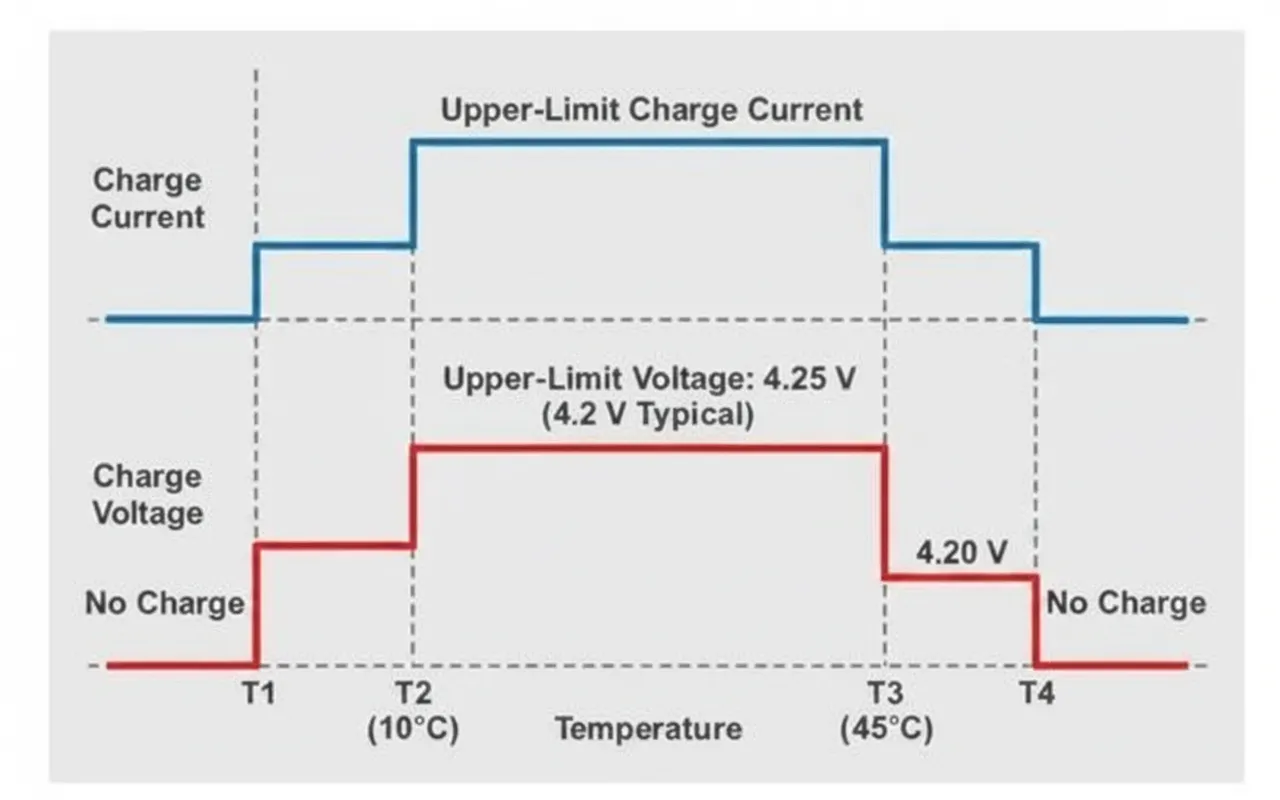
JEITA defines temperature zones for safe charging: a minimum temperature (T1), a maximum temperature (T4), and three intermediate zones (low, medium, high) so that charging behavior can be adjusted by temperature to ensure safety.
The guideline specifies maximum safe currents for each temperature zone:
- High temperature zone: maximum current 50% of battery capacity
- Standard temperature zone: maximum current 70% of battery capacity
- Low temperature zone: maximum current 60% of battery capacity
CC/CV charging algorithm and implementation
Many system-on-chip (SoC) products for low-power devices integrate power management features that can implement CC/CV charging and support the JEITA guidelines when combined with external components. A flexible CC/CV charging algorithm typically supports a wide current range so it can charge batteries of different capacities. Typical SoC-based charging connections place the SoC between the battery and system power rails to control current and monitor voltage during charging.
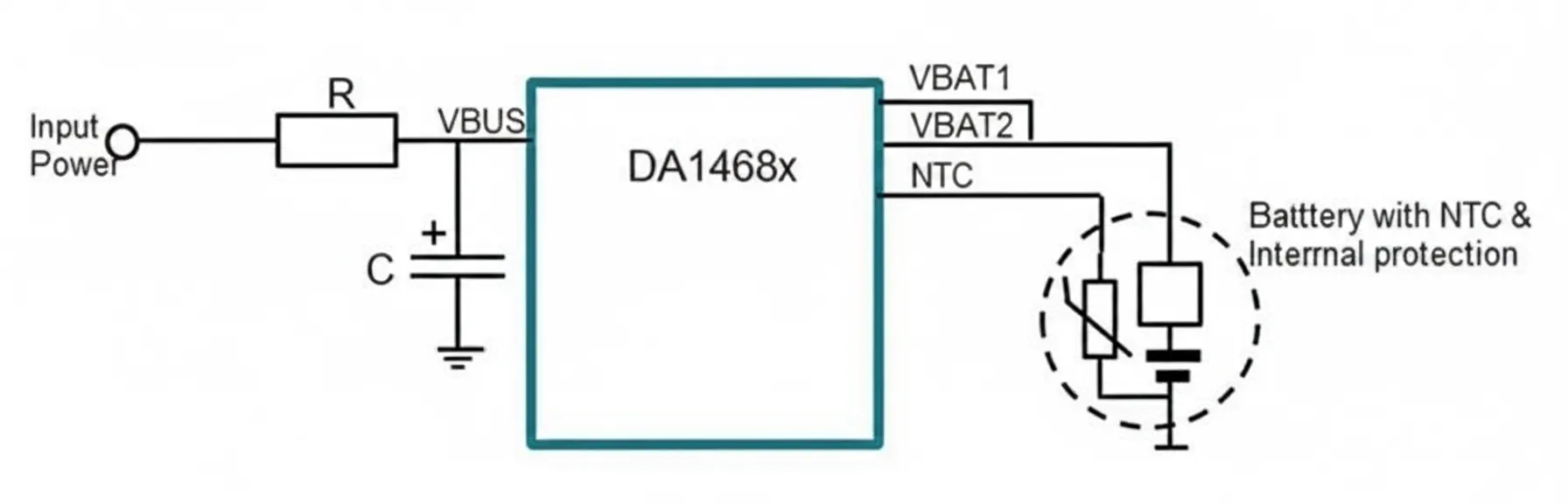
Charging algorithms commonly implement four stages: pre-charge, constant current, constant voltage, and voltage monitoring.
Charging cycle
The charging process normally starts when an input voltage is detected. If the battery is deeply discharged (for example, below about 3 V), the algorithm enters a pre-charge stage, delivering a low current (around 10% of the battery capacity) until the battery can accept full charge current. This prevents excessive heating. Once the voltage reaches a safe threshold, the algorithm switches to constant-current mode, charging at a higher current (up to the battery capacity) until the cell voltage reaches 4.2 V. The charger then enters the constant-voltage stage to avoid overcharging: the voltage is held at 4.2 V while the current decreases toward roughly 10% of capacity. The transition from CC to CV is implemented gradually to avoid damage.
When the battery is fully charged, the charger can switch to a voltage-monitoring stage, providing periodic top-up charging to compensate for self-discharge. Top-up charging typically occurs when the battery open-circuit voltage falls below 4.0 V.
On this basic cycle, designers can tune several parameters to tailor charging behavior. Typical adjustable parameters include:
- Pre-charge current (typically about 10% of capacity, e.g., 1 mA to 15 mA)
- Pre-charge voltage Vpcv (typically around 3.05 V)
- Pre-charge timer (default example: 15 minutes)
- Constant current Icc (typical example: 70% of capacity)
- Charge voltage Vfloat (range commonly 4.2 to 4.6 V)
- CC timer (default example: 180 minutes)
- CV timer (default example: 360 minutes)
Built-in safety features
To reduce risks from abnormal charging conditions, chargers and power-management subsystems often implement built-in protections for conditions such as:
- Undervoltage during discharge
- Overvoltage during charging
- Overcurrent during charging
- Timeouts for pre-charge, CC, and CV stages
- Battery temperature out-of-range (with external NTC sensor connected)
Batteries should provide protection against overvoltage, undervoltage, and overcurrent, and include an NTC temperature sensor that can be connected to the charging controller and an ADC input for temperature monitoring.
Summary
The wearable device market continues to grow. Although progress has been made in reducing system power consumption and improving energy-harvesting potential, rechargeable batteries remain necessary for most feature-rich wearable and IoT applications in the near term. Lithium-ion cells offer a compact, lightweight energy source with high capacity and suitable operating voltage, which helps designers meet size constraints while providing acceptable battery runtime. However, safe and efficient charging requires more sophisticated charging solutions and adherence to guidelines such as JEITA.
Integrating battery management and CC/CV charging algorithms, temperature monitoring, and protective functions into a single component reduces overall system size, increases design flexibility, and simplifies development while supporting safer charging behavior. These capabilities allow designers to implement compact, energy-efficient wearable devices with predictable charging performance and safety controls.