ALLPCB


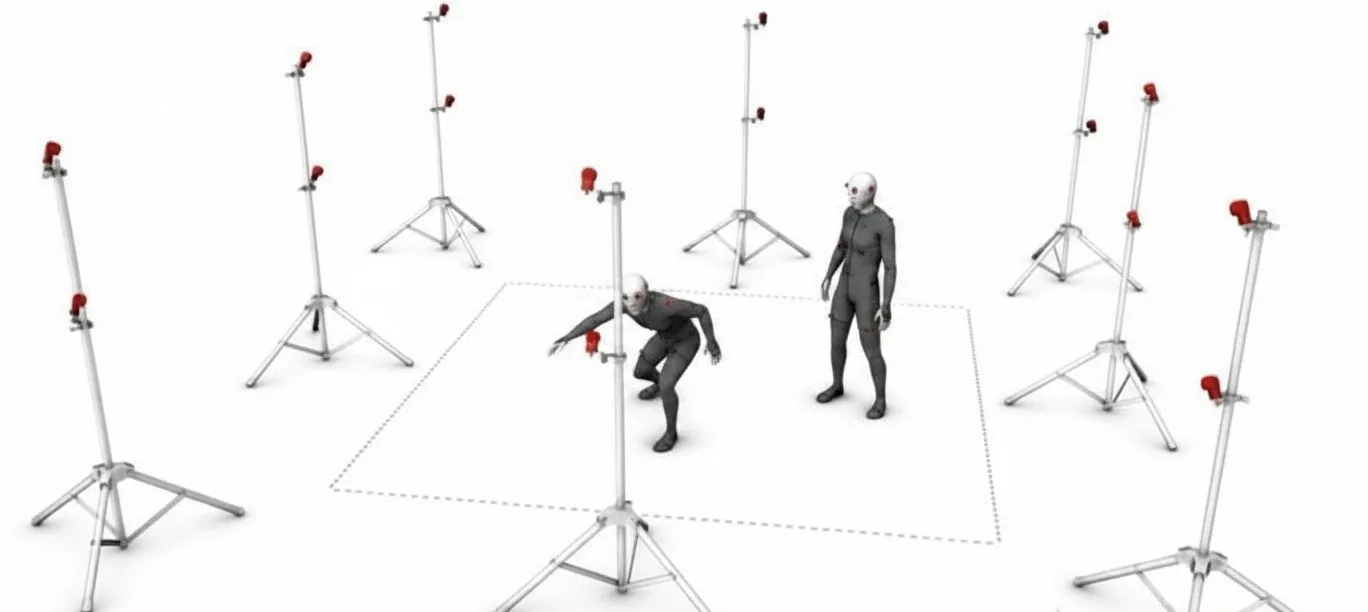
Augmented reality (AR) is a technology that seamlessly integrates real-world information and virtual information. It overlays virtual information onto real-world entities that are difficult to experience within a given time-space range (visuals, sound, taste, touch, etc.), after simulation and modeling by technologies such as computer simulation, so that the virtual information can be perceived by human senses and provide an enhanced sensory experience. Real environments and virtual objects are superimposed and coexist in the same view or space in real time.
Overview of Augmented Reality
AR not only presents real-world information but also displays virtual information concurrently, with the two types of information complementing and overlaying each other. In visual AR, users can use head-mounted displays to composite the real world with computer graphics, enabling an enriched view of their surroundings.
AR combines multimedia, 3D modeling, real-time video display and control, multi-sensor fusion, real-time tracking and registration, and scene fusion. It provides information that differs from what humans normally perceive.
An AR system has three notable characteristics: 1) integration of real-world and virtual-world information; 2) real-time interactivity; 3) placement of virtual objects in three-dimensional space. AR has wide applications in military, medical, architecture, education, engineering, film and entertainment.
AR shares application domains with virtual reality (VR)—such as advanced weapons, aircraft development, data model visualization, virtual training, entertainment, and the arts—but because AR can enhance the display of the real environment, it has clearer advantages over VR in medical research and anatomy training, precision instrument manufacturing and maintenance, military aircraft navigation, engineering design, and remote robot control.
Everyday AR Use Cases
- Medical: Surgeons can use AR for precise localization of surgical sites.
- Military: Units can use AR for orientation, obtaining real-time geographic and other tactical data.
- Cultural heritage: AR can present restored or reconstructed information to visitors; users can see textual explanations and virtual reconstructions of damaged sections at sites.
- Industrial maintenance: Head-mounted displays can show auxiliary information such as virtual instrument panels, internal structures, and part diagrams of equipment under repair.
- Video communications: AR combined with face tracking can overlay virtual objects like hats or glasses on a caller's face during video calls.
- Broadcasting: AR can overlay supplementary information on live sports broadcasts to provide viewers with more data.
- Entertainment and gaming: AR games can allow geographically distributed players to interact within a shared real-world scene using virtual avatars.
- Tourism and exhibitions: AR can deliver contextual information about buildings or exhibits while visitors browse.
- Urban planning: AR can overlay proposed planning effects onto real scenes for direct visualization.
A relatively authoritative AR scholar in the Chinese market is Professor Wang Yongtian from the Department of Optoelectronic Engineering at Beijing Institute of Technology.
The first time this technology was applied to everyday life in the Chinese market was an AR travel app released on Apple's App Store called XINGWIKI (AR version).
Users increasingly expect to access the same media and information conveniently across different locations and devices—from PC to mobile phone, from projector to head-mounted display. Interfaces are extending into larger spaces and allow intuitive, on-the-spot capture of creative ideas.
1. Origins, Concepts, and Application Domains of VR and AR
(a) Origins
Although 2016 was widely labeled as the "year of virtual reality," VR is not a recent invention. Virtual reality emerged in the United States. In 1965, Ivan Sutherland described the basic ideas of a virtual reality system with interactive graphic displays, force-feedback devices, and audio cues in his paper "The Ultimate Display." Early VR research by Sutherland included three-dimensional stereoscopic displays in his "Sword of Damocles" system. Augmented reality was introduced by Sutherland during his head-mounted display research as a means to provide informational and entertainment overlays on real environments.
In 1966, MIT's Lincoln Laboratory began developing head-mounted displays (HMDs). Early prototypes soon added force-feedback devices to simulate force and tactile sensations. By 1970, the first relatively complete HMD systems appeared. In 1989, Jaron Lanier of VPL popularized the term "Virtual Reality" and commercialized VR technology, accelerating its development. VR gained momentum in the 1990s.
After 2000, VR integrated technologies such as XML and Java, leveraged powerful 3D computing and interactive techniques, improved rendering quality and transmission speeds, and entered a new development era. VR is a product of economic and social productivity advancement with broad application prospects. By 2008, the U.S. National Academy of Engineering listed virtual reality among major engineering challenges for the 21st century, alongside technologies like new energy and clean water. Governments and large companies in countries such as the U.S., U.K., and Japan have invested heavily in VR research and development.
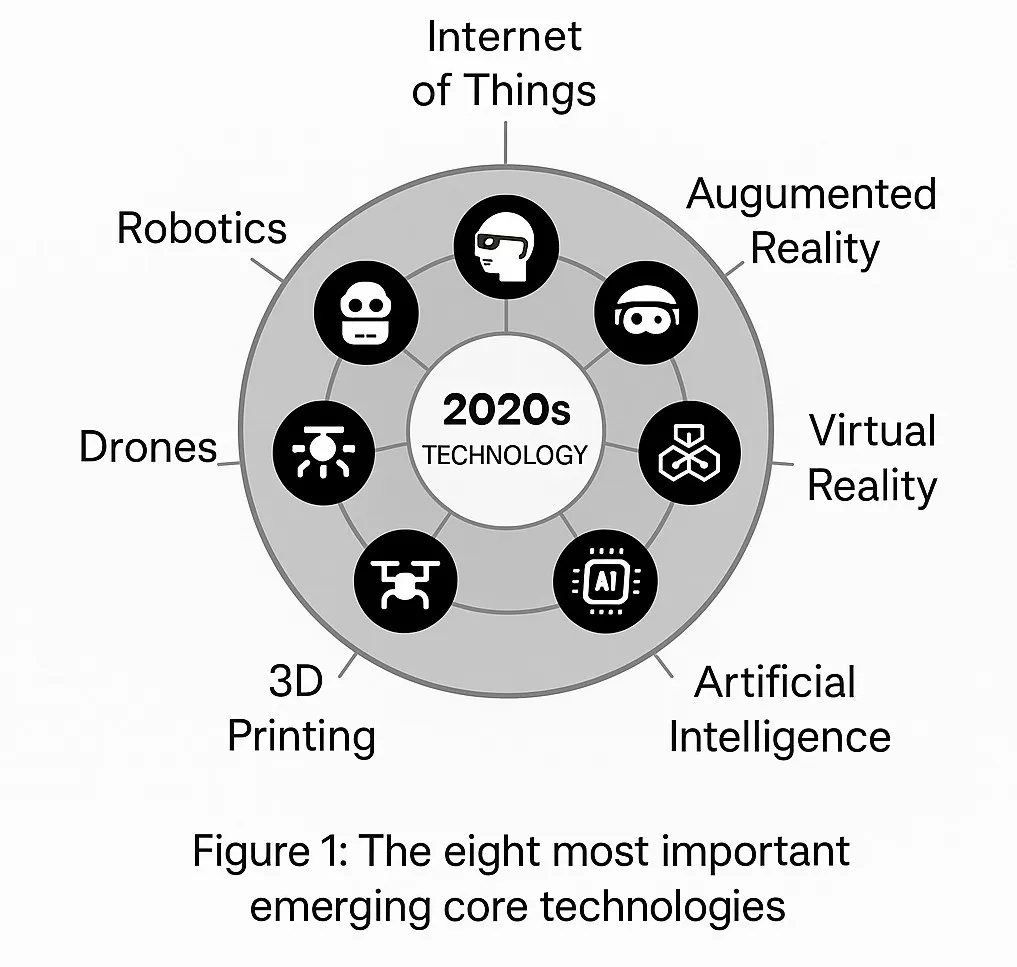
Research on virtual reality technology in China began in the early 1990s. With rapid advances in computer graphics and systems engineering, VR received significant attention. National-level planning documents have highlighted VR and interactive media as emerging strategic fields to promote innovation and industrialization, fostering new growth points. VR and AR have also been identified among key emerging core technologies.
A 2016 joint report showed large potential VR user numbers in the Chinese market. Demographics indicated younger users predominated and early adoption was concentrated in economically developed cities, with gradual spread nationwide.
(b) Concepts, Features, and Application Domains
1. Virtual Reality Technology
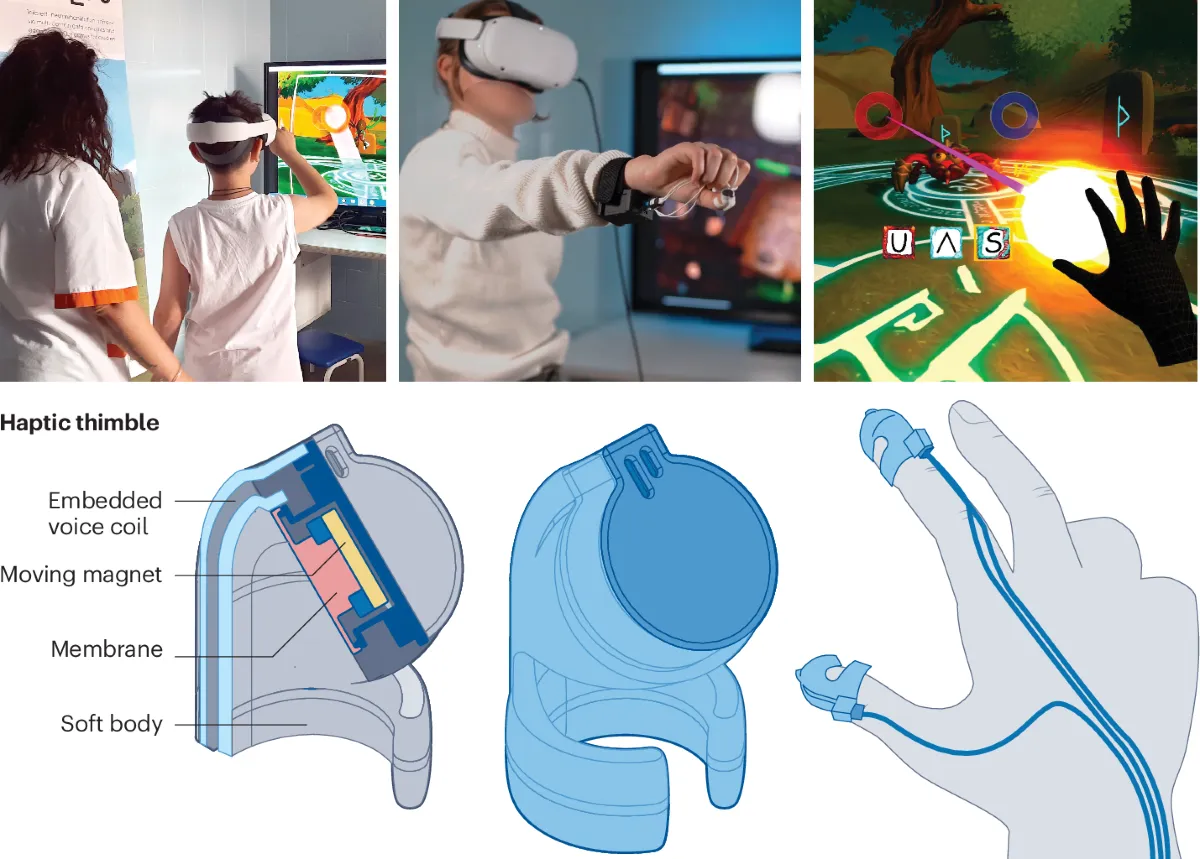
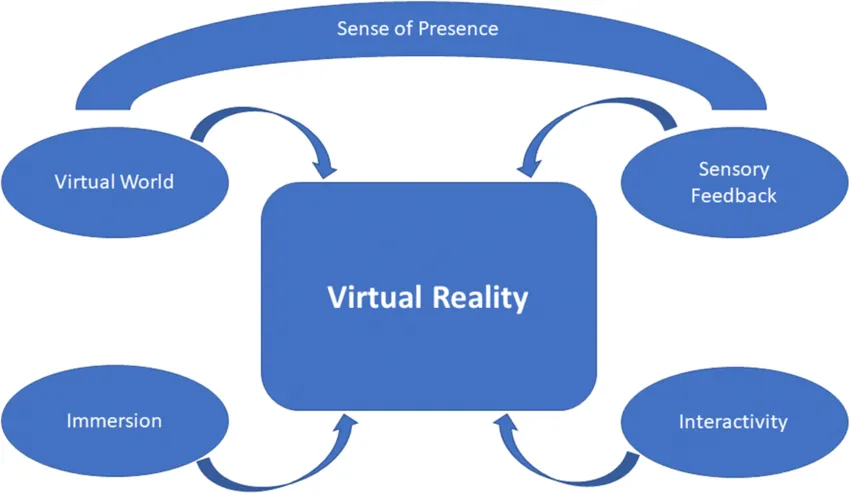
Virtual reality is an immersive interactive environment based on multimedia computing, sensing technologies, and simulation. It uses computers to generate realistic visual, auditory, and haptic virtual environments within a defined scope. Users interact naturally with virtual objects using appropriate devices, producing experiences equivalent to real environments.
VR exhibits the "3I" properties: immersion, interaction, and imagination. Combined with artificial intelligence and related fields, VR systems can gain intelligent and evolutionary characteristics. VR spans many disciplines and integrates various technologies. The VR industry chain includes hardware design and development, software development, content creation, and content operation platforms. Breakthroughs in VR technologies and the "VR+" model will generate many application systems across industries, driving network and mobile terminal applications and facilitating industry upgrades.
VR applies to defense, aerospace, smart cities, equipment manufacturing, education and training, healthcare, commerce, culture and entertainment, public safety, social applications, tourism, and broadcasting. For example, in 2016 a national broadcaster used VR holographic technology to present docking operations between space modules, employing virtual tracking to provide immersive visualization of spacecraft structures and control panels, enabling more vivid and direct viewer understanding compared to traditional reporting.
2. Augmented Reality Technology
AR developed from VR. Based on computer display and interaction, and network tracking and positioning, AR overlays computer-generated virtual information onto real scenes to supplement the physical world, enhancing users' visual, auditory, and haptic experiences.
AR has three main characteristics: virtual-real integration, real-time interactivity, and three-dimensional registration. It can be presented in three modes by proximity to the eye: head-attached (head-mounted), hand-held, and spatial display. AR smart glasses are one form of such devices.
AR has broad application domains. In education, AR can present holograms, virtual experiments, and virtual environments. In tourism, AR can help visitors explore scenic areas with virtual guides explaining history and points of interest. In retail, AR enables virtual try-on and has potential for e-commerce. AR shows promise in industry, healthcare, military, municipal planning, television, gaming, and exhibitions.
3. Mixed Reality
Mixed reality (MR) is a further development of VR. It presents virtual scene information within real scenes, creating an interactive feedback loop between the real world, the virtual world, and the user to enhance realism. MR combines the strengths of VR and AR and better realizes mixed virtual-real experiences.
According to theory from Steve Mann, smart hardware will gradually transition from AR to MR. The difference is that MR can reveal aspects of reality not visible to the naked eye via camera systems, while AR focuses on overlaying virtual content without altering the perception of the underlying reality.
4. Expander Reality
Expander reality (ER) integrates human networks and the Internet of Things, representing an advanced stage of VR development where the boundary between reality and virtuality is blurred and it becomes difficult to distinguish living in a virtual or real world.
5. Differences Among VR, AR, MR, ER
The distinctions are: VR focuses on the virtual world and seeks immersion in purely virtual scenes; AR focuses on the real world and enhances users' ability to explore the real environment by overlaying virtual information; MR combines digitalized reality with virtual overlays and is conceptually closer to AR; ER is an integration of human networks and IoT, representing a higher development stage where reality and virtuality converge.
2. Specific Educational Applications of VR and AR
VR and AR offer significant potential in education by stimulating learning motivation, creating contextual learning scenarios, enhancing experiential learning, enabling psychological immersion, overcoming time-space constraints, supporting dynamic interactive exploration, and enabling interdisciplinary knowledge integration. These technologies provide educators with new teaching tools and can motivate students through hands-on experiences. VR and AR can transform traditional teacher-led instruction into learner-centered experiences, supporting autonomous learning and aligning with recent educational reforms. This section outlines device-specific educational uses.
(a) Head-mounted VR and AR Devices in Education
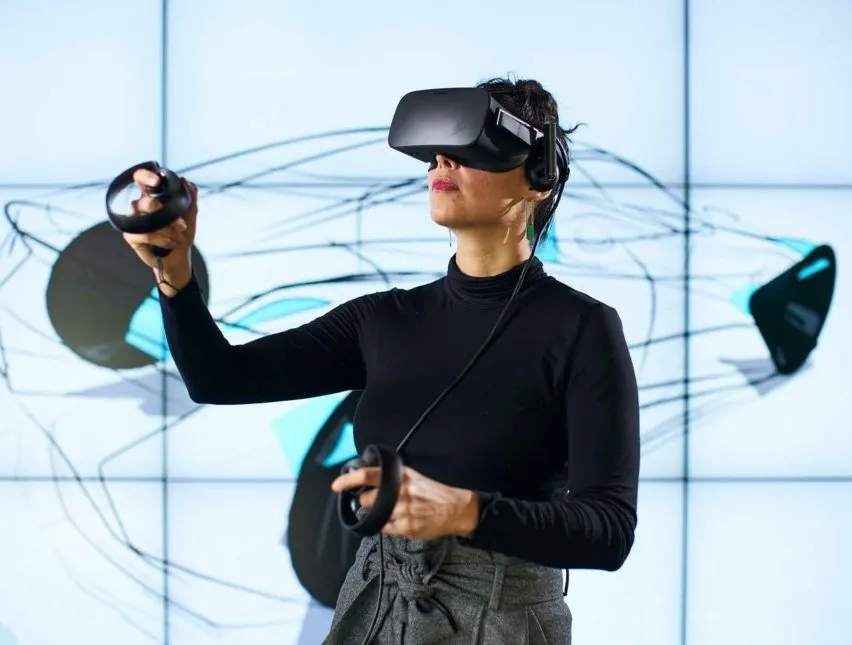
Head-mounted VR devices typically include an HMD, position trackers, data gloves, and other peripherals, and can be mobile or split-type. International products include headsets from major companies, and the Chinese market also offers numerous headsets. Research and pilot projects show VR and AR applicability across biology, physics, chemistry, engineering, manufacturing, flight training, language, history, geography, and cultural education.
Students using HMDs gain immersive experiences that make content tangible and interactive. For example, in geography lessons about planetary motion, students cannot physically travel to space, but HMDs allow close observation of planets, stars, and satellites from various angles, study of planetary surfaces and internal structures, and simulated landings on Mars or the Moon.
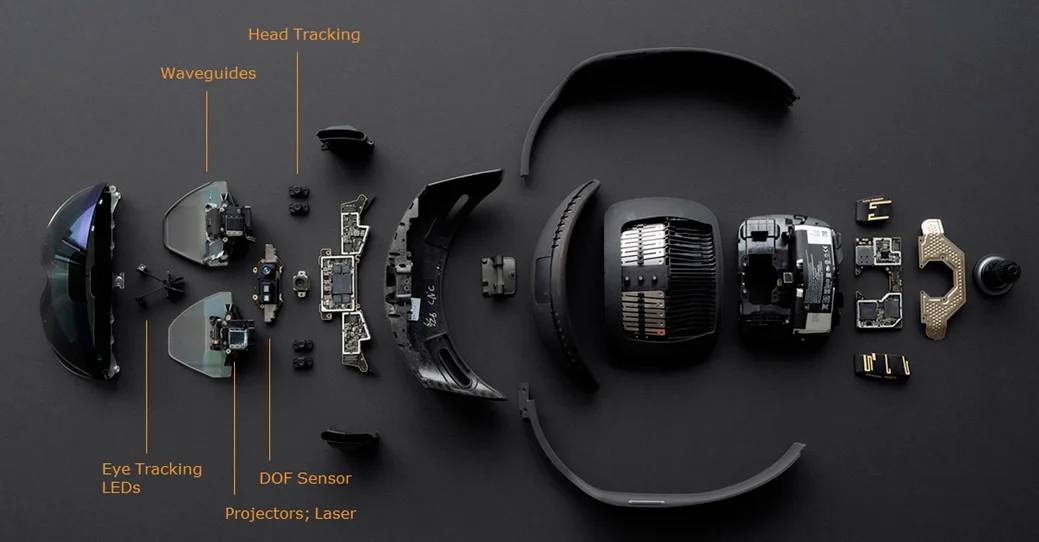
Representative head-mounted AR devices include Microsoft HoloLens, Magic Leap, and Meta 2. These devices enable users to view virtual displays anywhere and interact with virtual objects in space. HoloLens hardware includes a holographic processing unit (HPU), projection optics (LCOS microprojectors and transparent holographic waveguides), cameras and sensors (multiple cameras, inertial sensors, ambient light sensors), storage, audio, and power components.
With devices like HoloLens, users can operate without keyboards or screens, performing 3D modeling and other tasks using mid-air gestures.
(b) Desktop VR and AR Devices in Education
Desktop systems such as the zSpace all-in-one VR education machine are used in schools. zSpace provides educational content across grades and subjects and allows teachers to develop custom lesson materials by importing 3D models and multimedia resources. Users can view 3D effects with tracked or non-tracked glasses and interact using pens or additional cameras to project augmented 3D images onto tablets or displays.
(c) Hand-held VR and AR Devices in Education
Hand-held AR typically combines mobile devices with apps. Many educational AR apps and AR-enabled books use the phone camera to overlay virtual characters and content on printed pages or real scenes. These apps provide educational resources such as safety education, popular science, literacy cards, and puzzles, making them suitable for child education. AR-enhanced books let students scan images to see animations or overlay downloaded AR resources onto the real world, creating immersive and engaging learning experiences.
3. Advantages of VR and AR in Education
(a) Support for Autonomous Learning
VR and AR resources can be stored on network platforms, desktop devices, mobile devices, and print. Students can access resources anywhere and anytime for self-directed learning. This supports review of missed content, flipped classroom models, and microlearning, enabling teachers to focus on targeted guidance rather than repetitive explanations.
(b) Provision of Realistic Contexts
Traditional classrooms rely on text, images, audio, animations, and video. Complex subjects—such as solid geometry, celestial mechanics, magnetic and electric field lines, microscopic particle structures, and cellular biology—are difficult to explain verbally. VR and AR provide three-dimensional visualization that makes abstract concepts tangible, aiding understanding and memory.
(c) Increased Student Engagement
VR and AR integrate visual, auditory, and haptic senses, offering immersive and interactive experiences that stimulate learners' motivation. These technologies provide opportunities for observation, manipulation, and collaborative learning, promoting cognitive processing and deep understanding. Novel and engaging formats help students retain knowledge longer than rote memorization.
(d) Promotion of Resource Equity
China is geographically vast with significant regional disparities in educational resources. AR and VR can help mitigate imbalances by enabling high-quality instruction to reach remote areas. Expert teachers from resource-rich regions can deliver lessons through virtual platforms, improving resource allocation and supporting educational equity and poverty alleviation efforts.
4. Challenges in Educational Deployment
Although VR and AR can transform teaching, their adoption is still in early stages and faces challenges in technology, content development, teaching integration, and widespread deployment.
(a) Simulator Sickness
Users sometimes experience dizziness when using VR devices. Causes include insufficient realism in current technology, mismatches between perceived and actual motion, UI interfaces ported from PC that do not match VR interaction patterns, and frame latency that lags head movement. These factors can cause discomfort.
(b) Shortage of Educational Content
The VR/AR industry is nascent, with incomplete hardware and software ecosystems and limited development talent. Many schools lack devices, and many teachers have not yet learned how to use or develop VR/AR teaching materials. Shortage of curriculum-specific resources for primary and secondary education is a major barrier to broader adoption.
(c) Emphasis on Form Over Pedagogical Content
Some VR education platforms merely layer 3D videos or game-like environments over existing textbooks without improving the pedagogical content. Students may enjoy immersive interaction, but core explanations remain unchanged and do not become more vivid or targeted. Such implementations risk creating "pseudo-VR classrooms" that prioritize novelty over learning outcomes.
(d) Cost and Technical Limitations
High R&D costs and limited sales volumes have kept device prices high, making procurement difficult for many schools. Some specialized platforms and devices have historically been expensive. VR software often has strong domain-specific language, limited portability, and usability challenges. Hardware constraints, 3D modeling complexities, and integration with AI and big data remain areas for improvement, constraining large-scale adoption in primary and secondary education.
5. Outlook for VR and AR in Education
(a) Impact on Future Teaching Models
As cloud computing, fog computing, IoT, "Internet+", big data, and AI progress, VR and AR integrated with AI, data analytics, and IoT will gain new capabilities. Forecasts have suggested increasing enterprise experimentation with VR and AR in marketing and that large-scale consumer and enterprise adoption will grow significantly, with many people regularly accessing VR/AR applications and content.
Improvements in device performance and cost reductions will enable more educational investment and richer teaching resources. The immersive, interactive, and hybrid virtual-real capabilities of VR and AR will change both teaching and learning methods, potentially disrupting traditional education.
(b) Improvements in Teaching Efficiency
VR and AR enable personalized, autonomous, and experiential learning, allowing students to receive instruction tailored to their needs and to interact with virtual tutors. AR can render static text and images into interactive 3D models that simplify complex concepts and visualize micro-scale content, thereby improving comprehension and retention. These technologies can significantly enhance teaching effectiveness, student motivation, and learning efficiency.
(c) Promotion of Educational Innovation
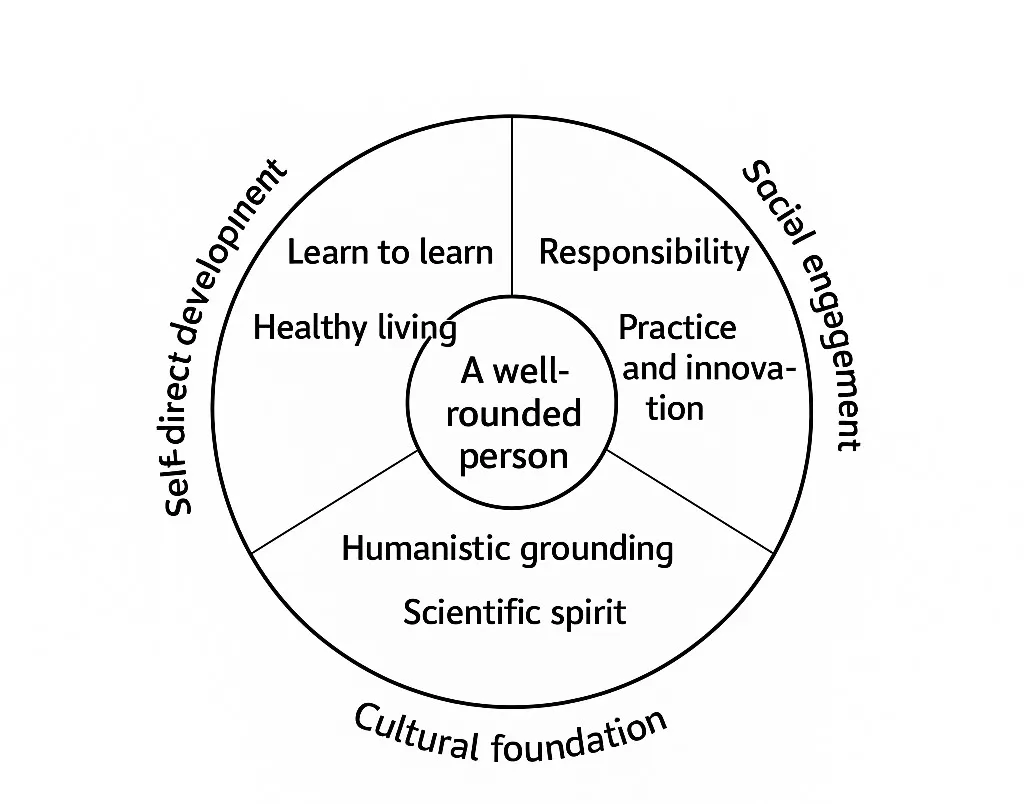
VR and AR provide diverse digital content and contextualized learning environments, enhancing students' presence and immersion. They facilitate cross-time and cross-space interactions, strengthen hands-on skills, and foster innovation and inquiry. As convergent technologies, VR and AR support maker education and STEAM learning by enabling hands-on exploration, interdisciplinary design, and collaborative creation, thereby cultivating core competencies such as practical innovation.
6. Conclusion
Artificial intelligence, big data analytics, and virtual education are identified as major technological directions shaping the future. VR and AR will increasingly integrate AI, cloud computing, big data, and mobile technologies. Their development in education will extend beyond being tools to foster new teaching models and methods. Widespread application of VR and AR in classrooms can support initiatives to develop future schools and smart classroom reforms. By merging virtual objects with real environments and providing rich interactive experiences, VR and AR offer new media and learning experiences that facilitate mobile, autonomous, project-based, and maker learning. As carriers for maker and STEAM education, these technologies help students develop core competencies through inquiry, interdisciplinary collaboration, teamwork, and innovation, contributing to future educational transformation.