ALLPCB


Introduction
A VR headset has two critical components: a display that shows the virtual world, and a set of lenses positioned in front of that display. Why are these lenses important, and how do they affect the virtual reality experience?
Lenses
The first relevant property of a lens is its refractive index, which indicates how much a material bends light. This effect occurs because light slows down when it enters a material; the greater the speed reduction, the more the light is bent. Common examples include refraction in water, plastic, and glass, while air has a relatively low refractive index.
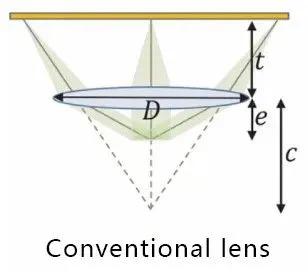
Light refraction depends on: 1) the material's refractive index and the lens shape; 2) the time light spends inside the lens, or more precisely the lens thickness; and 3) the wavelength of the light (color). The last factor leads to chromatic aberration. A prism, for example, separates different colors because the lens bends different wavelengths by different amounts.
Other issues include spherical aberration, which causes different parts of an image to focus at different points. That means if you want the image center to be sharp, the edges may appear progressively blurred. The eye or camera center can be selected so that the focal region is sharpest at that point, with surrounding areas becoming less sharp.
There is also pincushion distortion, often encountered when lenses are adjusted to correct chromatic and spherical aberrations. This distortion can stretch or compress a grid of straight lines in the final image.
Optical Lenses and Virtual Reality
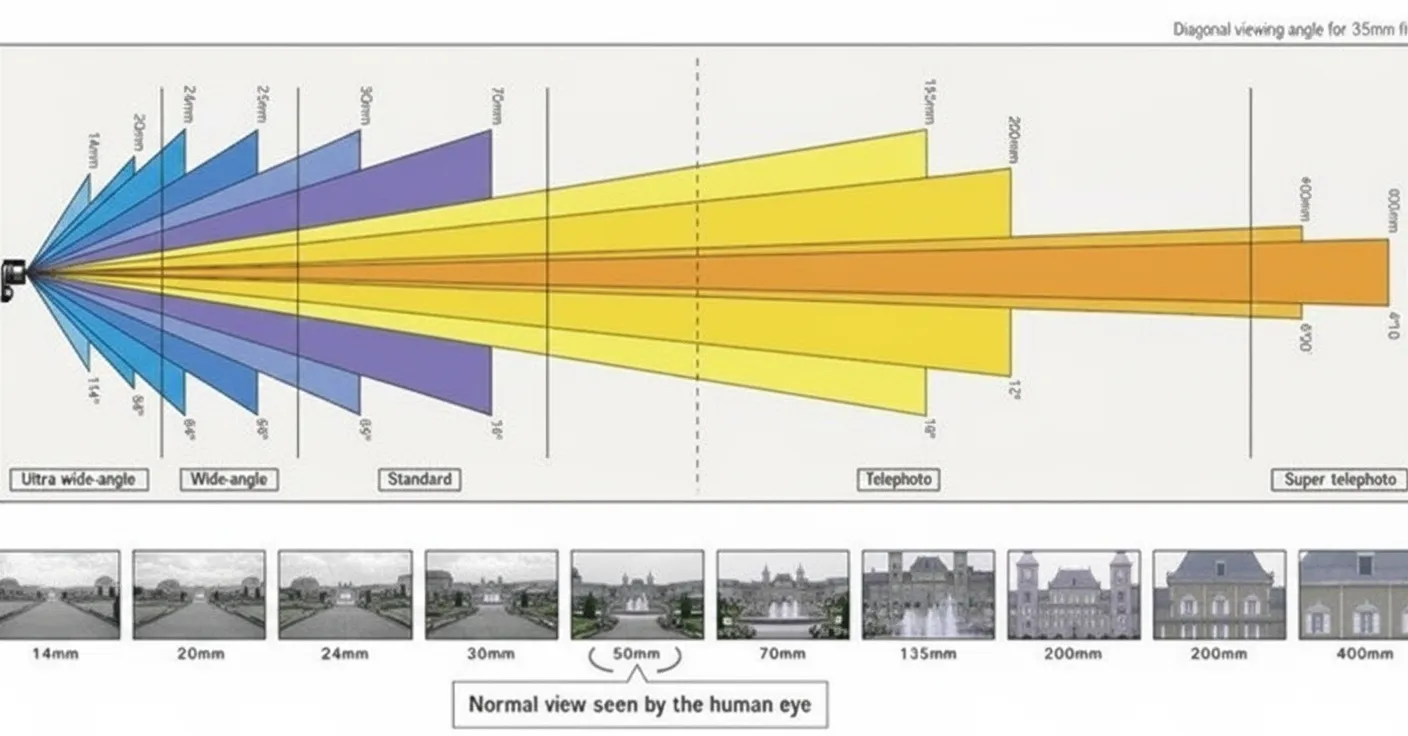
When considering lenses and their impact on VR imagery, the display size is a primary factor. A larger headset display gives a wider field of view, but it also adds weight and bulk. One way to address weight and size is to place the screen closer to the eyes. This has two advantages: you do not need as large a display to achieve a wide field of view, and the closer display reduces the moment about the nose, making the headset feel lighter. However, the human eye cannot comfortably focus on objects that are too close, which limits how near the display can be positioned.
Current VR displays typically extend about 7 inches (18 cm) diagonally or less, which yields a relatively limited field of view. The result is that the virtual world is viewed through a narrow window, similar to having your peripheral vision partially blocked. The usual solution is to place a lens or a stack of lenses between the face and the display to bend light and provide a wider apparent field of view. Essentially, these lenses act like magnifiers to produce a comfortable viewing experience with the display located close to the eye.
However, introducing lenses to expand a small field of view introduces new optical problems related to the aberrations described above. Camera lenses solve this by using complex multi-element lens assemblies that combine distortions to cancel out many aberrations and deliver a clean image. The downside is added weight, length, and cost.
To address those trade-offs, many VR headsets use Fresnel lenses, as seen in designs such as HTC Vive and Oculus Rift. Fresnel lenses are relatively thin and feature concentric grooves designed to bend light differently depending on where it strikes the lens. Properly designed Fresnel lenses can help mitigate some chromatic aberration compared with a single thick lens, reducing the need for multi-element camera-style optics.
Fresnel lenses, however, do not solve all issues. While they provide a wide field of view and reduce some chromatic effects, they do not fully correct pincushion or other field distortions. The typical approach for modern VR systems is to apply software corrections: the rendered image is pre-distorted in the opposite direction of the lens distortion so that, after passing through the lenses, the perceived image appears correct. For example, pincushion distortion is removed by applying an inverse distortion warp to the image before display.
Current State and Future
Fresnel lenses offer a practical compromise for current VR headsets, but they are not a complete solution. They cannot eliminate all aberrations, and they do not produce a perfectly focused image like a complex camera lens assembly. This contributes to the blur seen in some low-resolution VR systems. To improve effective resolution and magnification, various manufacturers are developing different lens designs. Improved Fresnel and hybrid lens designs from recent headset iterations have shown better effective resolution and allow displays to be placed closer to the eye. Overall progress tends toward smaller, thinner, and lighter lenses.
As displays are placed closer to the eyes to cover the full ocular field, optical distortion becomes a central engineering challenge. Lens manufacturing precision, improved molding techniques, and automated production are among the industry approaches to enhance imaging quality. At the same time, interest in the metaverse and immersive applications is driving continued development in VR optical technologies.
Software: Zemax Editions and Capabilities
Zemax is available in three editions. Professional includes sequential optical system design, non-sequential optical system design, polarization ray tracing, and physical optics analysis. Premium adds features for advanced professional users, including ParkLink, AssemblyLink, a light source model library, advanced ray analysis, and fast ray tracing. Enterprise includes all Premium features plus additional modules.
Zemax also offers subscription licensing so users can pay for access based on time periods.
Applications
- Microscope, telescope, eyepiece and other lens design
- Camera lenses, various zoom lenses, mobile phone camera design, night vision systems
- Secondary optics for LEDs, chromatic analysis and color mixing optimization
- Automotive lighting, LCD backlight and LED lighting system optimization
- Light guides, fiber connectors, active and passive devices, fiber coupling
- DVD/VCD laser read/write heads, interferometers, holography
- LCOS, DLP and other projector optical engine design
- Physical optics BPM calculations, polarization optics
- Laser optical systems, beam expanders, F-theta scanners, beam-shaping mirrors
- RCWA micro- and nano-grating design (microstructures, volume holograms)
- AR and VR optical design, HUD design
Technical Capabilities
- Geometric optics: imaging lens design, image quality analysis, thermal environment analysis, manufacturing tolerance analysis
- Physical optics: laser system and component design and analysis, coherent diffraction analysis, fiber coupling
- Illumination system design: lighting system design, opto-mechanical design, dynamic links to 3D modeling software, light source libraries
- ZPL language extension: built-in scripting language for custom extensions
- Integration: interoperability with C, C++, Python and other programming languages