ALLPCB


Overview
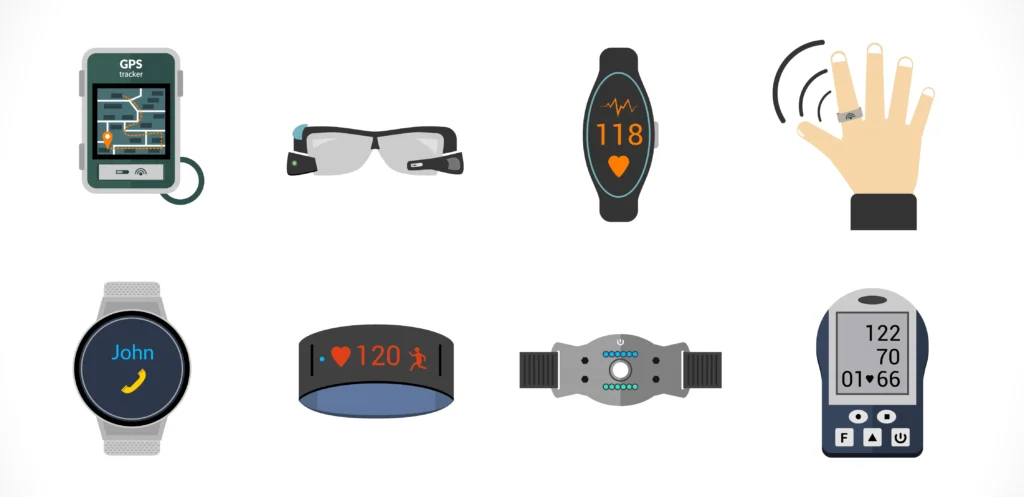
I previously wrote about wearables and how to make them more capable while reducing size. Innovations in battery charging, low quiescent-current operation, smart power management, and high integration are enabling wearables to become smaller, more feature-rich, and longer-lasting.
Charging Small, Low-Capacity Batteries
Because wearables must use small, low-capacity batteries as the power source, charging them is challenging. For example, when using batteries of different capacities such as 40 mAh, 100 mAh, or 200 mAh, and when targeting fast charge and long cycle life by charging at 0.5C, 1C, or 2C, the required charging current varies widely. The key is to include a programmable fast-charge current in the design. The bq25120 battery-management solution provides charge-current settings from 5 mA to 300 mA to support multiple battery and charging-system configurations.
Precision Charge Termination
While fast charging is important, delivering as much energy as possible into the battery is also critical. To achieve this, charge termination must be very precise and capable of reliably terminating below 1 mA.
Low Quiescent Current Power Conversion
The battery must power the microcontroller (MCU), radio, and sensors between charges. To maximize battery life, pay close attention to components with low active power and extremely low shutdown power. Because the buck converter powers the MCU and must run continuously, it is the most important device for achieving low quiescent current (Iq). Consider solutions that integrate ultra-low-current DC/DC converters, such as the bq25120. It can enable a 1.8 V rail and achieve 700 nA Iq while powering an MCU with no load. If an additional low-Iq buck is required, the TPS62743 is a suitable option.
Load Switching and Shutdown Leakage
Some sensors and radios are not used continuously and can be turned completely off, which requires a low-leakage shutdown mode. The bq25120 integrates a load switch that can power devices down when not in use, and it can be configured as a regulated LDO output when needed.
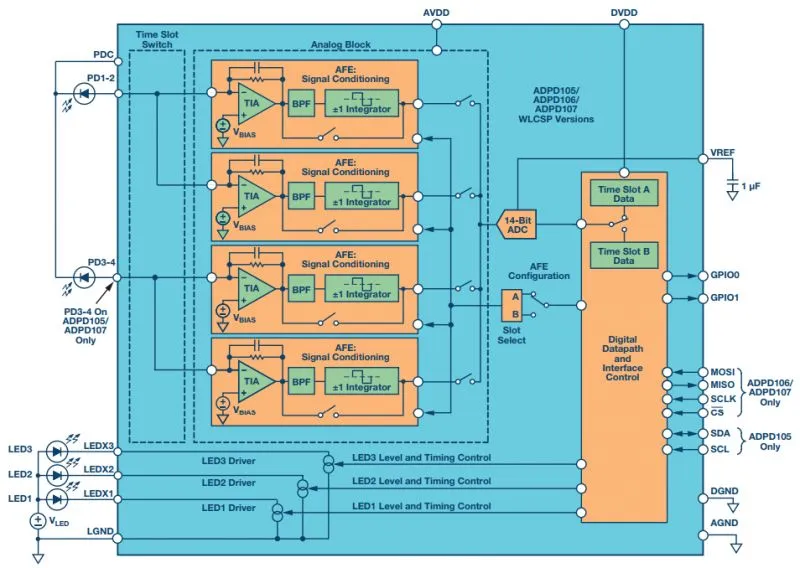
Boost Converters for Displays and HRMs
Some wearables require boost converters for displays or heart-rate monitors (HRM). Different displays have different voltage requirements, so the most flexible approach is to use discrete components for boost conversion. For OLED displays, consider devices like the TPS61046, which provides a 12 V rail in a small package with low Iq. For LCDs, e-ink displays, or HRMs, the TPS61240 is well suited to provide a 5 V rail. HRMs require 5 V to drive LEDs, and the TPS61240 includes an ultralow-leakage disconnect switch that can fully turn the LEDs off when not in use.