ALLPCB


Overview
Combined with concepts such as wearable electronic devices, telemedicine, and medical IoT, wearable sensors can track diverse biophysical activities including pulse, temperature, and respiration. These sensors enable real-time health monitoring without causing discomfort or interfering with normal activities, which can improve user adherence and clinical care. Compared with wearable sensors that focus on biophysical vital signs, wearable biochemical sensors for sweat or wound exudate can monitor molecular biomarkers on site, providing unique molecular-level insight into a user’s health status.
Fully integrated devices that perform all functions without external accessories are considered an ideal target in modern device design. Applying full integration to wearable biochemical sensing enables wireless, noninvasive, continuous, and multiplexed on-site molecular monitoring of biomarkers in sweat or wound exudate for routine health assessment and management. However, no previous study has demonstrated a dual-function fully integrated wearable platform or evaluated its use for dynamic on-site health monitoring and personalized intervention. Monitoring both sweat and wound exudate in situ with a single dual-function integrated platform is challenging because the two biofluids have significantly different physiological environments, which can cause different signal drift for the same biomarker.
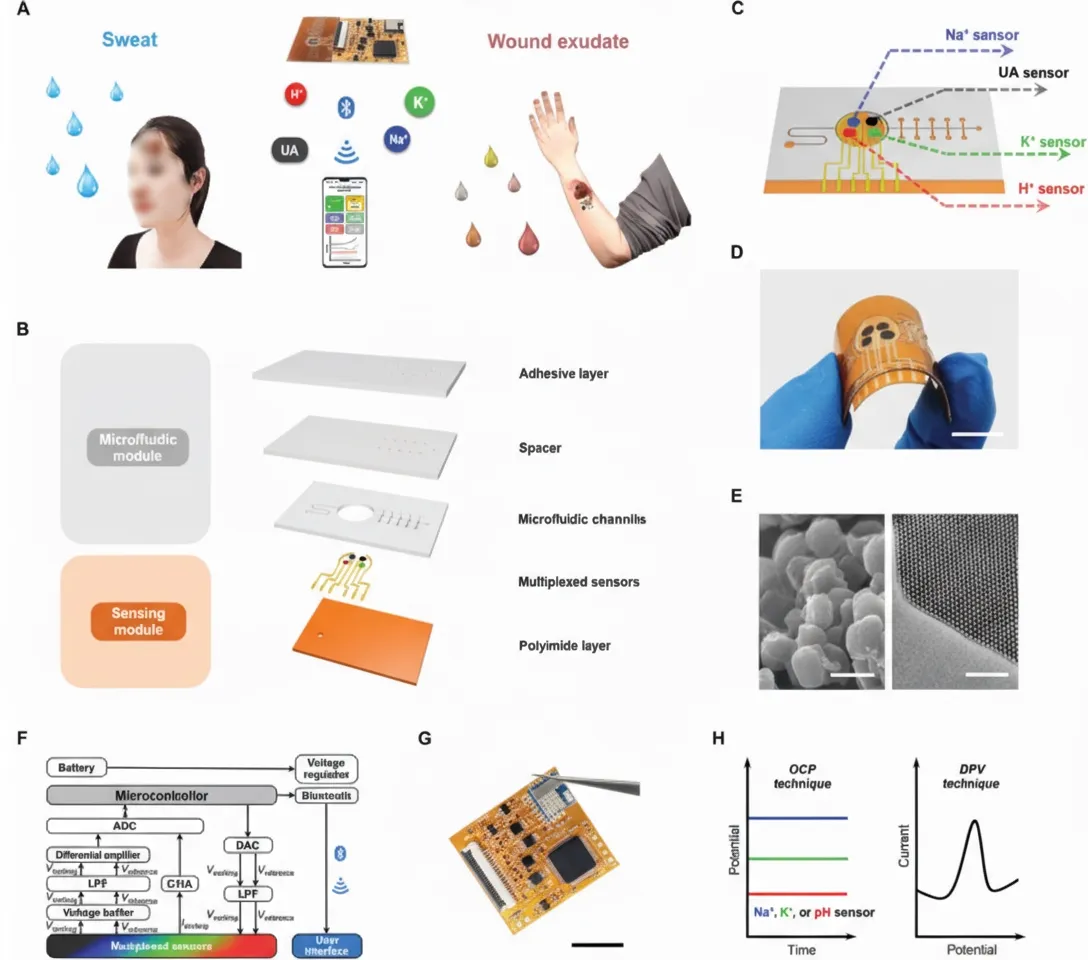
Researchers at Northeast Normal University in China proposed a single dual-function fully integrated wearable tracker for wireless, real-time, dynamic on-site monitoring of multiple biomarkers in epidermal sweat and wound exudate.
Design and Experimental Validation
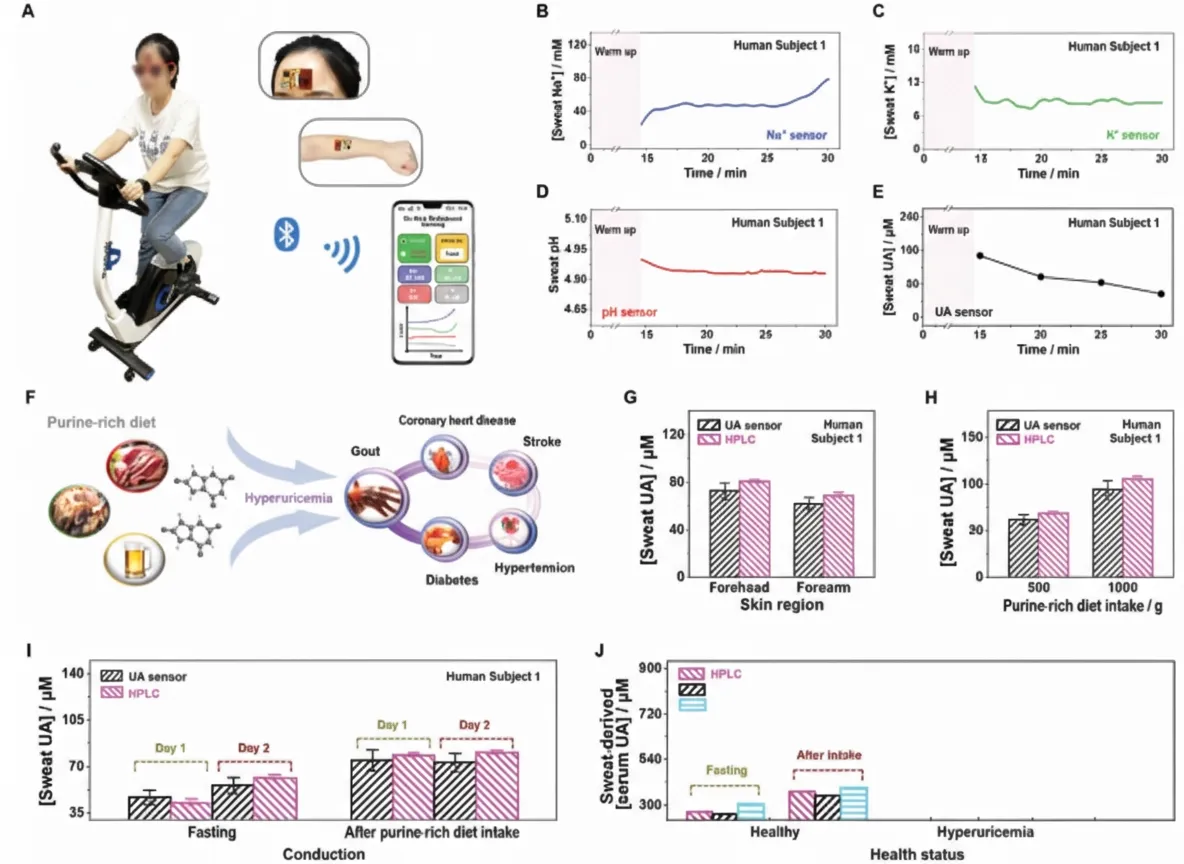
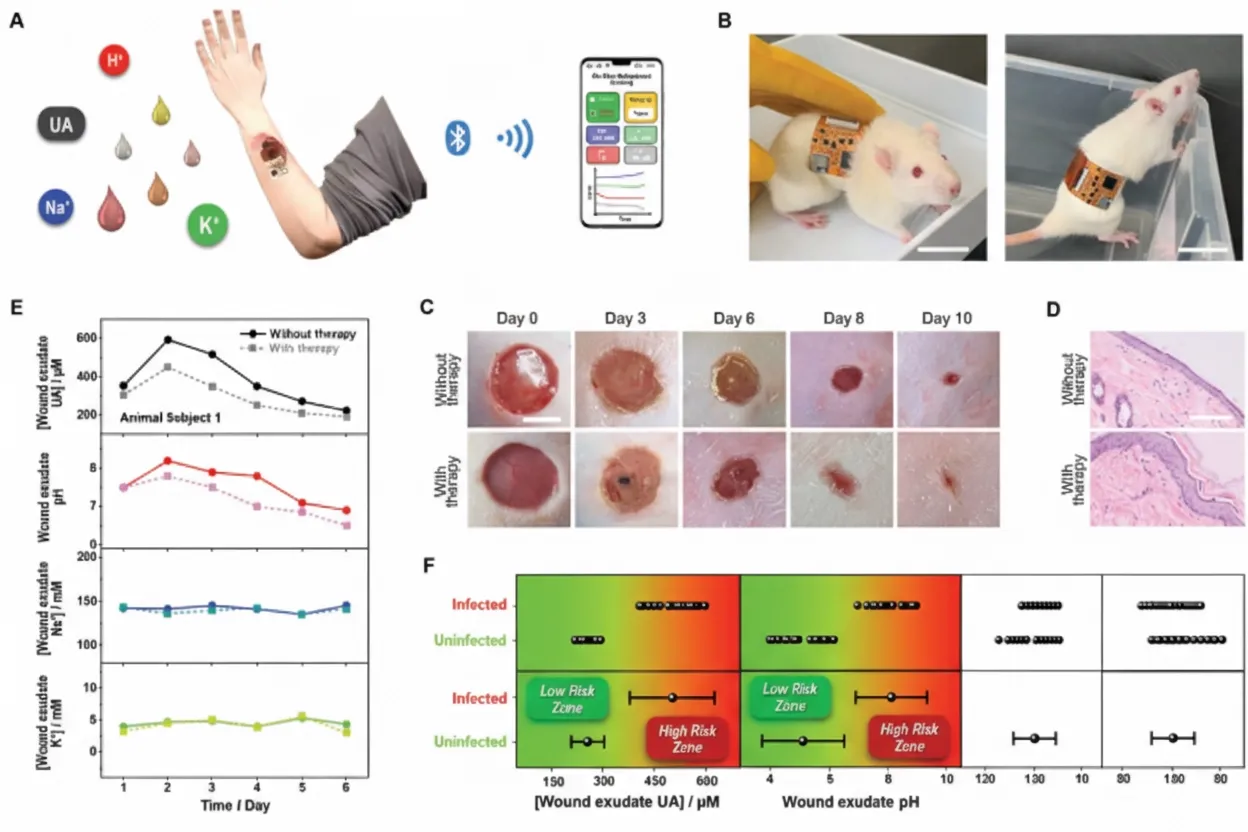
Considering that electrolytes in sweat or wound exudate (such as Na+, K+, and H+) and metabolites (such as uric acid, UA) may relate to health or wound status, the team integrated microfluidic, sensing, and electronic modules to dynamically track Na+, K+, pH, and UA in sweat during subject exercise and to monitor wound exudate during healing. They evaluated the suitability of the device for noninvasive hyperuricemia management using a purine-rich intake test in subjects with high uric acid and healthy controls, and they performed wound management on subjects with infected wounds in comparison with medical treatment.
Key Advantages
As a wearable bioelectronic device, the proposed dual-function fully integrated tracker offers several advantages:
- (i) Compared with non-integrated devices that include limited modules (for example, separate microfluidic or sensing modules), the fully integrated tracker provides greater practicality by combining all necessary functions in one platform.
- (ii) The unique dual-function capability allows a single sensor to analyze the same biomarkers in both epidermal sweat and wound exudate, simplifying the design compared with using two separate sensors.
- (iii) Simultaneous measurement of sweat or wound exudate Na+, K+, pH, and UA yields a comprehensive and information-rich view of body or wound status that individual species in either biofluid cannot provide alone.
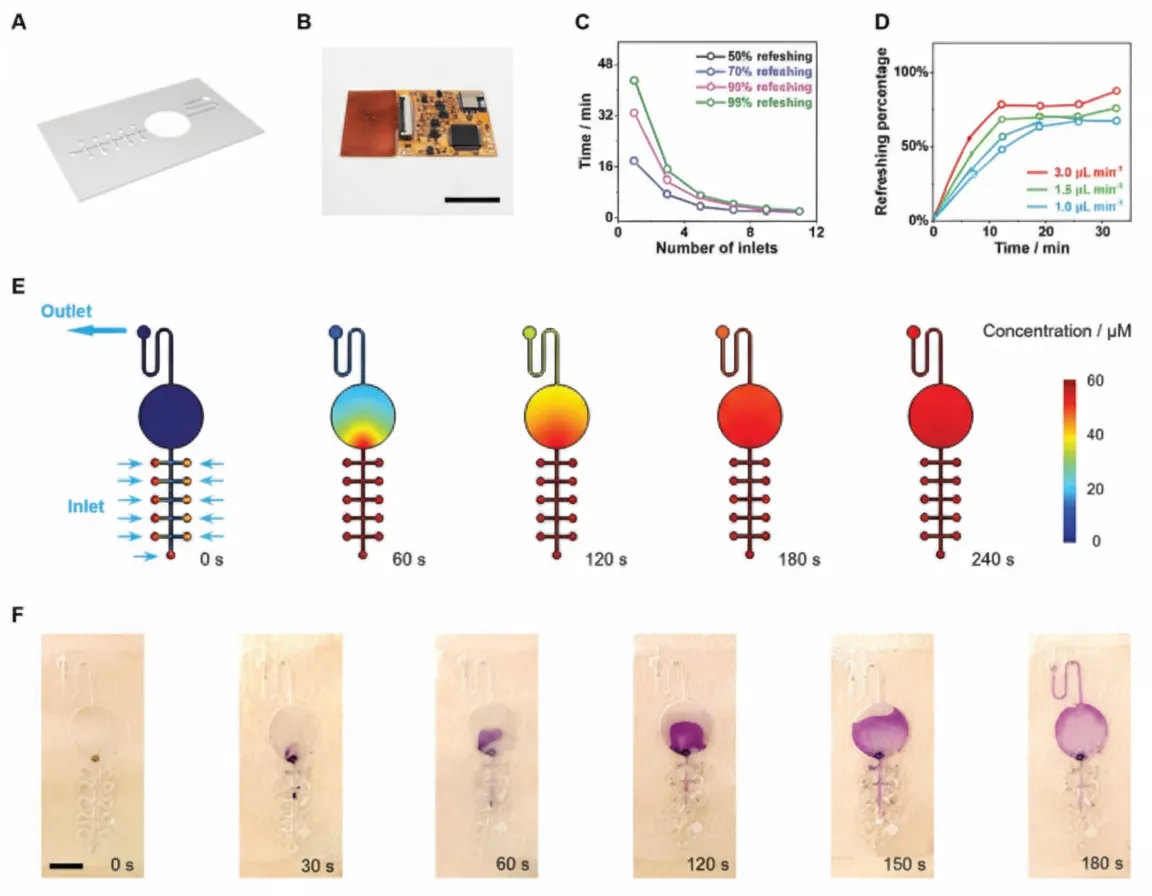
- (iv) The specially designed microfluidic module supports efficient surface biofluid sampling, storage, and discharge, ensuring effective dynamic in situ multiplexed analysis within the sensing module.
- (v) Using HOMC with unique structural features (uniform and highly ordered pore size, large specific surface area, mesoporous structure, and high density of defect sites) as the electrode material for the UA sensor induces specific electrochemical reactivity, enabling highly sensitive and selective UA responses in both sweat and wound exudate.
- (vi) Monitoring UA in biofluids is clinically important. Serum UA is a key biomarker for hyperuricemia, which is a risk factor for gout, coronary heart disease, stroke, and hypertension. Compared with invasive serum UA tests, the noninvasive sweat UA approach offers a more convenient route. The introduction of Na+ and K+ co-assisted real-time calibration in wearable sweat UA monitoring greatly improves accuracy for raw sweat UA measurements and noninvasive hyperuricemia management. Wound exudate UA is considered an important indicator of wound severity; incorporating pH-assisted real-time calibration into wearable wound UA analysis improves accuracy and can support effective wound management.
The combination of these features suggests strong potential applications for the dual-function fully integrated wearable tracker in noninvasive personalized fitness monitoring, individualized diagnostics, and tailored therapy.