ALLPCB


Overview
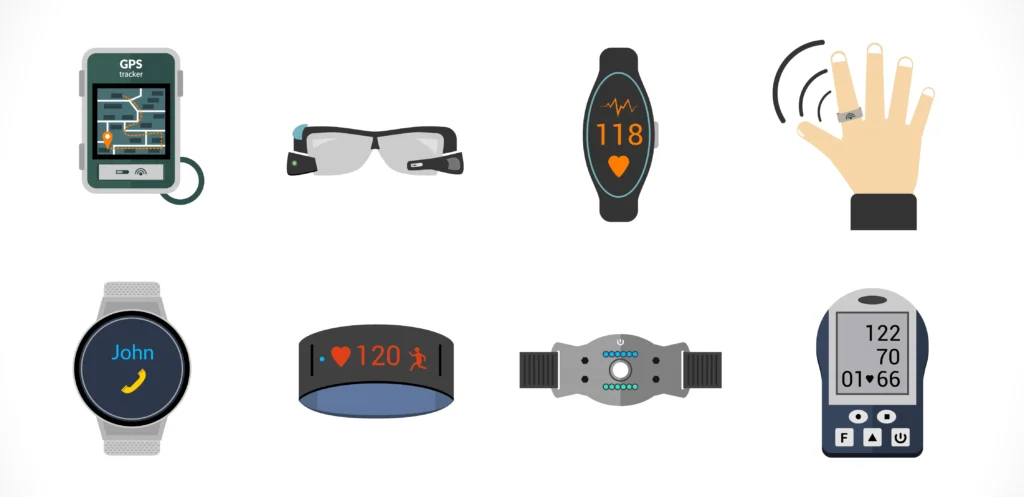
Wearable devices have attracted attention for portability and potential utility in monitoring healthcare biomarkers. Microneedles (MN) can penetrate the skin barrier to access interstitial fluid (ISF) and represent a minimally invasive approach for transdermal sensing and drug delivery. Microneedles have the potential to overcome limitations of conventional transdermal delivery, offering an alternative route to oral and injectable administration.
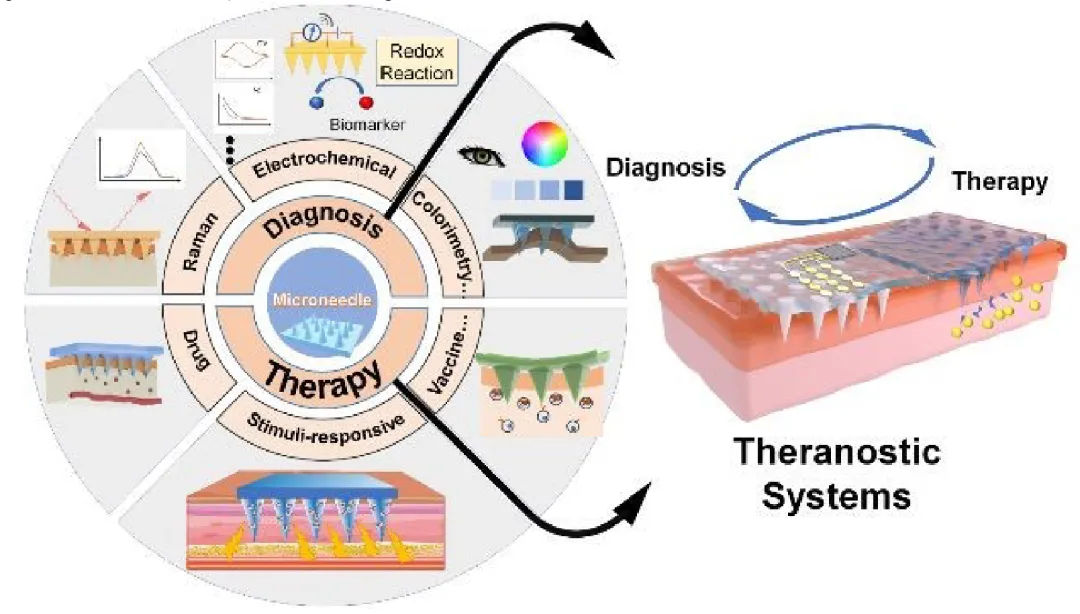
Advantages of Microneedles
The authors discuss several advantages of microneedles as emerging and valuable tools in biomedical systems:
- Microneedles provide a patient-centered alternative to conventional drug administration, reducing the need for injections and improving treatment adherence.
- They expand opportunities for safer, more effective vaccination strategies.
- Microneedles support the development of point-of-care testing (POCT). Microneedle-enabled diagnostic devices allow minimally invasive, near-real-time detection of biomarkers, enhancing healthcare monitoring.
- Combining microneedles with personalized medicine opens avenues for individualized treatment strategies.
- Microneedle-based tissue engineering enables precise transdermal delivery of cells and growth factors, which can promote wound healing and tissue regeneration.
Classification, Design, and Fabrication
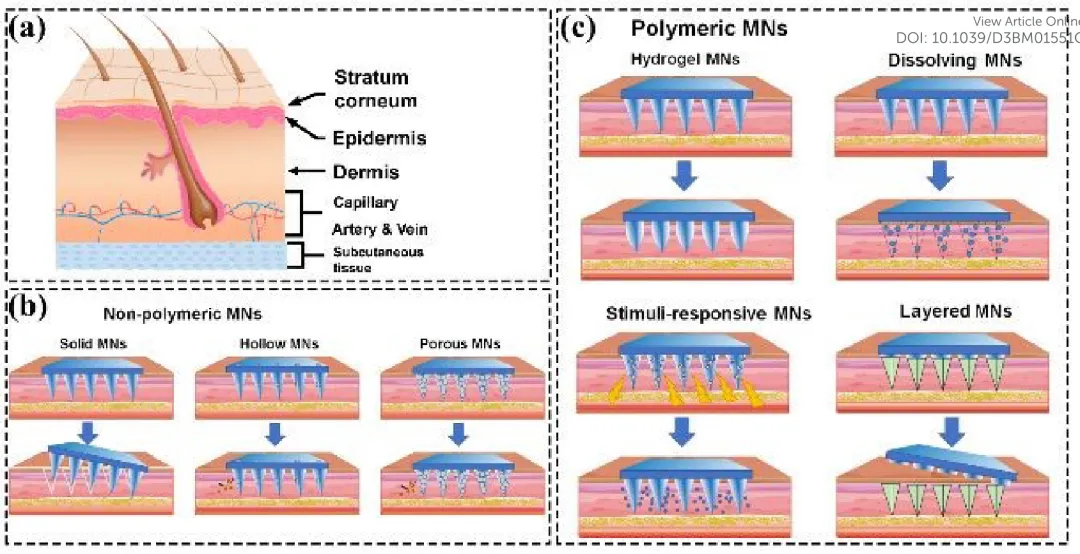
Microneedles are classified by the presence and type of cavities: hollow microneedles, solid microneedles, coated microneedles, and porous microneedles. The authors summarize classification, geometric design considerations, and fabrication methods for microneedles.
Sensing Applications
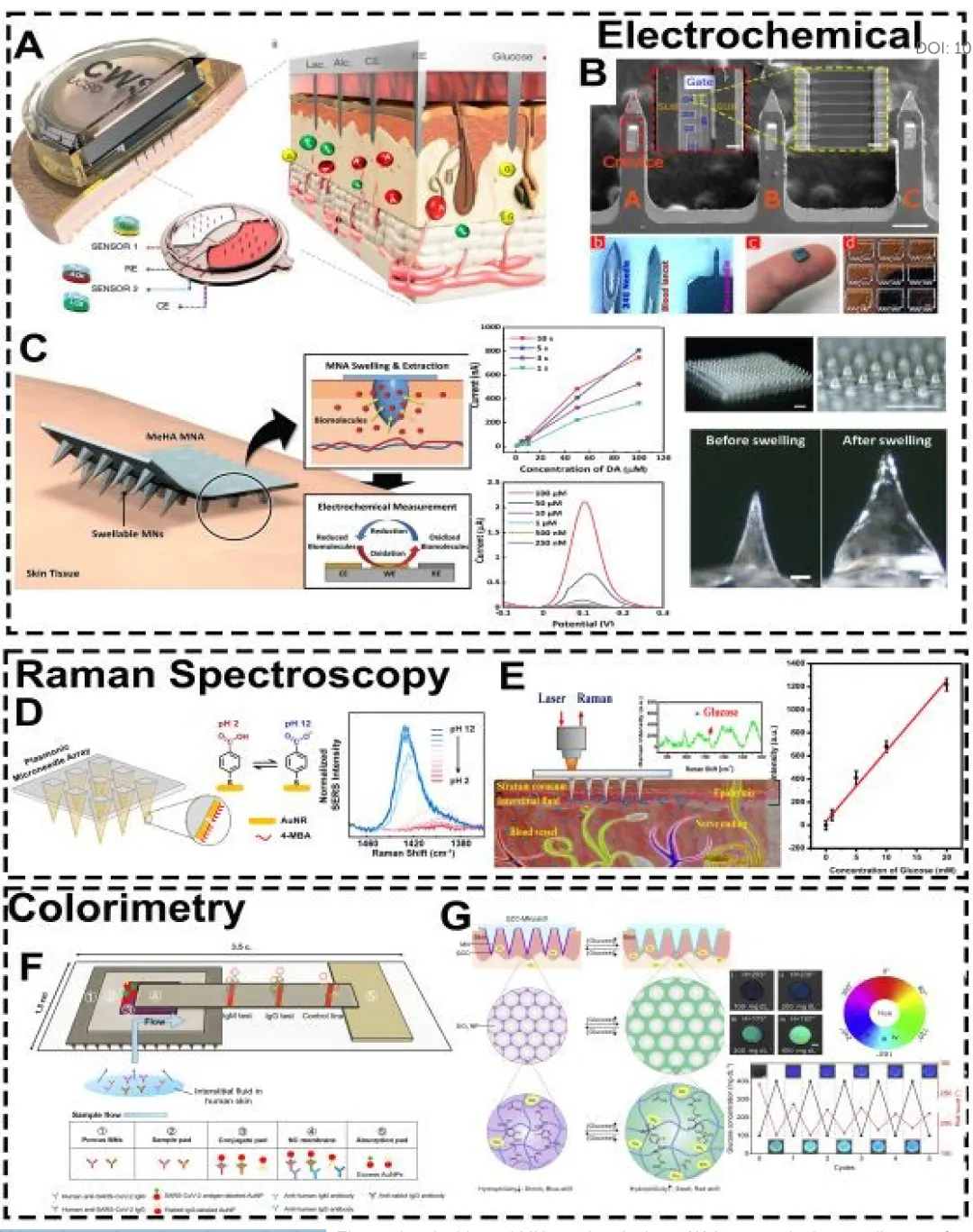
The review outlines recent progress in microneedle-based sensing. Microneedles provide a fast and direct means to obtain biomarkers from interstitial fluid and derive diagnostic information. Sampling interstitial fluid from the dermis using microneedles involves three steps: ISF flow toward the microneedle, distribution of ISF, and transport of ISF through the microneedle to the skin surface.
Transdermal Drug and Vaccine Delivery
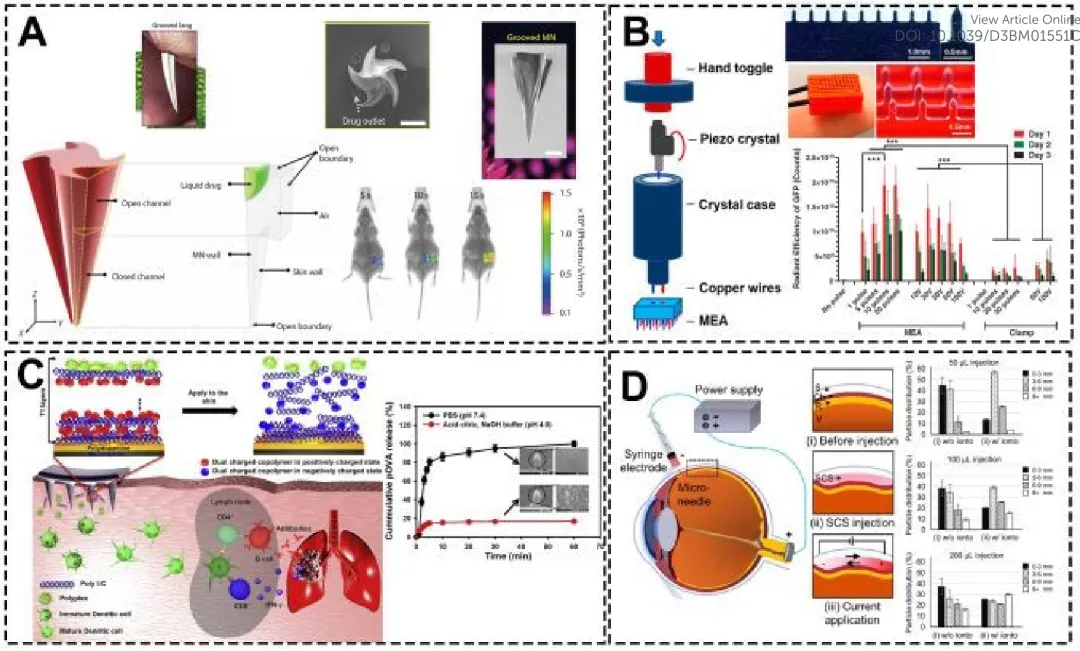
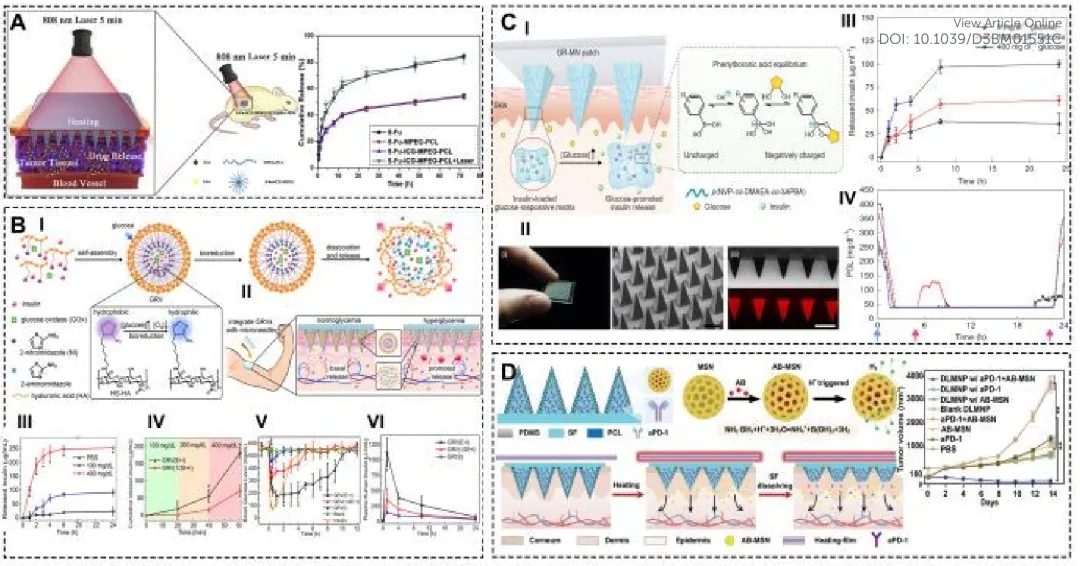
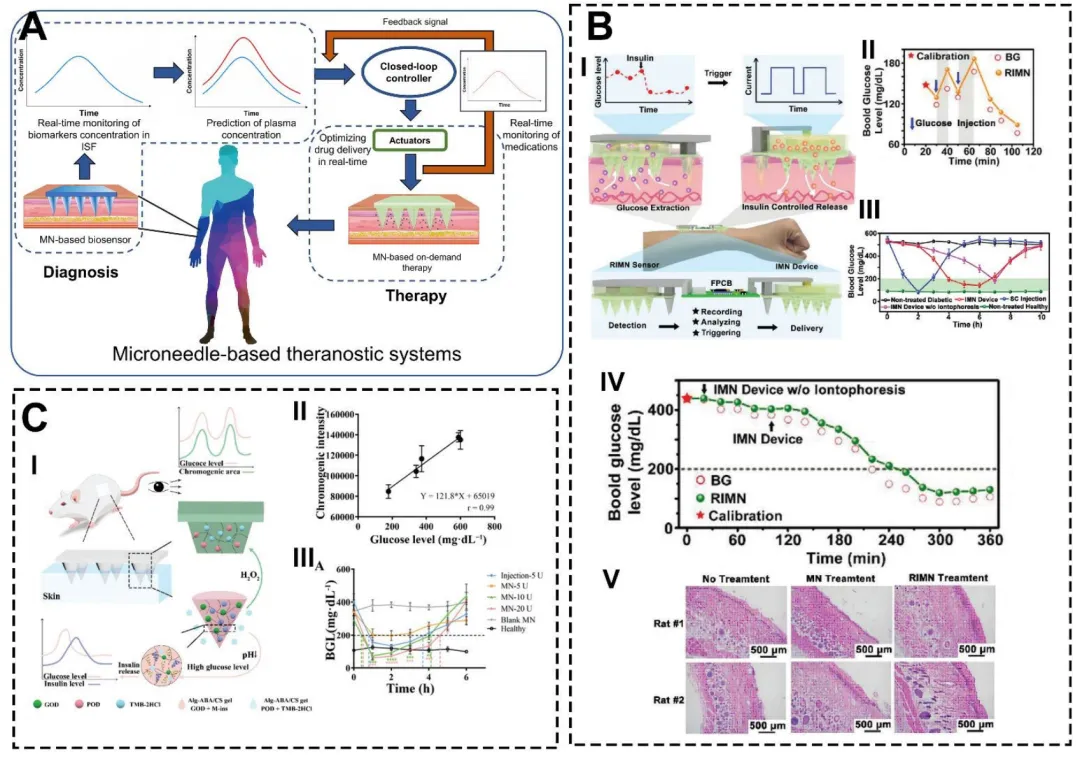
Transdermal drug delivery (TDD) is widely accepted as an alternative to subcutaneous injection because it can be painless and minimally invasive. Microneedles can breach the stratum corneum to form microchannels and enhance skin permeability to large molecules. Consequently, beyond ISF extraction and biomarker analysis, microneedles are used for controlled or autonomous transdermal delivery of vaccines and drugs that cannot be delivered via conventional transdermal or other routes. The authors summarize representative studies on microneedle-based drug and vaccine delivery, stimuli-responsive microneedles, and pioneering microneedle-based biomedical therapeutic systems.
Next-Generation Wearables and Key Directions
Major development directions for microneedle-based healthcare research and next-generation wearable devices include:
- Developing microneedles that use stimuli-responsive materials to control drug release.
- Integrating microneedles with advanced biosensing and diagnostic platforms, such as wearable devices and point-of-care testing systems.
- Attempting to establish therapy-sensing-behavior systems to enable personalized treatments and improve patient quality of life.
Challenges and Technical Considerations
To realize the diagnostic and therapeutic potential of microneedles, several challenges must be addressed. Achieving reliable skin penetration and effective needle-tissue coupling is a major obstacle because skin elasticity, thickness, and individual variability affect penetration depth and completeness. Optimizing microneedle geometry, improving fabrication methods, and developing universal applicators may be necessary to ensure consistent and effective skin penetration.
For microneedle-based diagnostics, reproducible insulation, packaging, and sensor modification protocols are technical challenges. Another barrier in microneedle sensing is managing biofouling and foreign body responses during prolonged operation on humans.