ALLPCB


Overview
Bluetooth Low Energy (BLE), also called Smart Bluetooth, has become a key enabler for connected wearables, smart appliances, and proximity tags. The short-range wireless standard aims to reduce energy consumption by enabling faster connection establishment so that smaller amounts of data can be transferred with lower latency.
BLE targets roughly one tenth of the power consumption of classic Bluetooth, which requires significant engineering to apply this radio link to compact devices and designs (see Figure 1).
BLE uses a 1 Mbit/s link bitrate and an application throughput around 800 Kbit/s. The lower bitrate is offset by reduced latency: connection events can be as short as 6 ms compared with 100 ms in classic Bluetooth. These changes allow BLE to expand beyond smartwatches and bands into a broader set of wearables and IoT applications.
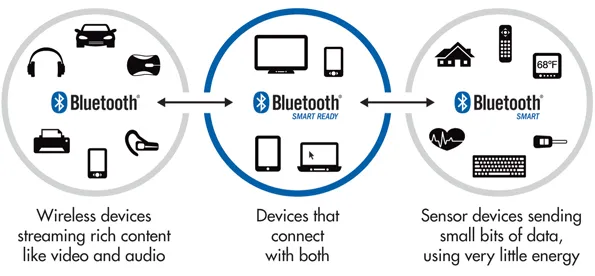
Figure 1: Bluetooth Low Energy has evolved from earlier protocols to serve wearables and IoT devices. (Image source: Aislelabs)
Examples include wearable sensors in VR motion gaming platforms that use BLE links to stream low-latency data to wireless headsets, and hearing aids that use BLE for audio adjustments, alerts, battery monitoring, and tone control from smartphones.
BLE is also used for beacons, remote sensors, and wearable biometric passports, enabling mobile advertising, commerce, ticketing, access control, and other security-related applications. Smartphones and laptops with BLE can monitor the location, acceleration, and proximity of nearby tagged objects within ranges on the order of 5 to 30 meters.
The latest Bluetooth v4.2 specification allows more devices or "objects" to connect in dense environments and helps enable the next generation of wearable and IoT applications. Among other changes, it increases maximum data rate to 800 Kbit/s—roughly 2.6 times faster than earlier versions—allowing faster sensor logs and quicker firmware updates.
Simplifying BLE design
End-to-end BLE solutions that span silicon, protocol stack, and modules are bringing important improvements in connectivity, security, and power consumption. Given the challenges for IoT, security is a primary concern.
Bluetooth v4.2 introduces a range of security enhancements that make device tracking over Bluetooth more difficult. It adds authentication mechanisms similar to classic Bluetooth levels and only permits pairing when the connection is verified as secure.
It also supports automated pairing and dual-mode communication, which makes pairing in open modes easier while enabling higher data-transfer security in closed modes. Another key feature is that beacons or proximity tags must obtain permission from the device they intend to communicate with, balancing privacy and power efficiency.
These privacy and filtering features allow BLE chipsets to remain idle until a nearby trusted object is detected. New BLE subsystems consume incremental power and automatically turn off when idle, saving energy.
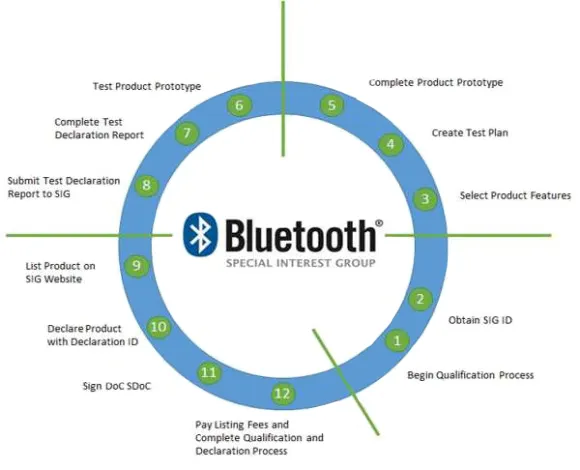
Figure 2: Highly integrated Bluetooth SoCs and modules enable rapid addition of BLE links to wearable and IoT designs. (Image source: Cypress Semiconductor)
Modern BLE chipsets can switch between multiple power modes—active, sleep, deep sleep, hibernate, and stop—to control consumption. For example, the Bluetooth chipset can coordinate with the CPU to enter deep-sleep while keeping the BLE link active.
In deep-sleep, a BLE chipset can draw under 500 nA while retaining data in memory. Hibernate and stop modes disconnect the link and allow the chip to reach nanoamp-level currents.
Development cost and PCB space are additional BLE design challenges. Single-chip Bluetooth SoCs and highly integrated modules compliant with the latest Bluetooth specification reduce board area, lower BOM cost, and cut development time.
Single-chip BLE solutions
From both asset and power-efficiency perspectives, multi-chip BLE designs are suboptimal. Ultra-low-power system-on-chip (SoC) solutions combine efficient processor architectures with multi-protocol radios to reduce cost, board area, and power consumption.
On these SoCs, an onboard processor manages control functions such as scheduling appropriate power modes. With sufficient memory, the SoC can run a full BLE protocol stack, including security stacks and multiple profiles. A single IC also provides storage for data and application code, eliminating the need for a separate microcontroller and avoiding the associated cost, power, and interface overhead.
Multi-protocol radios let designers optimize BLE links for critical data transfer while simultaneously supporting low-latency use cases such as 2.4 GHz proprietary audio streams. Improved signal performance and multiple transmission strategies help extend battery life while maintaining range.
For designers with limited Bluetooth or RF experience, integrated SoCs reduce common design challenges and simplify adding BLE to products. SoCs typically provide better sensitivity, greater range, and, importantly, automatic power management.
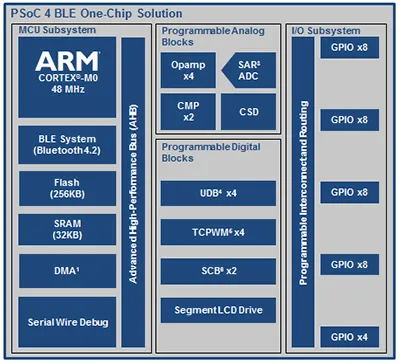
Figure 3: Cypress low-power Bluetooth SoC aimed at sensor-based wearables and IoT applications.
Cypress Semiconductor's PSoC 4 BLE chipset is an example. It integrates an analog front end, digital logic, a Bluetooth radio, and CapSense capacitive sensing. The chipset is based on an ARM Cortex-M0 processor and includes a free BLE protocol stack compatible with Bluetooth 4.2.
Cypress also provides module-based options built around the PSoC 4 to simplify design integration. EZ-BLE PSoC modules include the PSoC 4 BLE chip, antenna, crystal, and necessary passive components to create a plug-and-play Bluetooth subsystem.
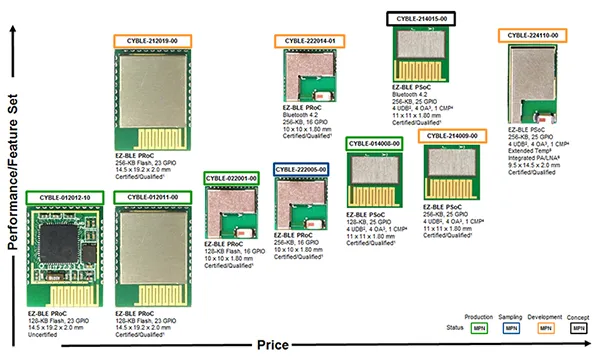
Figure 4: Cypress EZ-BLE modules are fully integrated, programmable modules with onboard crystal, trace antenna, breakout, and passive components to simplify design. Typical module size is 10 x 10 x 1.80 mm.
Evaluation boards allow engineers to develop on and assess EZ-BLE PSoC modules. With GPIO routed to components such as CapSense, LEDs, and switches, evaluation boards support rapid prototyping and include the PSoC Creator graphical design environment.
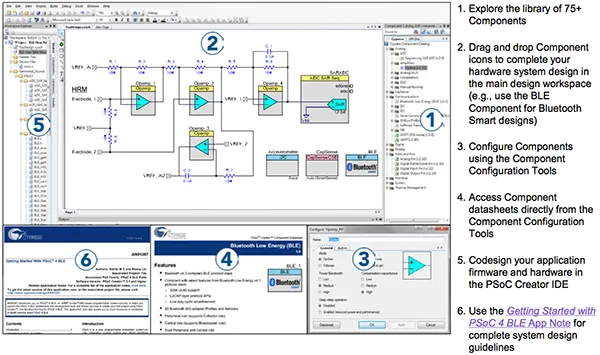
Figure 5: PSoC Creator helps accelerate design using drag-and-drop prebuilt components; this example shows a BLE heart-rate monitor with a custom analog front end.
The tool generates an application programming interface for each schematic component after graphical configuration. BLE components simplify stack and profile configuration.
Modules: complete BLE subsystem
SoC vendors such as Atmel, Cypress, and Silicon Labs also supply a range of modules that help designers. Modules require vendors to innovate on the IC and provide value in cost, packaging, and energy efficiency. For wearable and IoT products, BLE modules deliver a fully assembled hardware subsystem.
These modules include all hardware and firmware needed for BLE-based applications: a BLE SoC with antenna and interfaces for peripherals and sensors. Modules are prevalidated, letting designers avoid complex antenna design and certification steps.
Antenna handling and RF remain challenging because antenna placement and matching must be implemented for a specific location and output profile. Poor antenna placement on the PCB can severely degrade performance (radiated output and receive sensitivity), with direct impact on battery life.
Many BLE modules now integrate the RF front end, combining a chip ceramic antenna, low-pass filters, and matching baluns. Baluns convert between balanced and unbalanced modes for antenna matching, which reduces spurious emissions and harmonics and supports smaller wearable enclosures.
For example, Skyworks Solutions' SKY66111-11 front-end module (FEM) includes TX/RX and antenna switching, filtering, and amplification (see Figure 6). This FEM is commonly paired with radios from Nordic Semiconductor, Dialog Semiconductor, Texas Instruments, and others. The FEM removes connection losses to the host Bluetooth IC and reduces current consumption at +10 dBm transmit to around 10 mA.
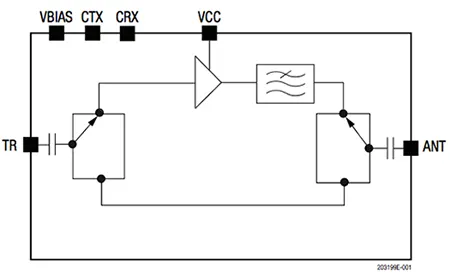
Figure 6: Skyworks Solutions' SKY66111-11 is a representative RF front-end module used to extend range and improve RF performance.
Cypress EZ-BLE module dimensions are typically 10 x 10 mm; a Skyworks FEM can add only 3.3 x 3.0 mm with about 20 pins. Operating voltage ranges are commonly 1.8 to 5 V with sleep currents below 1 μA. Care should be taken not to overdrive the input RF power to avoid switching overload; start around -20 dBm input power and increase gradually.
Silicon Labs' Blue Gecko BGM113 low-power module combines a 2.4 GHz Blue Gecko radio and an efficient chip antenna to minimize development time and effort. The module ships with a Bluetooth 4.1-compatible stack that is upgradable to 4.2. Silicon Labs also provides development tools such as an Energy Profiler and Packet Trace.
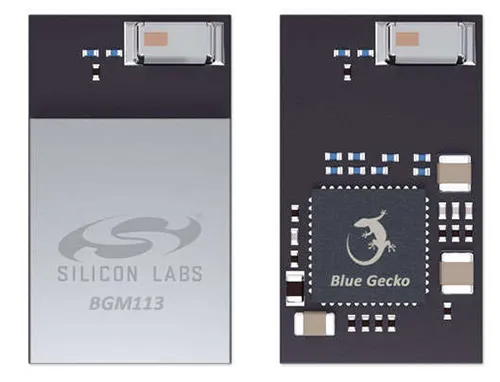
Figure 7: Silicon Labs' Blue Gecko BGM113 is a preassembled, tested platform with onboard stack, antenna, and certification files.
The BGM113 includes an on-module DC-DC converter and security features such as a hardware cryptographic accelerator and a true random number generator (TRNG).
Conclusion
In many cases, using integrated BLE modules and RF front-end modules is an efficient path to market. Designers, vendors, and manufacturers are providing supporting toolchains and ecosystems to accelerate development. For innovative wearables, connected home devices, and other IoT applications, careful consideration of layout, matching components, and software development enables reliable, low-power BLE designs.