ALLPCB


Background
The global medical electronics market was valued at about $3.0 billion in 2015 and is forecast to grow at a 5.4% compound annual growth rate to reach $4.41 billion by 2022. Key drivers behind this growth include population aging, the rising incidence of lifestyle-related diseases, increasing demand for personalized and easy-to-use healthcare devices, and the growing adoption of wearable medical electronics.
At the same time, the cost of extended inpatient treatment and rehabilitation has become increasingly difficult to bear for both healthcare providers and patients. Hospitals are therefore seeking ways to reduce these costs while still enabling timely, autonomous patient recovery. One approach is to free patients from hospital beds through remote monitoring and diagnostic devices so they can recover at home. Typical remote patient monitoring features include heart rate, blood pressure, respiration rate, sleep apnea, blood glucose, and temperature. Many portable monitoring systems integrate RF transmitters so data collected from patient monitoring systems can be sent directly to hospital monitoring systems for later review and analysis.
Power and reliability requirements
Low-power, precision components have driven rapid growth in portable and wireless medical instruments. Unlike many other applications, medical products typically demand much higher standards for reliability, runtime, and ruggedness. Much of this burden falls on the power system and its components. Medical devices must operate correctly and switch seamlessly among AC mains, backup batteries, and even harvested energy sources. They must also provide protection and fault tolerance for various failure modes, maximize battery runtime when battery-powered, and ensure reliable operation whenever a valid power source is present.
Potential solutions for patient monitoring systems
Providing suitable home medical instruments often costs far less than inpatient care for the same purpose. However, it is critical that patient-used devices are not only reliable but also protective. Manufacturers and designers must ensure devices can operate seamlessly from multiple power sources (including backups), that collected patient data is highly reliable, and that wireless data integrity reaches 99.999%. That requires power management architectures that are robust, flexible, compact, and efficient, so both hospital and patient needs are met.
Many analog semiconductor companies have developed products to address these challenges. Because many medical electronic systems must continue running even during AC power interruptions, a key requirement is achieving very low quiescent current to extend battery life. Switching regulators with standby currents below 9 mA are often required. Some systems that rely on a combination of batteries and energy harvesting as their primary power source demand quiescent currents in the single-digit microampere or even nanoampere range. Those are prerequisites for adoption in many home-use patient medical systems.
Although switching regulators generate more noise than linear regulators, their efficiency is significantly better. When a switching regulator operates predictably, noise and EMI can be controlled in many sensitive applications. Constant-frequency switching with clean, predictable edges (no overshoot or high-frequency ringing) minimizes EMI. Small package size and high switching frequency enable compact layouts that reduce EMI radiation. Using low-ESR ceramic capacitors minimizes input and output voltage ripple, reducing additional noise sources in the system.
Modern multifunction patient-monitoring devices have an increasing number of power rails while operating voltages trend downward. Many systems still require 3.0 V, 3.3 V, or 3.6 V rails to power low-power sensors, memory, microcontroller cores, I/O, and logic. Because some functions can be life-critical, many devices include battery backup systems to protect against main power failures.
Traditionally, these rails have been supplied by buck regulators or low-dropout regulators. Those ICs do not always utilize the full battery voltage range, shortening potential battery runtime. Buck-boost converters, which can step the voltage up or down, allow the battery to be used across its full discharge range. This increases operating margin and extends battery life, particularly when the battery approaches the low end of its discharge curve.
Energy harvesting as a power source
Recent innovations in energy harvesting have focused on using body heat to power electronic monitoring systems or recharge the batteries that power them. These advances enable changes in component size and form factor to suit milliwatt and microwatt power budgets, making it feasible for many complex electronics and devices, such as wearable medical and autonomous devices, to operate at power levels around or below 250 μW.
Wireless sensor networks with power levels from a few microwatts to several hundred milliwatts typically use battery power. Due to inherent limitations of batteries, such as finite stored charge and the need for periodic recharging, the prospect of using ambient energy sources like thermal gradients or vibration to periodically recharge rechargeable batteries has emerged.
Linear Technology has produced energy-harvesting ICs for nearly a decade. Their first product, LTC3108, introduced in December 2009, is an ultralow-voltage DC/DC converter and power manager designed to collect and distribute residual energy from thermal sources. It can operate from temperature gradients as small as 1°C.
More recently, the LTC3107 is a highly integrated DC/DC converter designed to extend the life of a primary battery in low-power wireless systems by harvesting and managing residual energy from very low input-voltage sources such as thermoelectric generators (TEGs) and thermopiles.
With the LTC3107, a single load-point energy harvester occupies minimal space, limited to the 3 mm x 3 mm DFN package and a few external components. By generating an output that tracks the existing primary battery voltage, the LTC3107 can be seamlessly integrated to bring the cost savings of harvested thermal energy to new and existing battery-powered designs. The LTC3107 can augment the battery or even fully power the load depending on load conditions and available harvested energy.
The LTC3331 is a multifunction environmental energy harvester that forms a complete energy harvesting regulation solution, delivering up to 50 mA of continuous output current when harvested energy is available to extend battery life, as shown in Figure 2. When harvested energy can supply a load, the device does not need the battery to provide load current, while in battery-only, no-load conditions the LTC3331 draws only 950 nA of operating current. The LTC3331 integrates a high-voltage energy harvesting front end and a synchronous buck-boost DC/DC converter (powered by a rechargeable primary battery) to provide an uninterrupted output for WSN and IoT devices used in energy harvesting applications.
The LTC3331's harvesting front end consists of a full-wave bridge rectifier and an efficient synchronous buck converter suitable for AC or DC inputs, enabling energy collection from piezoelectric (AC), solar (DC), or magnetic (AC) sources. A 10 mA splitter provides simple battery charging from harvested energy, while low-battery disconnect protects the battery from deep discharge. The rechargeable battery powers a synchronous buck-boost converter that regulates the output across an input range of 1.8 V to 5.5 V whenever harvested energy is unavailable, regardless of whether the input is above, below, or equal to the output. For micropower sources, the LTC3331 implements critical power management logic for battery charging so the battery is charged only when the harvesting front end has surplus energy. Without such logic, the harvesting source could become stuck at a suboptimal operating point during startup and fail to power the target application. When harvested energy is not available, the LTC3331 automatically switches to battery power. One advantage is that if a suitable harvesting source is available at least half the time, a battery-powered WSN can extend its operational life from 10 years to more than 20 years; with more abundant ambient energy, the lifetime can be even longer.
Conclusion
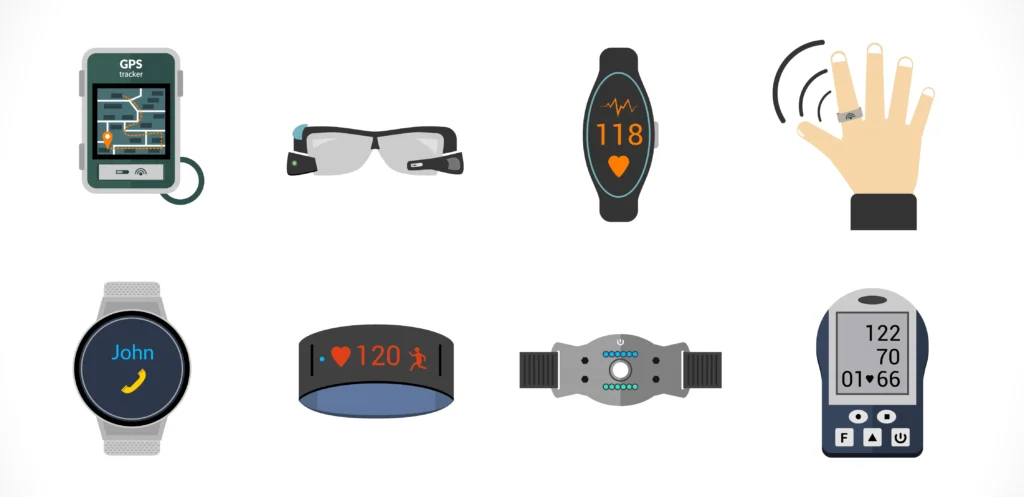
The market for intelligent medical wearables is poised for growth. High inpatient care costs and population aging are driving adoption. The new wave of wearable healthcare devices, which use sensors to monitor vital biometric data such as heart rate and blood pressure outside the hospital, enables more proactive health management. Typical architectures for intelligent wearables include a microcontroller, MEMS sensors, wireless connectivity, a battery, and supporting electronics.
Multifunction energy harvesting and IoT-capable solutions that can utilize multiple forms of ambient energy to power health-monitoring devices make it possible for patients to recover at home more quickly without compromising full rehabilitation.