ALLPCB


Introduction
Dispatch automation is an essential intelligent system for smart grid operation. It uses advanced IT and automation technologies and modern communication techniques to unify and make automation system data compatible at the model level, enabling two-way interaction between systems. The architecture allows both distributed operation and flexible composition. On a foundation of security and confidentiality, data can be freely located within the system group, enabling information exchange and demand interaction across the smart grid and improving overall social benefit.
Smart Grid Concept
The smart grid is a natural outcome of economic and technological development. In recent years, countries such as the United States and those in Europe have pursued smart grid research, though most efforts remain at an early stage. The Electric Power Research Institute (EPRI) proposed the "IntelliGrid" concept, while the U.S. Department of Energy (DOE) proposed "GridWise". In Europe the term "SmartGrid" is used. Although there is no single international definition, the smart grid generally refers to a power transmission and distribution network that employs robust two-way communication, advanced sensors, and distributed computing to improve the efficiency, reliability, and security of power delivery and usage.
Differences Between Traditional Grids and Smart Grid Dispatch Automation
Traditional grid dispatch automation mainly consists of substation automation and dispatch control center automation. Since 1954, when China imported remote terminal units (RTUs) from the Soviet Union and installed telemetry devices in the northeastern grid, China entered the era of substation automation development. After that, China developed a series of telecontrol products and promoted their application across the major regional grids. Substation automation evolved from centralized to distributed architectures. Dispatch control center systems began in the mid-1960s with the emergence of computer-based data acquisition and supervisory control systems (SCADA).
These two parts formed the basic framework of traditional grid dispatch automation, but services to customers were simple and information flow was largely one-way. Multiple information silos existed within systems, hindering information sharing. Although local automation levels improved, incomplete information and weak sharing capability left many automation systems isolated and unable to form a real-time unified whole, resulting in a relatively low overall level of grid intelligence.
In contrast, envisioned smart grid dispatch automation systems expand the ability to obtain panoramic grid information—complete, accurate, time-stamped, and standardized power-flow and business-flow data. Based on a robust, reliable physical grid architecture and an information-exchange platform, and driven by service requirements across the production process, these systems integrate diverse real-time production and operation information. By strengthening analysis, diagnosis, and optimization of grid business-flow dynamics, they provide operators with a comprehensive, detailed view of grid operating status, along with decision support, control implementation plans, and contingency responses. The goal is to achieve finer-grained, more accurate, faster, and higher-quality grid operation and management.
Smart grids further optimize control across grid levels, adopting a flat structure, modular functions, and configurable system composition. Combining centralized and decentralized approaches enables flexible network structures, intelligent reconfiguration of system architecture, optimal allocation of system capabilities, and improved service quality. This differs fundamentally from traditional grid architectures. With timely access to complete transmission network information, smart grid automation can greatly enhance lifecycle management techniques, fulfill corporate social responsibility, and strive for optimal technical-economic balance, sustainable development, maximized economic benefit, and improved environmental protection, thereby optimizing societal energy allocation and improving overall energy investment and utilization efficiency.
Current Research Status in Smart Grid Automation
Although China has not yet defined a national-level smart grid development strategy, many research results have laid a foundation for smart grid development. In dispatch automation specifically, efforts focus on constructing digital substations and upgrading dispatch control center systems.
Digital substations are primarily based on advanced substation network communication, unconventional instrument transformers, intelligent terminal systems, and the IEC 61850 standard. Unlike older standards, IEC 61850 defines object models using server models, logical device models, logical node models, and data object models to establish device and substation data models. IEC 61850 also defines a unified XML configuration language to describe these data models, making device and substation data transparent and deterministic to meet data access and interoperability requirements.
The standard uses object-oriented, self-describing data methods to define data object types (DOType) and data attribute types (DAType). Various data object types form logical node types (LNType); node types form logical devices, which become device templates; multiple device instances and primary equipment instances form substation data. IEC 61850 defines languages and methods for fully describing these data objects and object-oriented data services.
Compared with traditional substations, digital substations adopt new instrument transformers and use process buses to share measurement information comprehensively. The bay level and even the station control level can extend automation functionality beyond the boundaries of individual intelligent devices, enabling distributed deployment and application integration. Traditional hardwired connections are replaced by logically coordinated functions based on information exchange. Substations become information sources and control terminals for the overall power automation system, providing richer and more complete information to control centers, such as primary equipment monitoring, secondary device monitoring, grid operating status, fault information, and metering data. Substation automation thus becomes an integral part of the overall system, enabling control center functions like regional reactive power optimization, regional anti-misoperation strategies, regional automatic backup switching, and grid fault analysis via substation information transmission.
Dispatch control center automation is also progressing with technology, notably through adoption of the IEC 61970 standard, which brings new capabilities. IEC 61970 supports componentization and openness of Energy Management System (EMS) application software. It enables plug-and-play interoperability, making system integration and information sharing easier. EMS applications developed by different vendors can be integrated, and EMS can integrate with other power system operation systems such as generation or distribution management systems. This modular, open approach makes interfaces and models more universal and provides greater freedom for future system interaction. Barriers between information flows are reduced, information islands are eliminated, and systems can share resources, providing numerous interoperable model structures that support system intelligence.
Conceptual Design for Intelligent Dispatch Automation
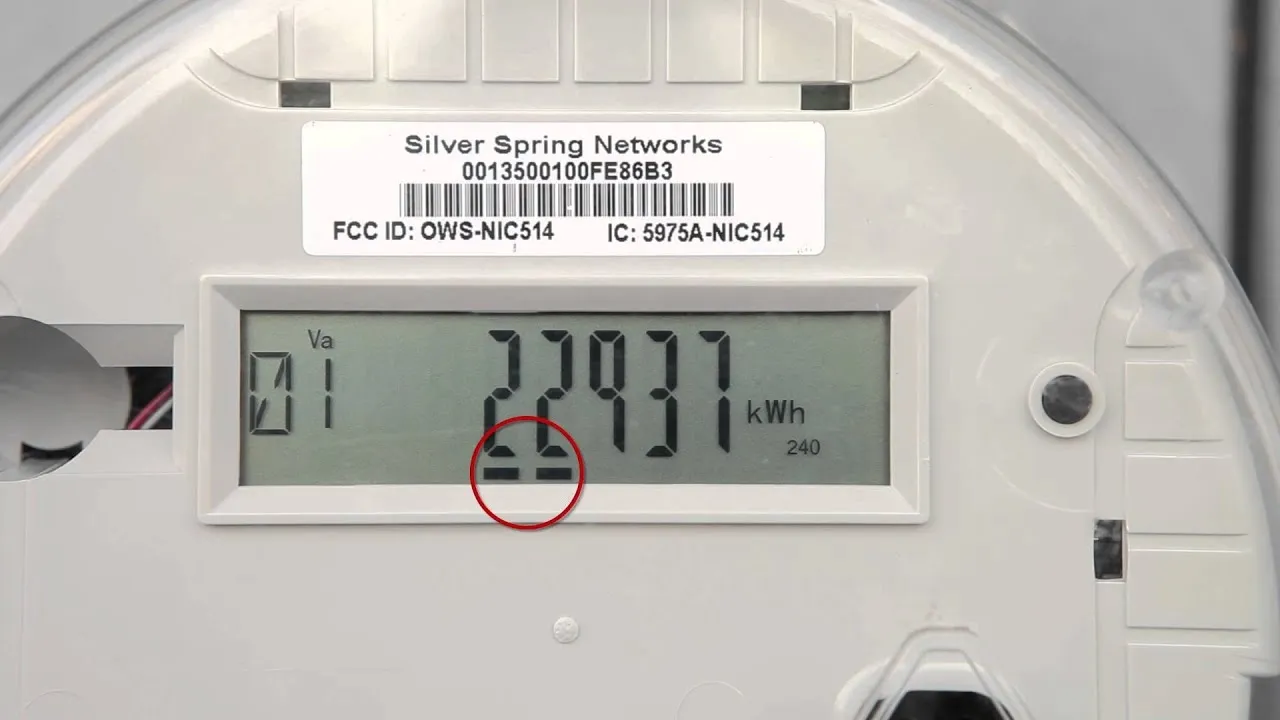
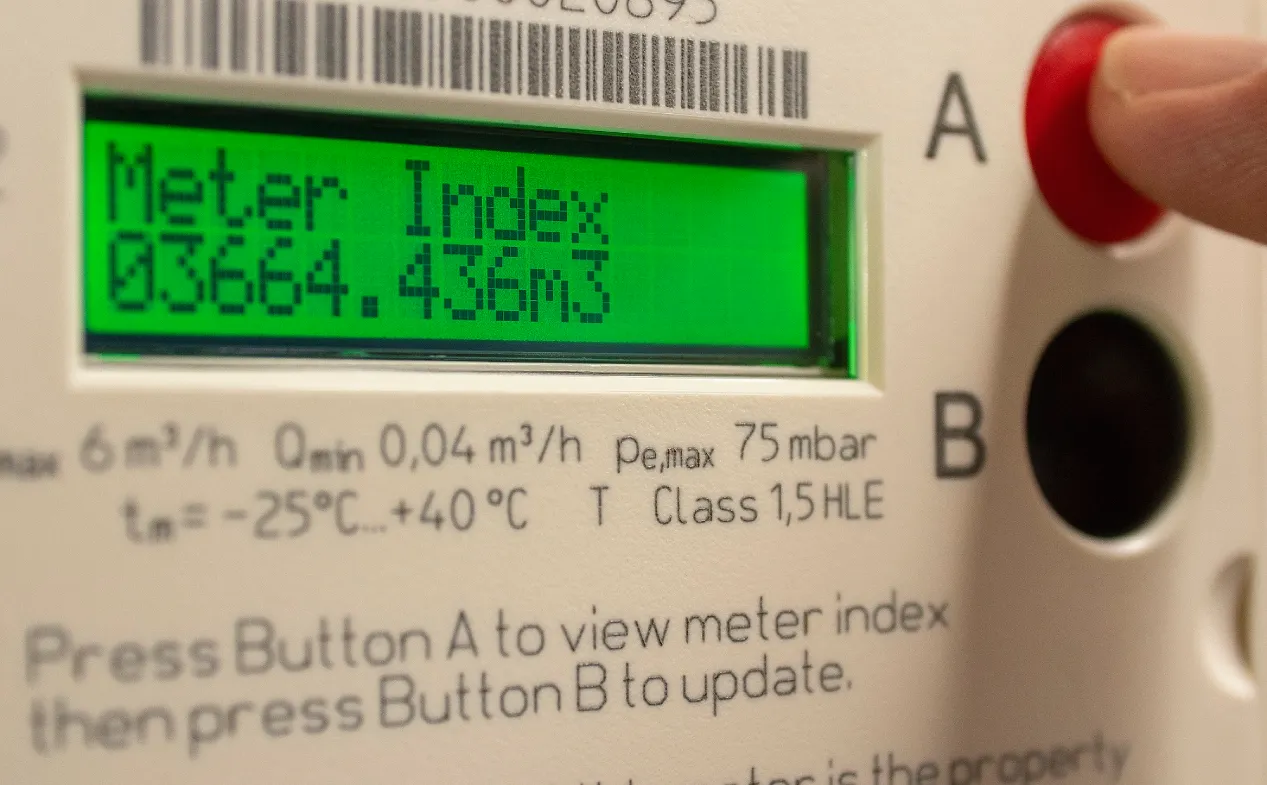
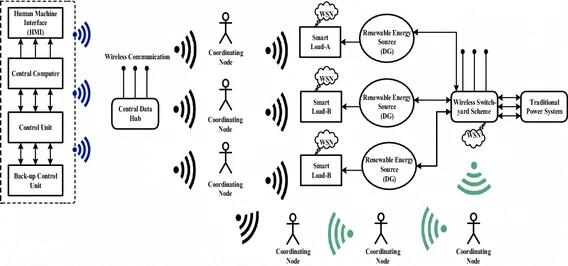
A future intelligent dispatch automation system will be a large-scale intelligent system. It will link load data and the grid via an advanced metering infrastructure (AMI) that includes smart meters, communication networks, and user in-home and local networks. The system will include a 3D GIS geographic information subsystem, an advanced intelligent distribution subsystem, an advanced intelligent transmission operation subsystem, and a robotic inspection subsystem, among others.
Because regional intelligent dispatch automation systems will be able to transfer and interoperate data, interactivity will be strong and information silos will be removed. Robust redundancy and combinational capabilities across systems will enable global data integration. Required grid data can be retrieved from regional system databases to form a global grid topology and provide a unified grid model for artificial intelligence applications. This intelligent structure will be flat, multi-layered, distributed, modular, and flexibly deployable. An information exchange and sharing hierarchy will avoid unnecessary or harmful mass information processing. The new information exchange platform will be robust, flexible, attack-resistant, and self-protecting.
Intelligent dispatch automation will unify generation, transmission, distribution, and user information on a single platform and enable two-way interactive power supply. From the user perspective, personalized, demand-driven, and flexible power consumption can be realized; self-generated, surplus, or investment-driven energy can be returned to the grid for supplementation, dispatch, or emergency use. From the grid perspective, operators can monitor demand in real time, control load allocation promptly, assess system security and stability, allocate energy resources effectively, guide users toward energy savings, rapidly respond to emergencies, and improve investment returns. Two-way interactive communication will greatly improve delivery of accurate and effective information, increasing the smart grid's responsiveness and performance. It will also bring operators closer to users, support understanding of user needs, and encourage user participation in grid stability and energy conservation.
Conclusion
Transforming the existing power system with information technology to maximize grid energy efficiency has become a major focus. A digital information network can enable intelligent, precise control across the lifecycle of electricity—from generation, transmission, storage, conversion, distribution, supply, and retail to end-user service—raising energy utilization to a higher level, reducing pollution, and improving investment returns. The development of dispatch control centers will be influenced by smart grid principles and will evolve toward greater intelligence based on computer networking technologies.