ALLPCB


Overview
A smart grid, also called an intelligent energy network or smart power system, integrates information technology, communication technology, power engineering, and automation. It enables more efficient, safer, more reliable, more controllable, and more environmentally friendly generation, transmission, and use of energy.
Key characteristics
- High reliability: Multi-level backup and recovery mechanisms enable rapid fault detection, isolation, and restoration, greatly improving power system reliability.
- Low carbon and environmental benefits: Use of clean energy and energy-efficiency technologies reduces CO2 emissions and overall energy consumption.
- High security: Digital technologies and automated control systems provide reliable power security control and protection management.
- Flexibility: Support for multiple energy inputs and conversion methods allows flexible optimization according to operational needs.
- High level of intelligence: Advanced information and communication technologies enable intelligent device interaction, fast response, and automated control, supporting a highly intelligent power system.
- Economic benefits: Intelligent electricity markets and energy management improve energy utilization and market competitiveness, raising economic efficiency.
Operating principles
Smart grids apply next-generation information and communication technologies together with automated management to improve supply reliability, efficiency, and sustainability. The main operating principles are:
- Multi-source power supply: Integration of diverse energy sources, including conventional generation such as coal, hydro, and nuclear, and renewables such as wind, solar, and biomass. Intelligent management systems enable smart distribution and allocation to maximize each source's strengths.
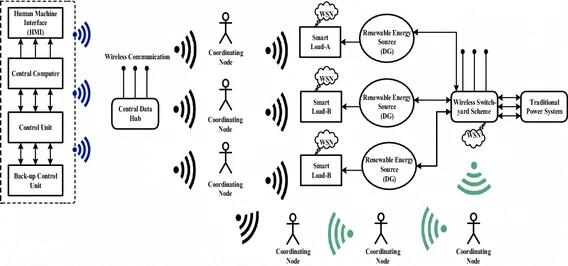
- Two-way communication: Modern communication technologies and data-processing systems enable two-way information flow across the network. Each node can exchange information and share data, supporting real-time monitoring of grid status.
- Intelligent optimization: Big data analysis and optimization techniques improve distribution planning, increase load factors, reduce energy consumption, and help maintain grid stability and reliability.
- Controllability: Monitoring and control via sensors and intelligent computing equipment enable voltage regulation, load control, and fault protection, allowing flexible, fast, and accurate responses to operating conditions.
- Network security: Cybersecurity is critical. Strengthening information-security measures helps defend against malware and intrusion, ensuring normal operation and data protection.
Wiring requirements for smart grids
As an integrated system combining information, communication, power, and automation technologies, smart grid cabling must meet strict requirements:
- Minimize and prevent interference: Smart grids carry multiple communication and control signals, so cable routing should minimize interference. Adjacent cables should use shielding measures, such as copper tape shielding, when necessary.
- Reliability and stability: Signal transmission requires reliable and stable connections. Use high-quality cables, connectors, and plugs, and ensure secure terminations to avoid poor contact or short circuits.
- Logical planning and maintainability: Due to system complexity and networked topology, cable routing should be well planned to avoid disorder and crossings and to facilitate maintenance. Consider modular routing and ease of disassembly so diagnostics and repairs are convenient.
- Compliance with safety standards: Cabling must meet applicable safety standards to prevent exposed conductors, unintended contact, overheating, and fire hazards.
In short, smart grid cabling should be planned logically, comply with safety standards, and meet reliability and stability requirements to ensure stable grid operation.