ALLPCB


Why modernize the power grid?
To improve grid reliability, efficiency, and safety. Modernization enables distributed energy resources so homes can be both customers and energy suppliers, and provides interactive tools for consumers to manage energy use.
Flexible consumer-side energy consumption enables supplier choice and facilitates distributed generation such as solar, wind, and biomass.
Modernization can create new green-energy jobs in renewable manufacturing, electric vehicles, solar PV, wind turbines, energy efficiency, and related construction, contributing to GDP growth.
The grid also includes numerous local networks that use distributed energy for multiple loads or to meet specific application requirements for remote power supply, municipal or regional power, high-quality power, and critical-load protection.
What makes a grid "smart"?
According to the U.S. Department of Energy, four categories of advanced technologies transform a conventional grid into a smart grid:
- Fully automated, integrated two-way communications among grid components.
- Automated control for distribution, fault management, and maintenance.
- Advanced management panels, decision-support software, and operational mechanisms.
- Accurate sensing and measurement technologies.
What is a smart grid?
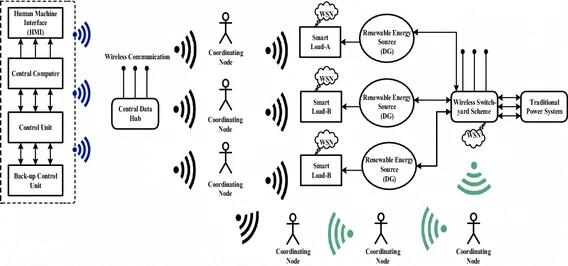
A smart grid integrates information, network communications, power transmission, and automation technologies into an existing power system to create a system that is information-driven, intelligent, efficient, and environmentally friendly. It enables remote monitoring, fast response, and automated operation.
Design goals include rational allocation of energy resources, improved energy-use efficiency, reduced waste and pollution, enhanced power quality and reliability, greater interaction with users, and support for electricity market mechanisms.
Smart grid functions
- Energy management: End-to-end monitoring and control of production, transmission, and consumption to improve efficiency and reduce waste and emissions.
- Multi-source dispatch: Interconnection and coordination among diverse energy sources, with real-time dispatch and optimization to improve utilization.
- Real-time monitoring: Systems and control mechanisms that diagnose and respond to faults and risks quickly, reducing outage time and losses.
- Reliability enhancement: Automation and remote supervision that significantly improve grid stability and reduce interruptions.
- Environmental and energy savings: Integration of renewable energy and efficiency measures to reduce carbon emissions and pollution.
- User participation: Treating users as active participants in consumption and energy management, increasing engagement and satisfaction.
Advantages and disadvantages of smart grids
Advantages:
- More efficient electricity use through monitoring and control of consumption and distribution.
- Safer power supply via real-time monitoring that reduces latent hazards found in traditional grids.
- Lower energy costs through improved balancing and distribution.
- More sustainable supply by integrating renewable energy sources.
Disadvantages:
- High investment requirements for construction, technology upgrades, and deployment.
- Technical complexity that demands specialized expertise for design, construction, and maintenance.
- Cybersecurity risks due to tight integration with networked systems.
- Need for broad stakeholder support; lack of public or institutional backing can hinder adoption.