ALLPCB


Market context
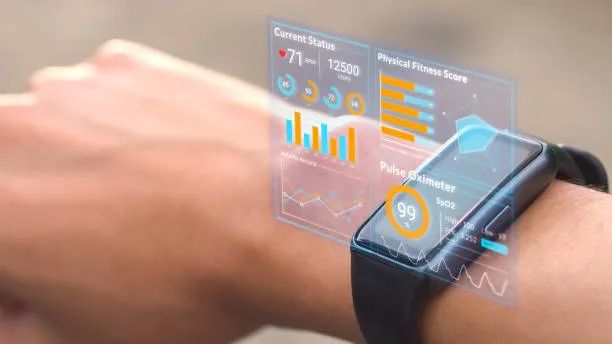
Like fashion, each advance in technology can trigger rapid product change and global adoption. Smart wearables—from everyday fitness bands and smartwatches to smart glasses, smart jewelry, smart T-shirts, and smart gloves—have become part of daily life.
According to International Data Corporation (IDC), wearable shipments were expected to rise from about 113.2 million units in the current year to roughly 222.3 million units by 2021. Yet despite market growth, the sector faces challenges. After a surge in 2015, smartwatch shipments fell rather than becoming ubiquitous; some pioneer brands such as Jawbone went bankrupt. Some categories that attracted media attention, like smart clothing and smart jewelry, have not proven widely adopted. The wearable market appears to have entered a plateau, and a distinct breakthrough may be needed to renew growth.
Why add natural language interaction to wearables
Voice interaction has attracted attention as a potential differentiator. Compared with text, speech recognition has broader applicability: whether or not users can read, as long as they can speak the system can interpret their requests and respond. This lowers barriers for elderly users, children, and others who may find text input cumbersome.
Advances in speech technology have improved recognition accuracy and enabled multi-turn dialog in some systems. With continued progress, human-machine interaction via voice is likely to become more widespread, making the idea of embedding voice interaction into wearables plausible rather than fanciful.
As the Internet of Things expands, voice becomes a common interface to control connected devices, as seen with smart speakers. However, people do not carry smart speakers with them, and phones or tablets are not always convenient. Embedding voice interaction in portable wearables can provide a practical, always-available interface.
Use cases
For example, a voice-enabled smartwatch could request a taxi without taking out a phone: a user could raise a wrist and say, "Call me a taxi," and the system would handle the request. Smart glasses with voice interaction could scan and read text aloud for fatigued users or enable access for visually impaired users. Because wearables come in many forms—watches, necklaces, glasses, clothing—they can broaden access to voice interaction.
Challenges
Embedding voice systems in wearables raises practical requirements: speech recognition and language understanding must be robust. Common issues include the need to speak close to the microphone, clear pronunciation, quiet environments, limitations on continuous dialog, and difficulty handling interruptions. If these issues are not addressed, voice could become another obstacle for wearable adoption.
Outlook
With ongoing advances in mobile internet, big data, cloud computing, and artificial intelligence, intelligent products are likely to keep evolving toward solving user pain points. Integrating natural language interaction into wearables could be an opportunity to address current adoption challenges and expand the range of practical applications for wearable devices.