ALLPCB


IoT and energy management
The IoT promises significant savings when widely applied in smart buildings and campus environments. Energy management offers one of the largest opportunities for savings, since environmental control can deliver optimal comfort for occupants while minimizing energy use. Factories and industrial parks also benefit from more robust, connected IoT-based energy management systems. Collecting and controlling all points of power delivery and consumption will require broader deployment of energy measurement and management devices.
MCU manufacturers have long supported energy measurement and management applications. Modern MCUs include advanced features that make them well suited for these applications, and many vendors provide reference designs that offer complete system solutions for common metering, control, and concentrator applications. This article examines several reference designs and evaluation kits to illustrate how they simplify implementation and accelerate development.
Energy management in the smart grid
The smart grid is a new approach to designing and operating energy infrastructure, covering generation, distribution, and use. When these three elements are instrumented and connected, a more intelligent and efficient grid can be built. The smart grid optimizes energy production, delivery, and consumption by measuring and predicting demand, then generating and delivering energy efficiently. A key element of the smart grid is awareness, monitoring, and communication of consumer energy use. With accurate usage data and predictive analytics, generation and delivery can be managed more effectively, and additional efficiency is possible if consumption can be shifted to match available generation.
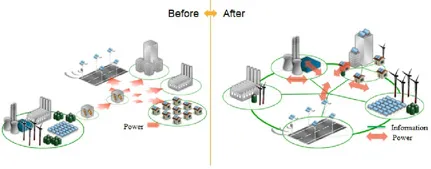
Figure 1: Smart grid evolution (provided by STMicroelectronics)
Energy metering evaluation kits
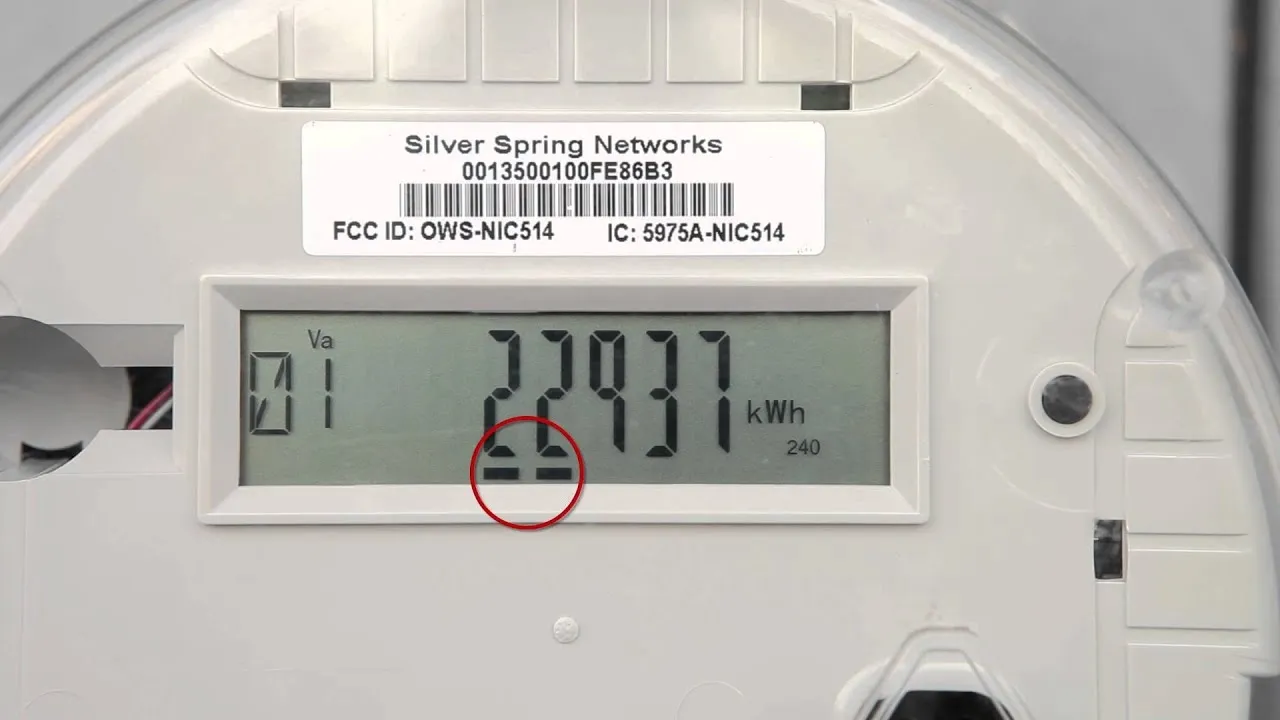
Energy metering in smart homes can be a key element of the smart grid. Metering solutions typically pair an energy-measurement IC with an MCU. A simplified block diagram of a typical smart meter shows an STM32F-series MCU, an STPM10 energy metering IC, and supporting components that provide power-line modem communication, additional memory, security, and power supply functions. The STPM10 measures active, reactive, and apparent energy on power-line systems using current transformers or shunt sensors in single- or multi-phase metering systems.
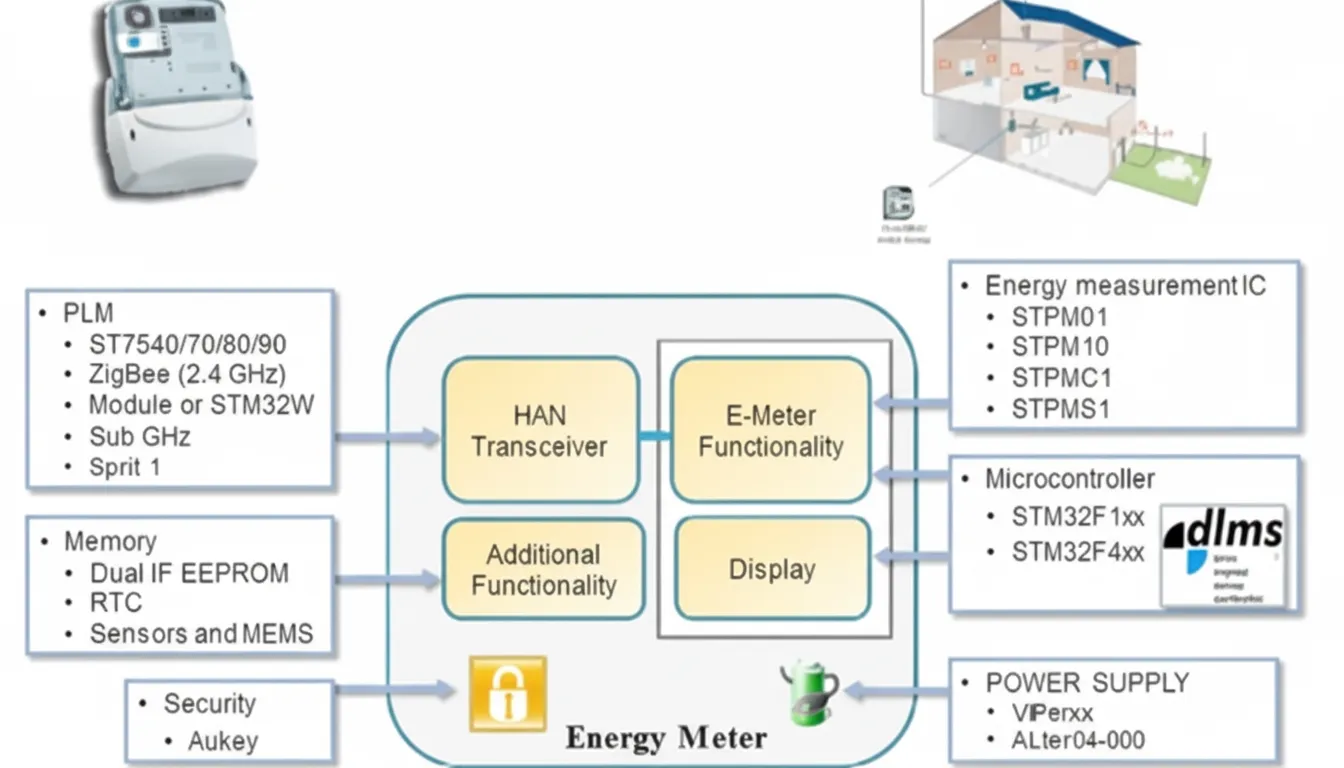
Figure 2: Energy metering in a smart home (provided by STMicroelectronics)
The analog front end of the STPM10 includes preamplifiers and first-order sigma-delta A/D converters, a bandgap voltage reference, and low-dropout regulators. The digital section contains system control, an oscillator, configuration and calibration nonvolatile memory, a DSP, and an SPI interface. A pair of sigma-delta output signals from the analog section is processed by the DSP to compute consumed active, reactive, and apparent energy, as well as RMS and instantaneous voltage and current values. Results are available as pulse frequency and status on device digital outputs or as data bits read over the SPI interface. The STEVAL-IPE15V1 evaluation kit can be used to simplify prototyping.
Metering and communications reference designs
Evaluation kits can rapidly provide working hardware to accelerate development. When software tools and a graphical user interface are provided to observe the operation of an evaluation kit or reference design, development time is further reduced. For example, the Cirrus Logic CDB5480U-Z reference design platform includes a target board and a related GUI that communicates with the board to configure and observe operation. The GUI can display histograms of collected data, with statistics such as mean, standard deviation, variance, maximum, and minimum.
MCU vendors also supply reference designs for the communications portion of the smart grid. Power-line communication is a common method for sending and receiving data within a smart grid, and MCUs typically act as central controllers in such systems. Some MCUs are optimized for these applications and provide extensive communications functionality for smart-grid implementations. The TI DSI CE3359 industrial communication engine reference design uses TI AM335x processors and supports numerous interfaces, including dual Ethernet, USB, CAN/PROFIBUS, I2C, SPI, and UART.
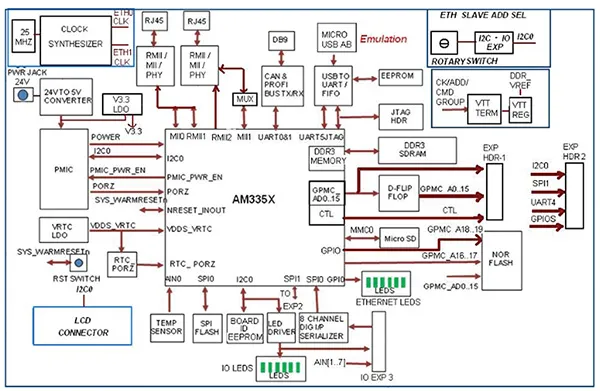
Figure 4: TI smart-grid communication reference design block diagram (provided by Texas Instruments)
The AM3352 MCU provides sufficient processing power for a range of smart algorithms used to sense and control energy for lighting, HVAC, signage, occupancy, material handling, and process control. The TMDSICE3359 reference design includes substantial code collected in the SYS/BIOS Industrial SDK. The SDK contains open-source RTOS components, a bootloader, peripheral drivers, evaluation versions of industrial communication stacks such as EtherCAT and PROFIBUS slave stacks, EtherNet/IP adapter/slave stack, Profinet IO device stack, and example applications demonstrating industrial I/O data exchange over various protocols. Including these components reduces the need to develop complex functionality from scratch and shortens development time.
Conclusion
Making the grid "smart" requires instrumenting and controlling each key element of the energy system: generation, distribution, and consumption. MCU-based power measurement systems collect the large datasets needed to improve system efficiency, and MCU-based communications systems send and receive that data within the smart grid. Evaluation kits and reference designs are available to help accelerate the development of these smart-grid design solutions.