ALLPCB


Many embedded systems that cannot connect to mains power rely on batteries, but battery replacement incurs maintenance costs and logistical challenges. Energy harvesting can supply continuous power to such systems and enable long-term operation. This article explains how energy harvesting can be used to build permanently operating embedded systems and summarizes related solutions from Silicon Labs.
Designing energy-harvesting systems for perpetual operation
Energy harvesting is increasingly a practical power option for embedded designers, enabling wireless sensors in applications that were previously impractical with battery-only designs. For example, energy-harvested power can enable ultra-thin wireless sensors with ranges exceeding 100 meters and lifetimes beyond 20 years.
The ultimate goal of an energy-harvesting system is perpetual operation. That is achieved when the energy collected meets or exceeds the energy consumed during operation. Power management is a key design aspect. The first step is determining the available power output from the harvester. Harvesters convert sources such as solar, mechanical, or thermal energy to electrical energy. Solar harvesters offer the highest power density and can provide up to 15 mW/cm2 of surface-area power. Maximizing harvester output is critical for building effective energy-harvesting systems.
In designing these systems, it is essential to provide the required functionality while minimizing system power consumption. Selecting components with low leakage and using ultra-low-power microcontrollers (MCUs), such as Silicon Labs' Si10xx wireless MCUs, helps achieve low overall power. Most low-power techniques used in battery-powered systems are also applicable to energy-harvesting systems.
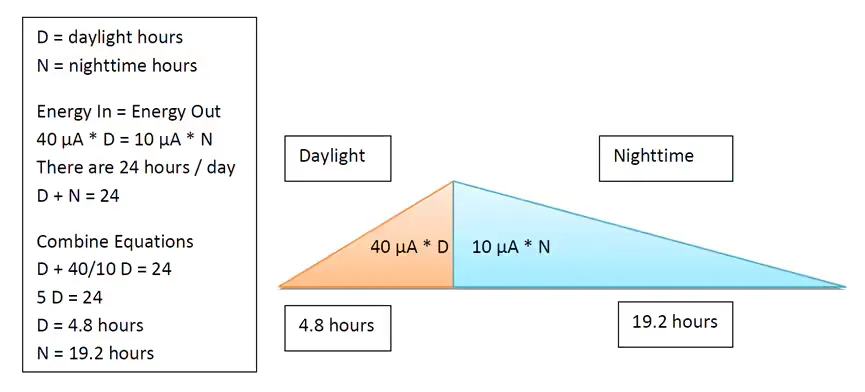
Consider a solar-powered wireless sensor node that transmits data every 20 minutes with an average transmit current of 10 μA. A solar panel supplies 50 μA of continuous current during daylight. The net charging current during daytime is 40 μA, while the battery discharges at 10 μA at night. If the system receives at least 4.8 hours of sunlight per day, the harvested energy can support perpetual operation.
Two classes of systems: balancing average power and pulse harvesting
Perpetually operating energy-harvesting systems generally fall into two classes, distinguished by their energy storage mechanisms. The first class accumulates energy over time in a low-leakage, high-capacity energy store such as a thin-film battery. Perpetual operation is achieved by balancing the average harvested energy against average consumption. These systems are flexible and may support occasional high-power bursts. They typically remain powered most of the time, in a low-power sleep mode, continuously harvesting energy. The solar-powered wireless sensor node is an example of this class.
The second class remains unpowered until an energy pulse is detected and captured into a low-impedance energy store, such as a capacitor. After a short power-up and reset, the system executes required functions using the finite energy from the pulse. Perpetual operation is achieved by balancing the total energy consumed per task against the energy harvested per pulse. An example is a wireless light switch that uses mechanical energy from a pushbutton to transmit an RF signal to a receiver located at the fixture.
Conventional batteries like coin cells, AA lithium cells, and lithium thionyl chloride cells have been used for long-life embedded systems for years. The introduction of thin-film batteries enables different trade-offs among cost, size, and safety. Although inexpensive coin cells may reduce manufacturing cost and speed time to market, their replacement incurs hidden costs over a product lifetime.
When comparing lifetime capacity, a thin-film battery can provide the equivalent energy of many CR2032 coin cells. Over an embedded system's lifecycle, the initial cost of a thin-film battery can be smaller than the cumulative cost of replacing multiple coin cells.
Thin-film batteries offer the thinnest form factor among battery types, with thicknesses down to about 0.17 mm. Their total lifetime capacity can be comparable to four AA lithium cells or one C-cell lithium thionyl chloride battery, making them suitable for space-constrained embedded systems that need ultra-thin form factors and long battery life.
Thin-film batteries also avoid some safety issues associated with large conventional batteries, such as flammability and explosion risk. Because thin-film batteries are rechargeable and typically store only a fraction of their total lifetime capacity at any given time, they present lower hazards in events like short circuits or exposure to extreme heat. Thin-film batteries also generate less waste than larger conventional batteries, which often end up in landfills instead of being recycled.
Reference designs to accelerate development
Power consumption remains a key constraint for battery-powered Internet of Things devices. Industry efforts to reduce device power have produced standards and frameworks that consider energy harvesting, such as Zigbee Green Power for wireless communications.
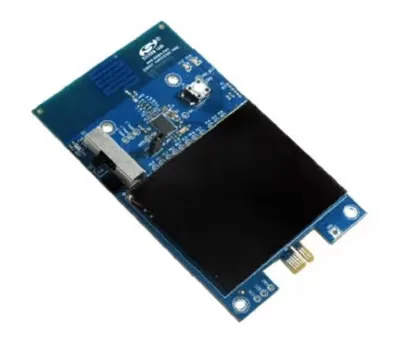
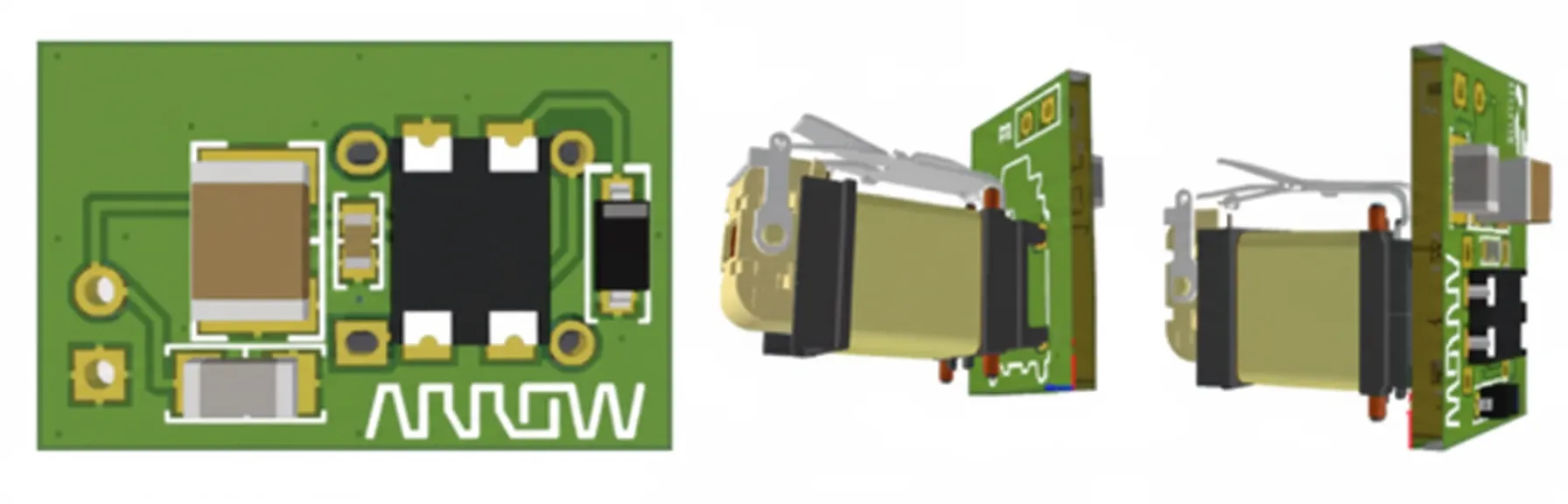
Silicon Labs and Arrow Electronics jointly developed an energy-harvesting reference design based on the Silicon Labs EFR32MG22 system-on-chip (SoC). The design pairs a Zigbee Green Power light switch with energy-harvesting power management. The MG22 device is designed for Zigbee, has a compact footprint, and includes security features, making it suitable for very low-power end devices. Silicon Labs also provides low-power power management ICs such as the EFP0111 to support power management in energy-harvesting designs. Development kits and the Simplicity Studio IDE are available to assist engineers in developing energy-harvesting systems.
The core energy source in this reference design is a mechanical energy harvester. The design uses a ZF bistable generator module. This is a bidirectional switch generator, meaning energy is generated both when the switch is pressed and when it is released. The switch contains a two-pole magnet; pressing the switch produces a magnetic flux through the core and back to the other pole. When the user releases the switch, the magnetic field changes and flows in the opposite direction through the core. The changing magnetic field induces a current that can be harvested. The ZF generator produces an AC voltage on press and release; the system uses this mechanical energy to power the light fixture receiver, with the goal of switching the fixture without wiring between switch and light.
Powering IoT devices is energy intensive, and battery-free approaches can simplify device design and reduce environmental impact. For example, the energy required to blink an LED once is sufficient to transmit multiple RF packets in some low-power systems. The combination of low-power silicon designs and networks optimized for low-power operation supports new approaches to power management and can reduce costs and waste for manufacturers and consumers.
High-performance, low-power power management components
The EFR32MG22 (MG22) series SoCs from Silicon Labs are Zigbee-optimized devices intended for applications such as smart home sensors, lighting control, and building and industrial automation, with a focus on efficient power use.
The EFR32MG22 and EFR32MG22E Zigbee SoC solutions are part of the Wireless Gecko Series 2 platform. The MG22 series integrates a high-performance, low-power 76.8 MHz ARM Cortex-M33 core with TrustZone. The MG22E variant extends energy efficiency to support longer battery life and battery-free designs. The MG22 SoC combines low transmit and receive currents (+6 dBm: 8.2 mA TX, 3.9 mA RX), a 1.4 μA deep sleep mode, and low-power peripherals to support Zigbee applications, including Green Power.
The EFP0111GM20 PMIC is a flexible, efficient multi-output power management IC that provides complete system power for EFR32 and EFM32 devices, including three output voltage rails and primary battery charge metering. The boost-start PMIC operates from 1.7 V to 5.2 V and has standby currents as low as 150 nA. The EFP0111GM20 supports batteries from 1.5 V to 5.5 V, enabling optimization of power efficiency for various battery chemistries.
The Si10xx sub-GHz wireless MCUs combine high-performance radio with an ultra-low-power microcontroller in a 5 x 6 mm package. Supported frequency bands range from 142 MHz to 1050 MHz, and the devices include an advanced packet engine and a link-budget capability up to 146 dB. By reducing TX, RX, active, and sleep currents and supporting fast wake-up times, these MCUs optimize energy consumption for battery-powered applications. Si106x and Si108x devices share pin compatibility, flash sizes from 8 to 64 kB, and include robust analog and digital peripherals such as ADCs, dual comparators, timers, and GPIOs. The devices are designed for 802.15.4g smart metering and support global regulatory standards including FCC, ETSI, and ARIB.
Conclusion
Energy harvesting has become a practical option for many embedded systems and is expected to become more widespread in the coming years. Properly designed energy-harvesting systems can achieve perpetual operation once initial power-on reset challenges are managed. With careful system design, energy-harvesting deployments can reach lifetimes of 20 years or more. Thin-film batteries, with their ultra-thin profiles and low leakage, are commonly used in energy-harvesting systems to replace primary or replaceable batteries, enabling new application possibilities for embedded development. Components such as the MG22 Zigbee SoCs, the EFP0111GM20 PMIC, and Si10xx sub-GHz wireless MCUs provide power-management and low-power wireless capabilities that support long-duration operation without frequent battery replacement.