ALLPCB


Shifting Expectations for Wearables
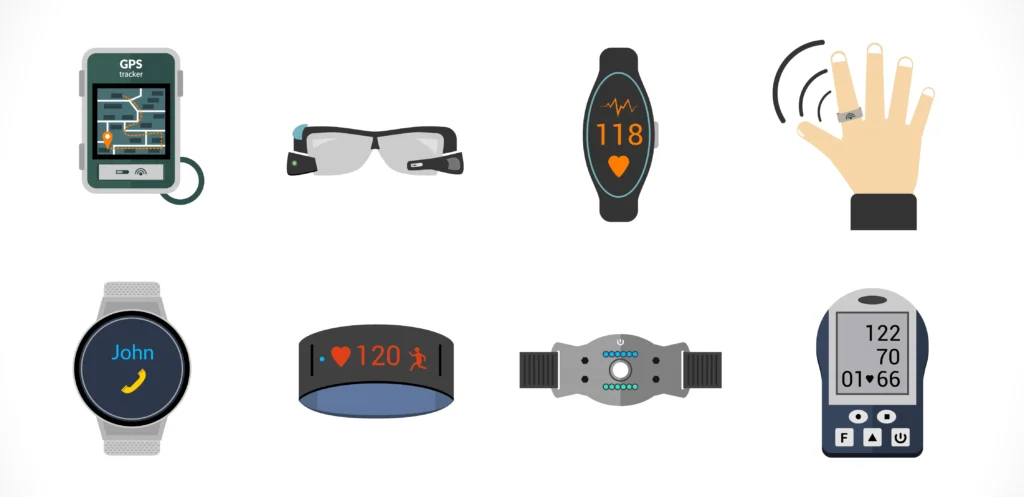
Development of smart wearables has slowed over the past two years. Basic data collection and analysis no longer satisfy users who expect more than step counting and sleep tracking. Technologies such as AR and VR are increasingly important for future device capabilities.
Industry Perspective on Storage and Functionality
From an industry perspective, what kinds of wearables will win consumers? How will storage contribute to more complex and intelligent devices? Recently, Harsha Nagaraju, market segment manager for embedded products at Micron Technology, discussed storage requirements and technology trends for smart wearable products.
What AR Enables
Augmented reality (AR) aims to blend the digital and physical worlds. AR can change how we visualize, share ideas, learn, and imagine. With AR, 3D digital images can be overlaid onto physical environments, and information from digital contexts can enhance real-world scenes. These augmented scenes are viewed through head-mounted devices (HMDs).
AR Headset Requirements
In simple terms, an AR headset must be able to sense the environment, interpret gestures, process information, and project digital content in real time. HMDs typically include forward-facing high-resolution cameras to capture the field of view (FOV) and an array of depth-sensing cameras and sensors to determine relative spatial positions of objects. Because users need to see their surroundings through lenses, AR headsets also incorporate advanced optical systems. After sensor and camera data are processed, an optical projection system renders digital information into the user's FOV.
From Simple Overlays to Interactive Holograms
Early AR headsets such as Google Glass focused on projecting digital information to aid decision making. Later, more advanced headsets such as Microsoft HoloLens added stronger processing, improved optics, and power management so users could interact with digital objects. These advanced headsets enable 3D viewing and interaction with virtual objects as if they existed in the real environment.
On-Device Processing and Storage
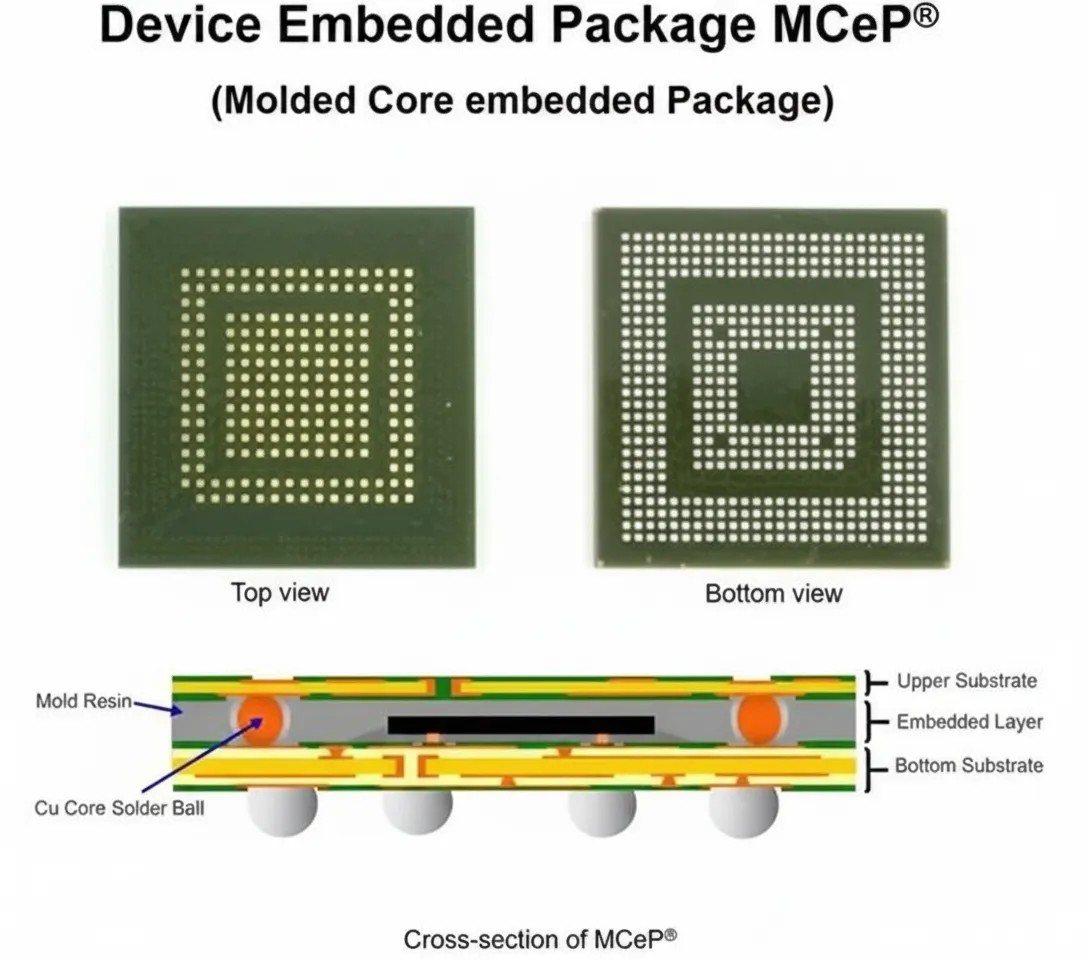
Although some AR headsets act as accessories to other computers, most are standalone and perform much of the computation locally. Early Google Glass first-generation hardware included a TI OMAP 4430 SoC, 1 GB mobile DRAM, 16 GB storage, and a 5 MP camera running Android 4.4. The first-generation Microsoft HoloLens used an Intel 32-bit architecture with a GPU and a custom holographic processing unit (HPU), 2 GB mobile DRAM (LPDDR), and 64 GB eMMC storage. Given the types of applications these headsets support, including long-distance communication, their architectures may resemble smartphones: high-performance but power-efficient chipsets. For local storage, options include eMMC, SD cards, or SSDs. To save space and improve integration, SLC/MLC NAND, LPDDR2/3/4, eMMC, or multi-chip packages that combine NAND and LPDDR are commonly used in standalone AR headsets.
Machine Learning and AR
Advances in AR are occurring alongside progress in machine learning. Machine learning enables computers to learn without explicit programming; image recognition and speech analysis are two major areas. Machine learning integrates well with AR headsets: as algorithms improve, headsets can become intelligent endpoints that help train and run models. Smarter algorithms in turn deliver more relevant information to AR displays, increasing their usefulness.
Architectural Trends and Future Storage Needs
Many early headset designs borrowed smartphone architectures, but new applications and machine learning may drive dedicated hardware for improved user experience, including CPUs, GPUs, FPGAs, sensors, and accelerators. Current headset designs use standard storage densities and packages from the smartphone market. As users demand lighter, more power-efficient, and more capable headsets, traditional storage solutions may not always suffice. More efficient storage technologies and advances such as silicon photonics could improve power, performance, and throughput. Various packaging and high-speed interconnect options may reduce signal transmission distances and widen signal paths, further enhancing performance.