ALLPCB


Introduction
Wearable devices were once considered a major future segment of the semiconductor industry. However, because wearables struggled to find clear application niches, initial enthusiasm faded. With population aging and increased public awareness of personal health management, wearables have found a clearer application area. Recently, both consumer and professional wearable medical electronics have become a renewed focus for the semiconductor industry. For any wearable medical product, especially professional medical devices, user safety is critical. Consumer health devices may pose less direct physical risk, but errors in display or measurement accuracy can still affect users' well being. This article first examines why wearable medical electronics have returned to industry attention, then discusses how their safety can be improved.
1. Wearable medical electronics regain industry focus
Medical electronics have recently become a renewed focus. After rapid declines in sales of devices such as the Apple Watch and Misfit bands, the once-promising portable wearable market appeared to enter a cooling period in early 2017. Except for some Chinese brands such as Xiaomi and Huawei that continued to release watches and bands, and some Shenzhen suppliers pursuing alternatives to traditional watches, most manufacturers shifted strategies. China, as the world's largest developing country with a large population and rising incomes in China and other emerging regions, faces increasing burdens from major diseases. Therefore, the Chinese market is expected to become one of the largest medical device markets globally, attracting renewed attention from companies and investors in medical and health devices. Research by CCID Consulting indicated that the global medical electronics market grew 4.1% in 2016 to reach USD 243.196 billion. With rising medical demand in emerging economies and ongoing investment in developed economies, the global medical electronics market continues to expand. Growth in developing countries notably outpaced that in developed countries. After a 23.7% surge in 2015, the China medical electronics market maintained rapid growth in 2016 with a year-on-year increase of 26.9%, well above global rates.
Figure: Global wearable medical electronics market forecast by user application, 2014–2020
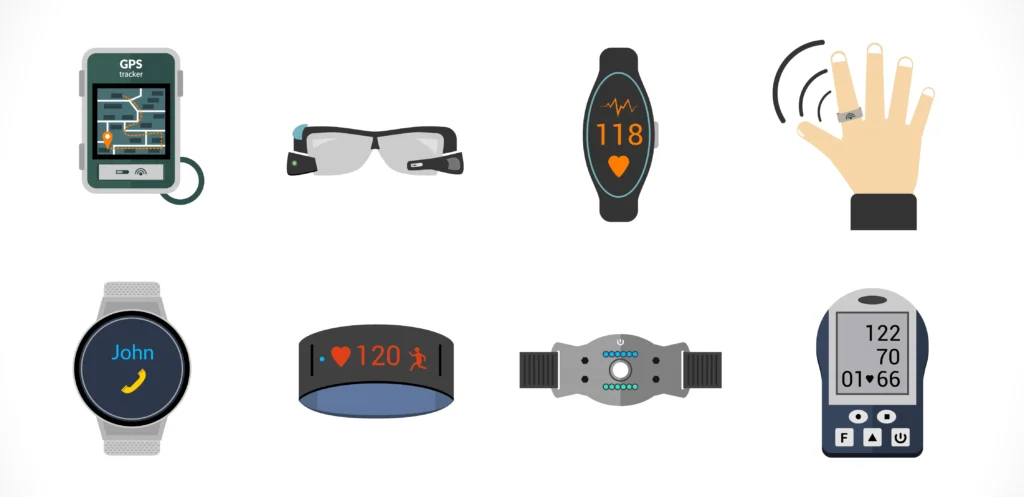
IDC reported that wearable device shipments grew at about a 32.8% CAGR in 2016 and were projected to reach 237 million units by 2020. Devices related to the human body can be made smart, including watches, bands, clothing, footwear, jewelry, accessories (earphones, backpacks), smart glasses, as well as patch and implantable devices. These primarily provide communications, health monitoring, fitness, entertainment, location, payments, and AI interface functions. MarketsandMarkets projected the global medical electronics market could reach USD 56.5 billion by 2020, with a 2014–2020 CAGR of about 5.5%. As wearables and their applications expand, the development will pass through three stages. The first stage emphasized basic activity and vital sign acquisition, collection, and processing. The second stage has made functions richer and more complete, covering health and environmental parameters while emphasizing wearer comfort and "seamless" user experience. Next, wearables will integrate more body and environment-related functions and become an important component of artificial intelligence workflows, further affecting daily life. Current opportunities for improvement include user engagement, personal privacy, health cycle integration, and data credibility. Users also prefer devices that do not look obtrusive, so "seamless" and "hidden" designs are key directions. Another trend is the rising importance of purpose-built devices that solve specific problems, especially wearables that combine medical and health functions.
Wearable device development will follow three stages; it has now reached the second stage
2. Wearables combined with healthcare functions
Health features are increasingly becoming essential in consumer devices driven by end-user demand. More than 80% of consumers see wearable technology as an important means to make healthcare more convenient, and 71% believe wearable technology helps to improve health and fitness, indicating a close relationship between healthcare and wearables. Basic vital sign monitoring such as heart rate, blood oxygen, blood pressure, activity, body fat, temperature, and respiration are closely related to health and trends, and are therefore well suited for integration into body-worn daily devices. This creates demand for more semiconductor hardware and software, including sensors, optical components, MEMS and impedance elements for monitoring these signals; analog signal processing, digital signal and wireless communication chips to process the signals; and algorithms that convert electrical signals into physiological metrics and interpret them. Sensors, circuitry, and algorithms are all essential.
3. Professional medical devices moving into the home
To meet preventive healthcare and consumer market demand, many high-performance professional medical devices originally used only in hospitals are expanding into outpatient and home environments, extending wearable capabilities and blurring the line between medical and consumer devices. Wearables is a broad concept and not purely consumer devices. Many wearable medical devices are medical-grade and used in hospitals or recommended by physicians for home care. Established medical device companies are developing such wearables, while consumer electronics manufacturers are also introducing wearable medical products. As a result, the boundary between the two categories is narrowing. Preventive wearables for fitness and lifestyle management will increase, and vital sign monitoring features will become more complete. For example, basic sleep quality monitoring may add EEG, blood oxygen, and heart rate metrics to improve accuracy and reliability. Whether diagnostic-grade or preventive devices used outside clinical settings, they are trending toward portable and wearable forms that free patients from bed confinement and reduce routine visits by clinical staff. As more medical-grade technologies migrate toward consumer wearables, preventive devices often add third-party services to help users interpret data, with professional medical data teams providing remote interpretation, analysis, and feedback.
4. How to ensure safety
Advances in medical device capabilities, combined with the spread of Internet of Things concepts, have led to smarter medical electronics. Home-based care has gained attention in aging societies to avoid waste of medical resources, and some specialized medical electronics have started to reach ordinary households. But can these smarter professional or consumer medical devices truly help patients and guarantee safe use? According to the U.S. patient safety organization ECRI, the top patient safety issues in 2017 included electronic health record data leakage, timely and accurate localization of clinical problems, correct use of clinical decision support systems, patient identification, medication accuracy, and prevention of errors, all of which can seriously threaten patient safety. As medical devices expand functions and measurement precision and deliver recommendations via analytic platforms, ensuring the highest level of safety while providing effective guidance remains a key concern for semiconductor vendors, medical device manufacturers, and healthcare providers. Semiconductor companies have begun proposing new solutions aligned with current medical electronics development to address these safety challenges.