ALLPCB


1. What Are Wearable Devices?
Understanding the essential user needs is required. Wearable devices are not just hardware; they rely on software, data exchange, and cloud interactions to provide functionality. Wearables can significantly change our daily life and perception.
Primary purposes:
- Extension of human capabilities
- Improved sensing and user experience
2. Wearables as Platforms for Exchanging Internal and External Human Information
Extract vital signs (what information is extracted and who receives it?)
Perceive external world information through the body (vision, hearing, skin, etc.).
Perceive external world information outside the body (information processing and transmission).
Control the external world (for example, smart home).
3. Current Bottlenecks
- Cognitive and conceptual bottleneck
Which functions and content, in which form and product shape, best meet user needs? Do users primarily want social features, entertainment, health monitoring, industry applications, or something else? For products like watches, what is the relationship with the smartphone: independent device or accessory? Should features be additive or reductive?
- Technical bottleneck
Issues include power consumption, measurement accuracy, battery life, and device area.
- Industry-chain bottleneck
Long and complex supply chains require leading companies to pull the ecosystem together.
4. Design Considerations and Major Challenges
Size
- Size is critical: most wearables are lightweight and getting smaller.
- Smaller packaging
- Lighter materials
- Use advanced packaging to increase integration
- Minimize external components
Ultra-low Power
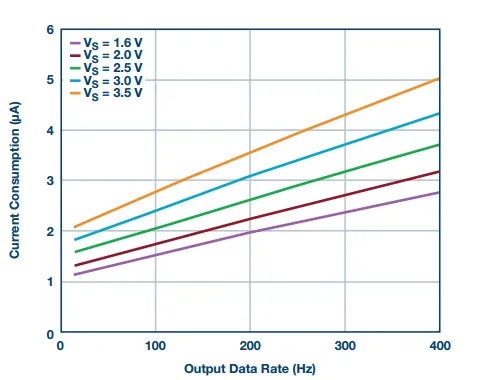
- Power consumption is crucial to user experience: lower is better.
- Battery size is limited due to small system dimensions.
- Low quiescent current chips help achieve low power and extend standby time.
- Wearables typically require low-power MCUs.
- Wearables need low-power connectivity technologies.
Ergonomics
- Ease of use
- Design to prevent accidental operation
- Highly reliable, high-sensitivity sensor design
High Reliability
- Adaptation to various environments
- Good mechanical design to prevent device damage
- Water resistance may be required in some cases
Sensor Technology
- Multi-sensor fusion
- Select sensor materials with good biocompatibility
- High sensitivity at low power
Connectivity
- Low-power Bluetooth and Wi-Fi connectivity to access other smart devices
- Data synchronization and automatic app updates
Functionality
- Deliver the most needed functions at minimal cost
- Clear division of functions across cloud, gateway, and device
5. Overall Industry Landscape
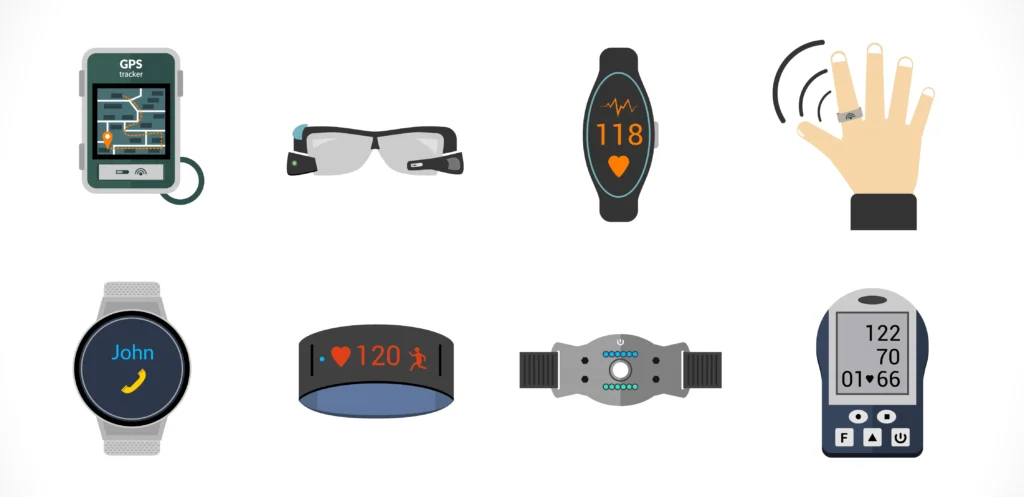
Fitness bands offer limited functions; some high-volume models have seen declining sales. From early generations to the current ones, many bands have continuously added functions.
Smartwatches from major vendors such as Apple, Samsung, and Garmin still show overall shipment growth. The Chinese market has led global growth in recent years, with many product lines achieving annual shipments in the tens of millions.
In AR/VR, companies such as Microsoft with HoloLens, HTC Vive, and various VR and AR efforts are working to improve ecosystems for education, social interaction, gaming, and entertainment.
Other categories include children's watches, elder-care watches, medical-grade wearables, and professional sports wearables, all of which are relatively niche.
6. Investment Principles for Projects
Focus on the most investable points in each subsegment.
- Assess market size and future growth potential.
- In large markets dominated by major players, consider investing upstream companies (by analogy with the smartphone market).
- Different subfields require different investment logic: product maturity, market space, growth potential, supply-chain structure, and competition vary.
- Different startup types require different team capability density.
- Use application and demand understanding to infer likely product and service forms, markets, and competitive structure.
- Invest in companies that can gain lasting industry positions.
7. Investment Opportunities
1) Fitness Bands and Watches
Downstream brands have the strongest influence and the largest market opportunity, with millions of potential units. Apply smartphone investment logic.
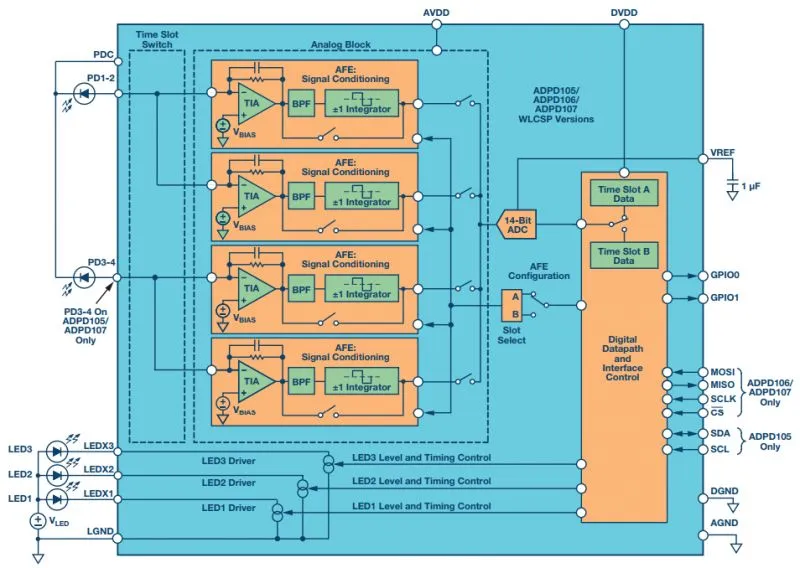
Prioritize upstream sensor manufacturers, especially intelligent sensors with algorithms (including deep learning), local or cloud processing (self-compensation and self-diagnosis, information storage and memory, self-learning and adaptation), such as optical sensors, pressure sensors, and temperature sensors.
Communications and interaction technologies for wearables need lower power and smaller area: 802.11ab, eSIM, NB-IoT, millimeter wave, voice, and others.
Do not invest in end-user products or main application processors when ecosystem creation and maintenance costs are prohibitively high.
For miniaturization technologies, including SiP-level packaging, evaluate the complexity of upstream and downstream integration. Excessively complex integration is more suitable for downstream brand manufacturers.
Miniaturization core elements: fast, low-cost, and sufficient for requirements.
- Blurred boundaries among printed circuit board, packaging and testing, and wafer manufacturing
- Substrate-like PCBs (SLP), mSAP
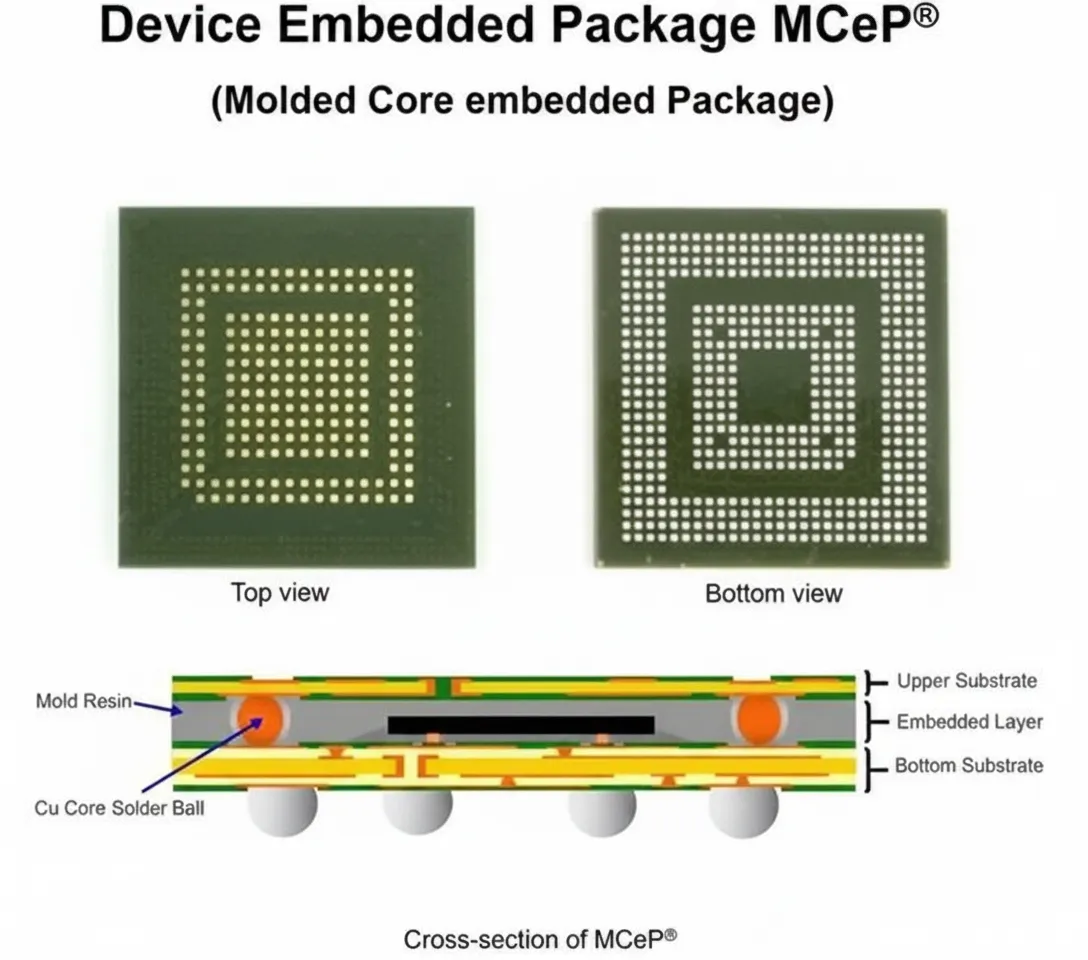
- Packaging: SiP, FOWLP, MCeP
- Miniaturization of RF, connectors, FPC, and similar components
2) VR
VR focuses on immersive experiences. Large companies are actively catalyzing ecosystems across education, social interaction, gaming, and entertainment, including offline experiences. The main current issue is the lack of killer applications that gain broad consumer acceptance.
Investment targets: software for gaming and entertainment best demonstrates VR value. Work on engines, middleware, and interaction technologies that are closer to practical applications. Initial efforts may be project-based.
3) AR
AR augments real-world information and thus can penetrate diverse fields. Immersion is generally lower than VR. Outside of smartphone AR, the field is fragmented, and major companies show limited focus, creating opportunities for startups.
Bottlenecks include: 1) complex processing when combining with the real world; 2) fragmentation that prevents the emergence of dominant products; 3) AR often forms only part of a complete system, so it cannot by itself close the loop. In industrial AR, AR is often a small component of a broader system.
Scene-specific AR favors companies that can provide full-system solutions and establish closed loops (for example, PTC's acquisition of Vuforia).
There are opportunities across the AR upstream and downstream supply chain, depending on how much value each point can amplify in current and future industries.
4) Niche Segments
Prioritize investments closely tied to data.
Invest in integrated system-solution products. These require higher team capabilities and more complex business models compared with upstream startups. Such projects demand strong sales, management, and strategy skills, and the ability to iteratively expand core technical competitiveness. Wearable products may be only a small part of the overall solution, for example in community elder care.
Prefer projects that achieve deep penetration across the industry chain. Products and services do not need to be multifunctional but must be specialized. Large, all-encompassing solutions are typically the domain of major companies and require ecosystem-level catalysts.
For projects targeting volumes in the low millions, investing in terminal products or professional platform SoC chips and system-level solutions is feasible.
Professional sports and medical applications are important directions for wearables. The focus is on multi-sensor fusion, moving sensors toward multi-parameter capabilities, intelligence, miniaturization, and low power.