ALLPCB


Introduction
Vital signs monitoring has expanded beyond clinical settings into many areas of daily life. Originally performed under strict medical supervision in hospitals and clinics, advances in microelectronics have reduced the cost of monitoring systems and increased adoption in telemedicine, sports and fitness, workplace safety, and markets focused on autonomous driving. Although these applications are broader, they continue to require high quality standards because they relate closely to health.
What Are Vital Signs
Vital signs monitoring involves measuring a set of physiological parameters that reflect an individual's health. Heart rate is among the most common parameters and can be detected using an electrocardiogram (ECG), which measures the frequency of heartbeats and, importantly, variability in the heartbeat. Heart rate variability is often influenced by activity. During sleep or rest the rhythm slows, while physical activity, emotional responses, stress, or anxiety can increase it.
Heart rates outside the normal range may indicate conditions such as bradycardia (too slow) or tachycardia (too fast). Respiration is another key vital sign. Blood oxygenation can be measured using photoplethysmography (PPG). Hypoxia may be associated with disease or disorders that affect respiratory function. Other measurements that reflect physical condition include blood pressure, body temperature, and skin conductance. Skin conductance, also called galvanic skin response, is closely linked to the sympathetic nervous system and therefore to emotional behaviors; measuring it can indicate stress, fatigue, mental state, and emotional reactions. Additionally, measurements of body composition, lean mass and fat mass percentages, hydration, and nutritional status can provide insight into clinical condition. Finally, motion and posture measurements provide useful information about a subject's activity.
Measurement Techniques for Vital Signs
Monitoring heart rate, respiration, blood pressure, temperature, skin conductance, and body composition requires various sensors and compact, energy-efficient, reliable solutions. Vital signs monitoring typically includes:
- Optical measurements
- Bioelectric measurements
- Impedance measurements
- Measurements using MEMS sensors
Figure 1
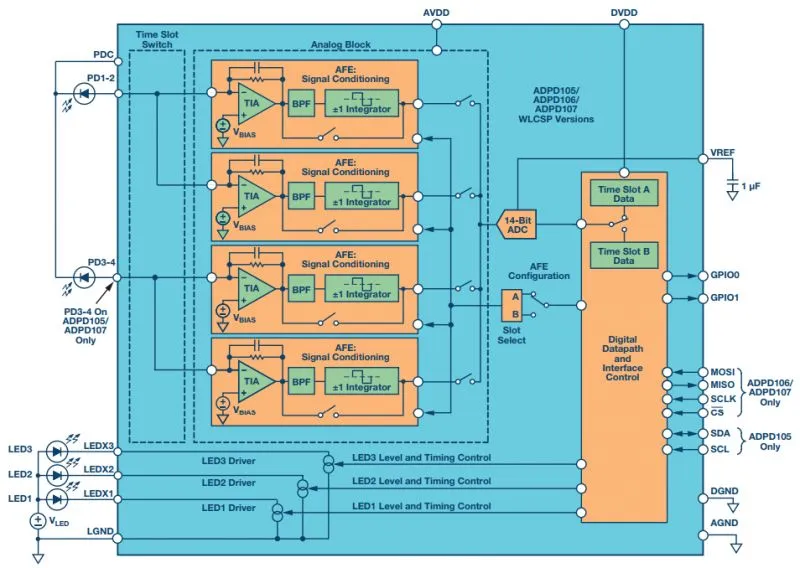
Figure 1. Signal chain for optical measurement
Optical Measurements
Optical measurements extend beyond standard semiconductor technology and require an optical toolbox. A typical signal chain for optical measurement uses a light source, usually LEDs, that may emit multiple wavelengths. Combining wavelengths can improve measurement accuracy. A set of silicon or germanium photodiodes converts the optical signal into an electrical current. Photodiodes must have sufficient sensitivity and linearity for the wavelengths used. The photogenerated current must then be amplified and converted, so a high-performance, low-power, multi-channel analog front end is required to control LEDs, amplify and filter analog signals, and perform analog-to-digital conversion with the desired resolution and accuracy.
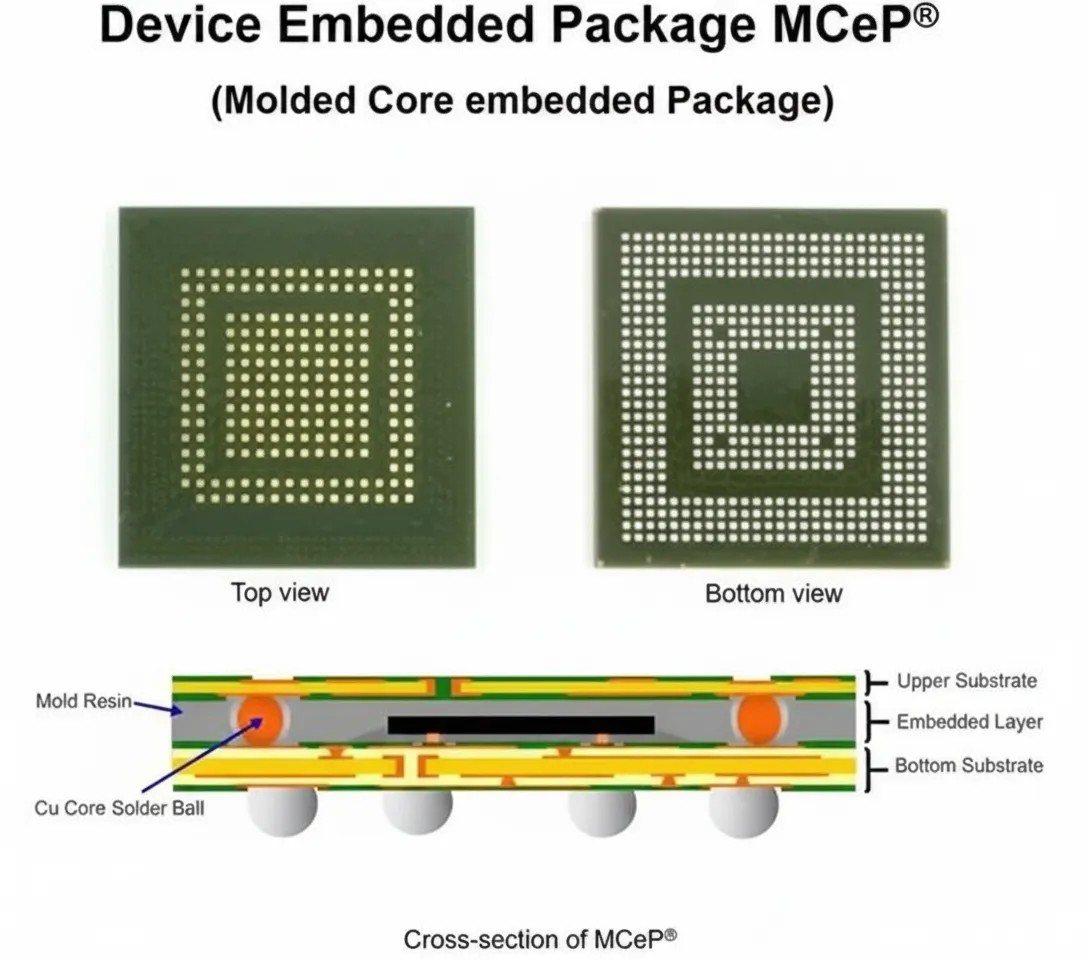
Optical system packaging is also important. The package must not only house components but also include one or more optical windows that filter outgoing and incoming light without excessive attenuation or reflection that would degrade signal integrity. Compact multi-die systems must integrate several devices, including LEDs, photodiodes, and analog and digital processing chips. Finally, a coating or filter technology that selects the required spectral bands and rejects unwanted signals is recommended. Even under sunlight the system must operate correctly. Without optical filtering, ambient light can saturate the analog chain and prevent proper operation of the electronics.
Analog Devices provides a range of photodiodes and analog front ends that can process signals from photodiodes and control LEDs. Integrated optical modules that combine LEDs, photodiodes, and front ends are also available, for example ADPD188.
Bioelectric and Bioimpedance Measurements
Bioelectric signals arise from electrochemical activity in the body. Examples include ECG and electroencephalography (EEG). These signals are very low amplitude and often lie in frequency bands with multiple interferences, so they must be amplified and filtered before further processing. ECG measurements are widely used in vital signs monitoring. Components from Analog Devices intended for these tasks include AD8233 and the ADAS1000 family.
AD8233 is designed for wearable applications and can be combined with the ADuCM3029, a Cortex-M3 based SoC, to create a complete system. The ADAS1000 family targets higher-end applications and offers low-power, high-performance operation suitable for battery-powered portable devices. Its power and noise characteristics are scalable, making it suitable for clinical-level applications.
Bioimpedance is another measurement approach that provides useful information about body state. Impedance measurements yield data on electrochemical activity, body composition, and hydration. Different measurement techniques and frequencies are required for each parameter. The number of electrodes and the timing of measurements vary with the frequency range used.
For example, skin impedance is measured at low frequencies up to about 200 Hz, while body composition is commonly assessed at a fixed 50 kHz. Different frequencies are used to assess hydration and to differentiate intracellular and extracellular fluids.
Although techniques vary, a single-ended AD5940 can implement many bioimpedance and impedance measurements. This device provides excitation signals and a complete impedance measurement chain capable of generating multiple frequencies to meet diverse measurement requirements. AD5940 is commonly used with AD8233 to create a comprehensive bioimpedance and bioelectric reading system. Other devices for impedance measurement include the ADuCM35x series SoC solutions, which combine a dedicated analog front end with a Cortex-M3 microcontroller, memory, hardware accelerators, and communication peripherals for electrochemical and biosensor interfaces.
Motion Measurement Using MEMS Sensors
MEMS sensors detect acceleration due to gravity and are therefore useful for detecting activity and anomalies such as unsteady gait, falls, or concussions, and for monitoring posture when a subject is at rest. MEMS sensors also complement optical sensors, which are susceptible to motion artifacts; accelerometer data can help correct optical readings. The ADXL362 is a low-power, three-axis accelerometer commonly used in medical designs. It offers programmable measurement ranges from 2 g to 8 g and digital output.
Figure 3
Figure 3. ADPD4000 implementation for photoplethysmography, bioelectric, bioimpedance, and temperature measurements
ADPD4000: Versatile Analog Front End
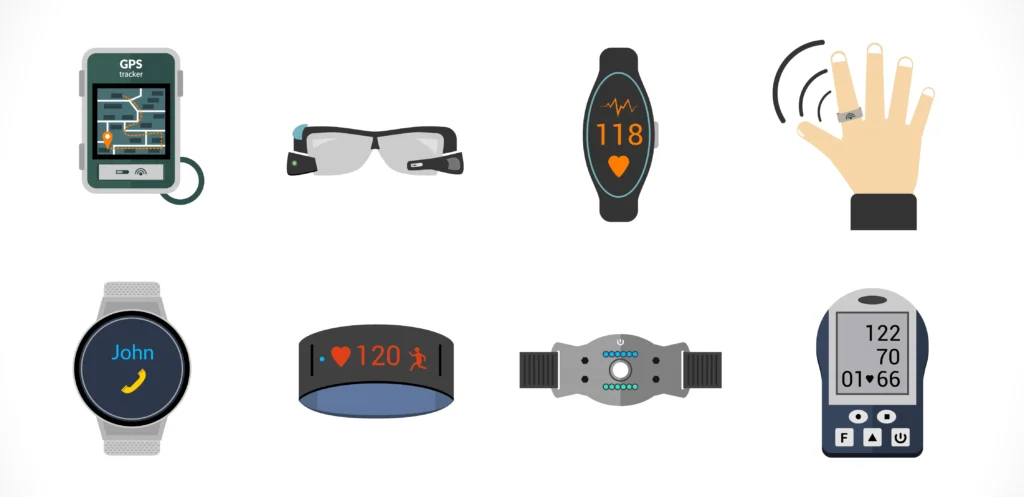
Wearable devices such as fitness bands and smartwatches offer multiple vital-sign monitoring features, commonly including heart rate monitoring, step counting, and calorie estimation. Blood pressure, skin temperature, skin electrical activity, blood volume changes (via photoplethysmography), and other metrics are also frequently measured. As monitoring options increase, demand grows for highly integrated electronic components. The ADPD4000 uses a flexible architecture to address these needs. In addition to supporting bioelectric and bioimpedance readings, it can manage optical front ends, drive LEDs, and read photodiodes. The ADPD4000 includes a temperature sensor for compensation and a switch matrix that routes the required outputs and acquired signals, supporting single-ended or differential voltage signals. Output configuration depends on the input requirements of the ADC it connects to. The device can be programmed with up to 12 different time slots, each dedicated to a specific sensor. Figure 3 summarizes key ADPD4000 features for several typical applications.
Conclusion
As technology advances, vital signs monitoring is becoming more common across industries and in daily life. Whether for treatment or prevention, health-related solutions require reliable and effective technologies. Designers of vital signs monitoring systems can find a range of products for signal acquisition and processing from Analog Devices to address their design challenges.