ALLPCB


Overview
On October 17, 2023, the Ministry of Industry and Information Technology (MIIT) issued the Notice on Promoting the Evolution and Application Innovation of 5G Reduced Capability (RedCap). The notice sets targets for 2025: significant improvement in the comprehensive capabilities of the 5G RedCap industry, continuous emergence of new products and business models, scaling of integrated applications, and strengthened security capabilities. On the technology and industry side, the notice expects ongoing standard evolution for 5G RedCap; the formation of a range of high-quality RedCap products and a complete industrial ecosystem; and continued cost reduction across key industry segments such as chips, modules, and terminals, with more than 100 terminal products available.
Regarding application scale, the notice aims for county-level and above cities across China to achieve widespread 5G RedCap coverage by 2025; richer application scenarios in industrial, energy, logistics, vehicular networking, public safety, and smart city domains; and a set of replicable, scalable solutions with at least five RedCap application domains each reaching one million connections. 5G Reduced Capability (RedCap, abbreviation of Reduced Capability) is an important path for connecting people, machines, and things. Advancing RedCap technology evolution and application innovation is expected to positively affect new infrastructure, industrial transformation, and deeper integration between the digital and physical economy.
Development Goals
By 2025, the comprehensive capability of the 5G RedCap industry should be significantly enhanced, with new products and models emerging, application scale increasing, and security capabilities strengthened.
Key Targets
-
Steady technology and industry development
- Ongoing evolution of 5G RedCap standards to meet diverse scenario requirements.
- Formation of a series of high-quality RedCap products and a complete industrial system.
- Cost reductions for chips, modules, and terminals, with terminal products exceeding 100 SKUs.
-
Growth in application scale
- County-level and above cities across China to achieve wide 5G RedCap coverage, with millions of additional connections.
- Richer and larger-scale RedCap application scenarios in industrial, energy, logistics, vehicular networking, public safety, and smart city fields.
- Selection of demonstration benchmark projects to produce replicable solutions and at least five application domains each reaching one million connections.
-
Thriving industry ecosystem
- Build technology and application innovation platforms and public service platforms for the RedCap industry.
- Foster innovative small and medium-sized enterprises.
Seven Major Tasks
-
Advance 5G RedCap standardization
Develop industry standards for 5G RedCap based on 3GPP Release 17 and support participation in 3GPP Release 18 and subsequent releases for international standardization of RedCap.
-
Build the 5G RedCap industrial system
Promote coordination across the industry chain to accelerate product R&D and industrialization, and accelerate integration with enhanced 5G features. Leverage existing operator networks to support RedCap testing and application validation and accelerate commercial deployment through scenario adaptation. Organize ecosystem activities to improve device compatibility and industry acceptance and drive cost reductions for chips and modules.
-
Accelerate RedCap capability upgrades in 5G networks
Following a cautiously forward approach, roll out RedCap commercially in phases and regions, accelerate continuous coverage in major cities, support industry virtual private network applications using RedCap, and improve 5G massive IoT capabilities.
-
Promote RedCap application innovation
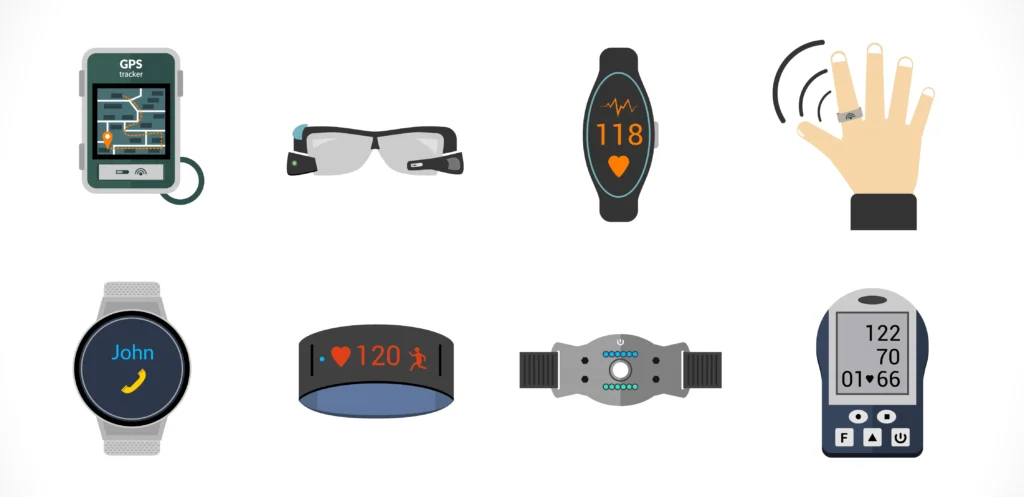
Advance RedCap use in wireless sensing and device control for production processes and develop scenario-based solutions for industry, energy, logistics, ports, and vehicular networking. Promote convergence innovations combining RedCap with video capture and data transmission to expand applications in public safety and smart cities. Encourage wearable and smart home device evolution toward RedCap to support personal application innovation.
-
Create industry demonstration benchmarks
Encourage major industry and telecom companies to develop demonstrable, replicable RedCap applications. Focus on exemplary cases through competitions and pilot projects to highlight successful models and resources.
-
Foster an integrated RedCap ecosystem
Encourage operators and industry leaders to drive technology innovation and coordinated development across the supply chain, and cultivate innovative SMEs. Use existing 5G promotion platforms to continue standards, testing, and related work. Establish application testbeds and provide public services such as technical consulting, testing, certification, and demand-supply matching.
-
Strengthen RedCap security capabilities
Plan, build, and operate RedCap security capabilities in parallel with technical and application development. Accelerate security standard development, perform risk assessments, and promote practical security capabilities. Encourage development of RedCap security testing tools and service platforms and support replication and adoption of effective security solutions.
Commercial Verification of 5G RedCap
Recently, China Telecom and China Unicom completed what they describe as the world's first full-band, multi-mode, full-scenario commercial verification of 5G RedCap across Zhejiang, Guizhou, Guangdong, Henan, and Shanghai, and initiated a city-scale commercial rollout. The verification covered multiple high, mid, and low bands including 3.5 GHz, 2.1 GHz, 900 MHz, and 800 MHz. In video networking scenarios, the deployment supported more than 20 concurrent high-definition video streams. Seamless handover success between 4G and 5G reached 100%, supporting high-mobility applications such as vehicular networking. The verification scenarios included urban, township, rural, and mountainous indoor and outdoor IoT scenarios, achieving comprehensive coverage in complex environments and supporting stable connectivity. The results indicate network environments can support broad commercial RedCap use across industrial, energy, logistics, smart city, vehicular networking, and wearable domains. Shenzhen, Xi'an, and other locations have already launched RedCap services.