ALLPCB


Definition
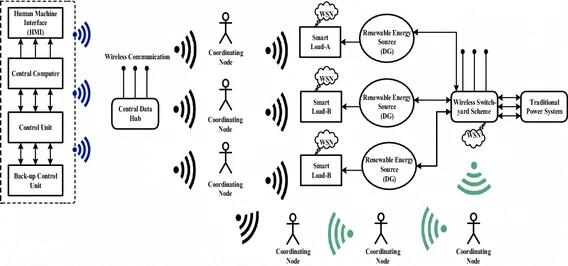
The smart grid is a power system that uses information technologies to achieve higher efficiency, reliability, and intelligence. By combining digital technologies and modern communication systems, the smart grid connects traditional generation, the grid, and loads, and implements system-wide monitoring, diagnostics, dispatching, and management to improve reliability, economy, and safety.
In practical terms, a smart grid uses modern networking technologies to enable automated control, real-time monitoring, automatic protection, intelligent forecasting, and optimized energy dispatch. Its main goals are to maintain stable operation while flexibly and efficiently adapting to changing supply and demand, to support the integration of clean energy and distributed generation, and to promote sustainable development of the power system.
Basic Characteristics
The smart grid is a new type of grid built on information technology, communication technologies, and energy technologies. Its basic characteristics include:
- Sustainability: The smart grid adopts technologies such as renewable energy to achieve efficient use of energy resources, reduce environmental impact, and support sustainable development.
- Intelligence: It uses advanced information and communication technologies to enable intelligent monitoring and control of the power system, optimizing operation and management while reducing construction and operating costs.
- Efficiency: Intelligent control strategies and modern equipment enable efficient use of electricity and effective operation of assets, improving economic performance and resource utilization.
- Flexibility: Modular design provides good scalability and adaptability, allowing capacity and configuration to be adjusted according to regional needs and load patterns.
- Security: Multiple measures such as equipment monitoring and fault isolation enhance security and reliability, enabling rapid response to and handling of abnormal conditions.
In summary, the smart grid supports sustainable development, intelligent control, economic efficiency, flexible adaptation, and dependable operation, offering significant practical value and development potential.
Functional Features
The smart grid is based on advanced information, communication, and control technologies and offers the following functional features:
- Adaptive capability: It can automatically adjust operating states to accommodate variable loads and diverse generation connections.
- Intelligent monitoring and management: The grid enables real-time monitoring and analysis of parameters such as voltage, current, and frequency, and supports automatic fault diagnosis and handling.
- Optimized energy allocation: It coordinates multiple energy sources to optimize allocation, balance clean and conventional generation, and improve overall energy efficiency while reducing consumption and emissions.
- Intelligent response: The system can automatically respond to changes in load and energy demand, making timely adjustments to maintain stable operation.
- Information and communication capability: By establishing communication networks, the smart grid supports remote monitoring and control of distributed generation and demand-side management, improving grid safety and reliability.
These features provide better adaptability, responsiveness, and stability, supporting reliable, sustainable, and efficient power system operation.
Main Advantages
The smart grid integrates sensors, communication, and control technologies. Its main advantages include:
- Efficient operation: Advanced control techniques enable rapid response to changing system needs, delivering efficient operation under dynamic conditions.
- High reliability: Deployment of dense sensors and related technologies allows real-time monitoring and management across the system, enabling fault detection and protection to enhance reliability and robustness.
- Coordinated operation: Leveraging characteristics of distributed generation and other resources, the smart grid enables coordinated operation that improves sustainability and stability while facilitating rapid adoption of new energy sources.
- Intelligent control: Automated control and optimization of operating parameters increase energy and generation efficiency and reduce operating costs.
- Flexibility: Integration of multiple energy types reduces dependence on traditional resources and improves the system's adaptability to diverse demand scenarios.
- Big data analytics: Use of big data techniques enables intelligent analysis and mining of system data, helping operators better understand system behavior and optimize decision making and management.
Overall, the smart grid's combination of efficient operation, improved reliability, coordinated resource management, intelligent control, flexibility, and data-driven decision making positions it as a key direction for grid transformation and sustainable energy development.