ALLPCB


Overview
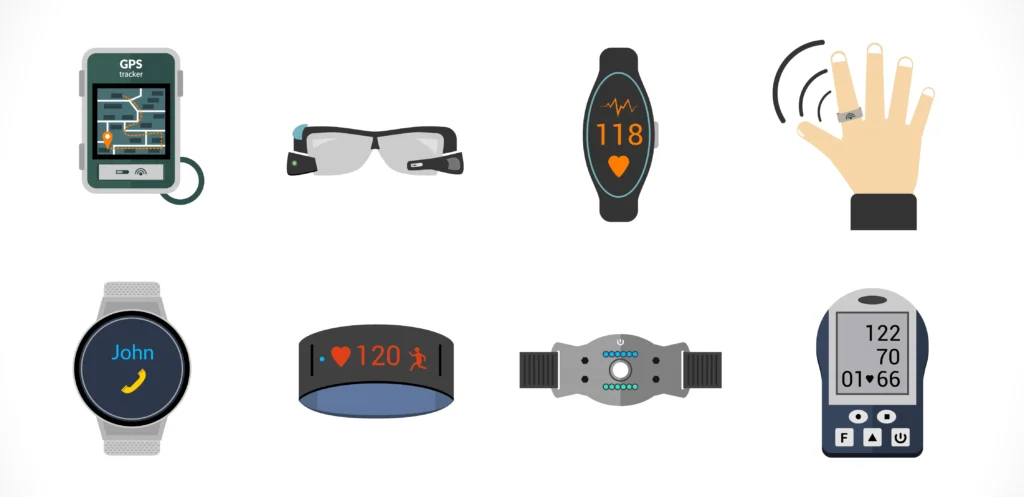
In the past, many people dismissed Google Glass for its odd, almost alien appearance, and wristband fitness gadgets for their fashion-focused nature. The idea that wearables could play a significant role in factory and industrial environments seemed unlikely. As wearables have steadily evolved from fitness monitoring toward more demanding and stringent tasks, their advantages and potential benefits have become clearer. In warehouses and field service work, for example, most staff already wear safety glasses, so adding wearable computing should not disrupt traditional workflows.
Consequently, revenue potential for wearable technologies is expected to be significant not only for general consumer applications but also for industrial use. Recent market research lists lifestyle and fitness as 38% of the overall market, while industrial and defense account for 22% of wearable applications.
Use Cases in Field and Warehouse Work
If wearable computing is to become a multitasking processor-based platform, it must enable continuous and smooth human-machine interaction. Wearables must allow users to perform tasks while receiving commands, and they must operate reliably away from traditional desktop computing environments. For example, on site, sensors can accurately measure, evaluate, and report distance and safety. Given the range of sensors available, they can help prevent industrial incidents involving hazardous particle inhalation or potential electric shock. In field service, maintenance, and troubleshooting, wearables can provide information about installed equipment and help diagnose problems without requiring engineers to continue making the now-trivial "fix" phone calls.
Field and warehouse personnel are likely to be early adopters of wearables aimed at improving productivity and safety while reducing human error. For example, video and smart glasses suppliers have integrated augmented reality (AR) applications to enable hands-free workflows. SAP announced two AR applications for a smart-glasses platform that provide hands-free work experiences: SAP AR Warehouse Picker and SAP AR Service Technician, both designed to support mobility and hands-free operations.
SAP AR Warehouse Picker is designed for warehouse pickers, enabling hands-free mobile operation with visual and voice recognition. Workers receive instructions through a smart-glass device and can complete routine tasks without handheld scanners. Features include barcode scanning for handling units, locations, products, workstations, and other required scans, plus voice input for quantity confirmation. Secure authentication on the user's SAP system can be performed via QR-code identity scanning, eliminating the need to enter usernames, passwords, or login codes.
The SAP Service Technician application allows field service technicians to access 3D visual enterprise models of their workplace through hands-free instructions, enabling them to perform necessary operations. The app supports voice recognition and an expert-call feature that lets remote experts guide on-site technicians by seeing what the technician sees through the smart-glass device or head-mounted display.
Core Role of Sensors
One of the major drivers behind the recent rise of industrial wearables is the continued proliferation and cost reduction of sensors, their successful integration into day-to-day applications, the ongoing evolution of mobile technology for industrial environments, and collaborations between major platform companies and leading sensor manufacturers.
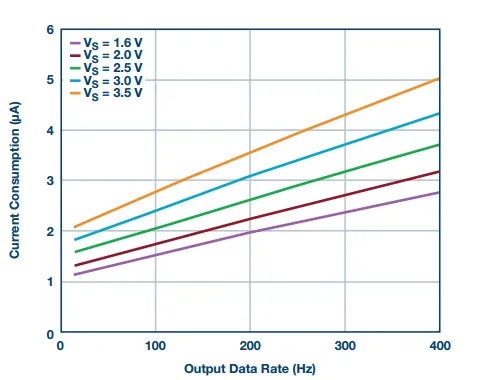
Manufacturers have introduced components specifically targeted at wearable sensors and industrial designs. For example, Texas Instruments announced low-power battery chargers and an integrated MicroSiP power module to extend battery life. The TPS82740B MicroSiP power-module evaluation unit uses a TPS82740B buck converter module, supports 200 mA output current, achieves conversion efficiency up to 95%, and consumes only 360 nA of quiescent current during active operation and 70 nA in standby (Figure 1).
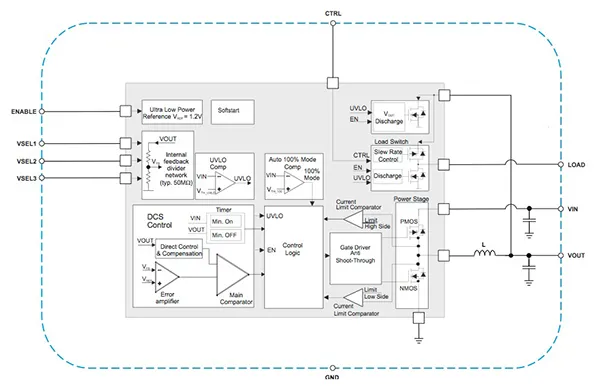
Figure 1: Functional block diagram of the TPS82740.
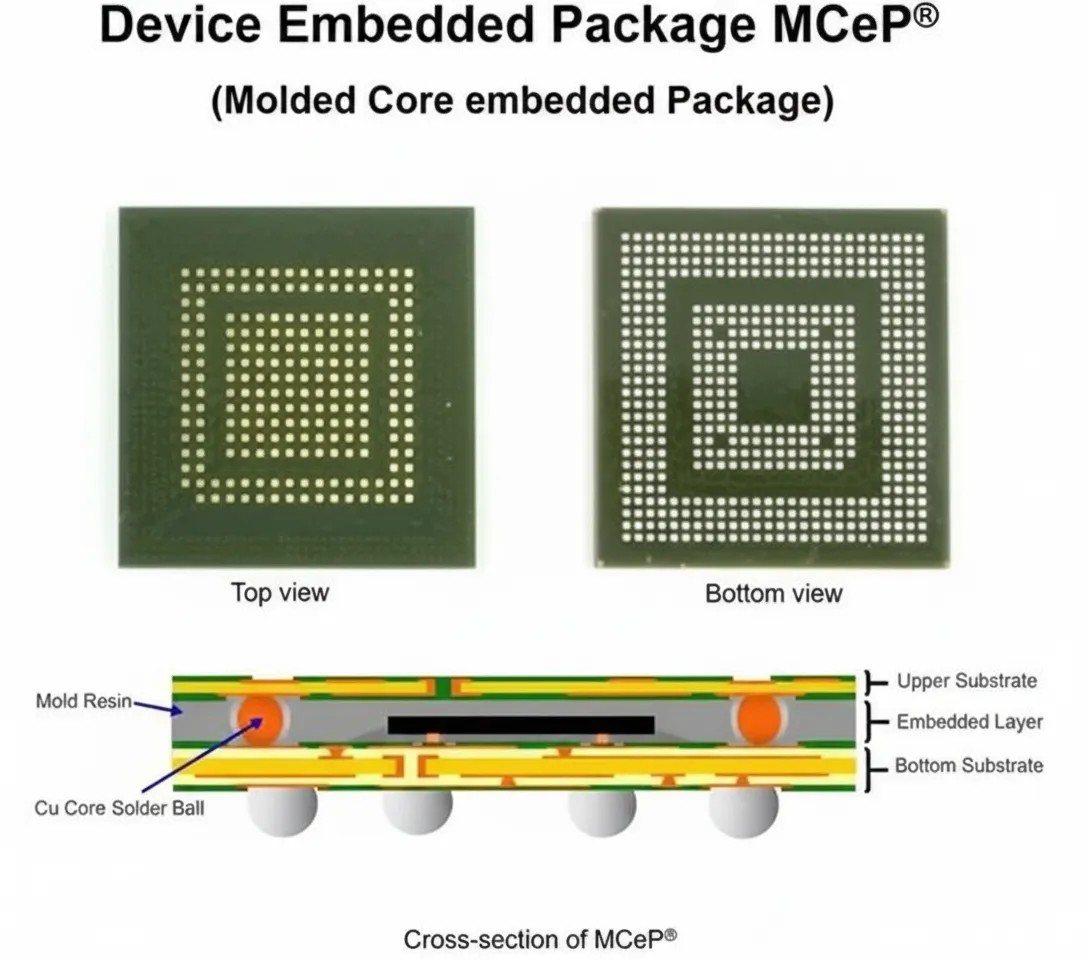
These miniature modules rely on a fully integrated 9-solder-ball MicroSiP package, reducing size by 75% compared with discrete solutions even when including a switching regulator, inductor, and input/output capacitors. The solution area is only 6.7 mm2.
Display, Camera, and Ambient Sensor Advances
Head-mounted displays (HMDs) have become more streamlined and ergonomic compared with earlier bulky devices, and prices are approaching levels that enable wider adoption. Next-generation OLED microdisplays and retinal displays are expected to advance a range of use cases. Video camera technology costs have also fallen sharply, especially for glasses-mounted solutions. Near-eye 2D/3D video see-through displays and video recording functions are being integrated into frame designs using gyroscopes and accelerometers.
Advances in proximity and ambient light sensors are also important. Ambient light sensing adjusts screen backlight according to surrounding light levels to improve battery life and usability in wearable devices.
For example, consider devices such as the 6-pin SMD Panasonic PNJ4K01F ambient light sensor. The device includes an integrated photodiode and current-amplifier circuitry to control display brightness based on ambient light, making it suitable for low-power mobile applications.
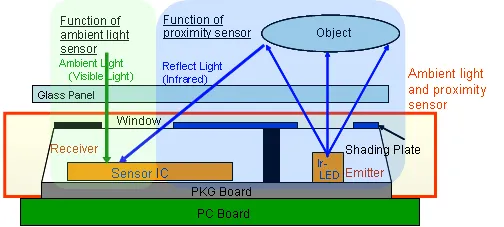
Figure 2: Ambient light and proximity sensing.
The PNJ4K01F has a spectral sensitivity matched to human visual response, enabling near-eye response and optimal human sensitivity control. Combined with small package size and low operating current down to 1.4 V/min, it is well suited for compact mobile and wearable electronics.
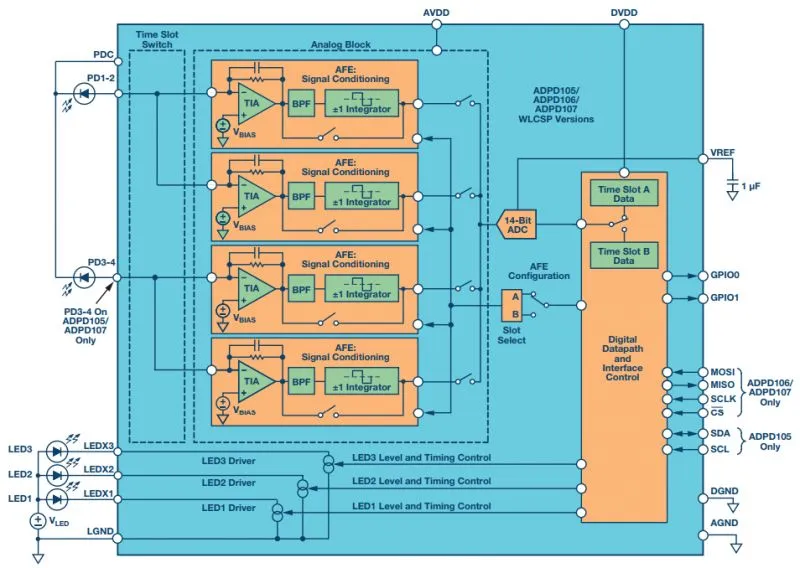
Another notable family includes Silicon Labs Si1141, Si1142, and Si1143 proximity/ambient light sensors with an I2C interface (Figure 3). These are contactless, low-power, reflection-based infrared proximity and ambient light sensor ICs with programmable event interrupt outputs, onboard ADCs, integrated high-sensitivity visible and infrared photodiodes, a digital signal processor, and one, two, or three integrated IR LED drivers with fifteen selectable drive levels.
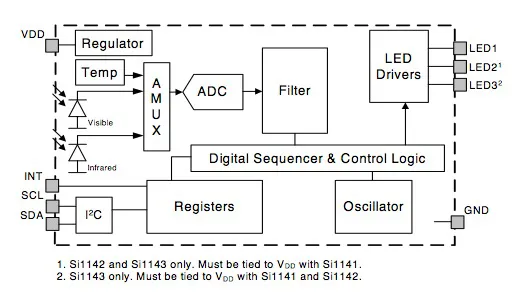
Figure 3: Block diagram of Silicon Labs Si1141/42/43 ambient light sensors.
These sensors deliver high performance across a wide dynamic range and under various lighting conditions, including direct sunlight, and can operate under dark glass covers. They support multi-axis proximity motion detection and operate from -40 to +85°C with a supply voltage range of 1.71 to 3.6 V.
The integrated photodiode response and associated digital conversion circuitry provide excellent immunity to artificial light flicker noise and natural light scintillation noise. With two or more LEDs, Si1142/43 devices support multi-axis proximity motion detection. Si1141/42/43 devices come in a 10-pin 2 x 2 mm QFN package and operate over the same temperature and voltage ranges.
Remaining Challenges
Despite impressive progress and a shift from consumer fashion to factory-floor usage, adoption of wearable technology in industrial settings is not without challenges. Issues remain around security, standards development, interoperability, and power management. As input and sensing devices are extended from smartphones—for example, wrist-worn keyboards that are relatively low cost and can serve as practical alternatives to standalone wearables—solutions currently on the drawing board aim to address these concerns.
As industrial adoption promises higher volumes, the cost of factory wearables and their associated sensors is expected to fall, removing a key barrier to widespread deployment in industrial environments.