ALLPCB


How touchscreens sense touch
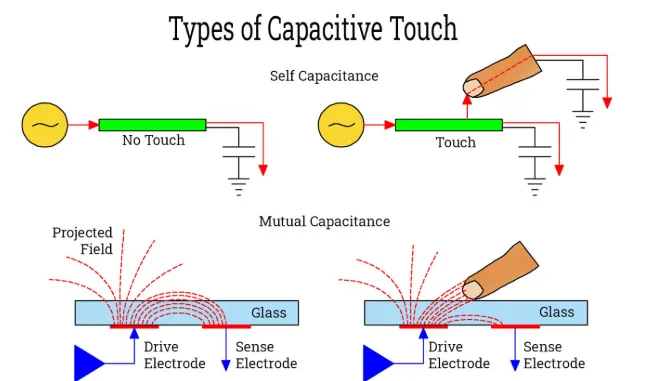
Touchscreens detect touch position by sensing the human body's capacitance. Modern common capacitive touchscreens use capacitive sensing technology. The touchscreen surface is covered by a transparent conductive film or glass. When a user touches the screen, the body's charge alters the capacitance at the touched area.
Capacitive touchscreens typically consist of two main parts:
Main components
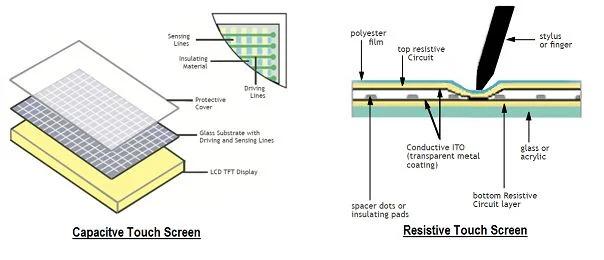
Front-panel sensor: A transparent capacitive layer located a short distance below the touchscreen surface that senses the charge produced when the body touches the screen. This capacitive layer is composed of a grid or traces of many tiny capacitive sensors, which can record the touch position and respond to touch events.
Control circuitry: The circuit board behind the touchscreen that receives signals sent by the capacitive sensors and converts them into digital signals that a computer or mobile device can interpret. The control circuitry also implements features such as multi-touch and gesture recognition.
When a user touches the screen, the body's charge changes the electric field distribution on the conductive film or glass. The capacitive sensors detect this change and transmit the touch position information to the control circuitry. The control circuitry processes these signals to determine the touch location and action, then sends the result to the relevant device or application, enabling touchscreen functionality.
Working principles and types
The working principle of touchscreens is to detect changes in capacitance caused by the human body. Common types include:
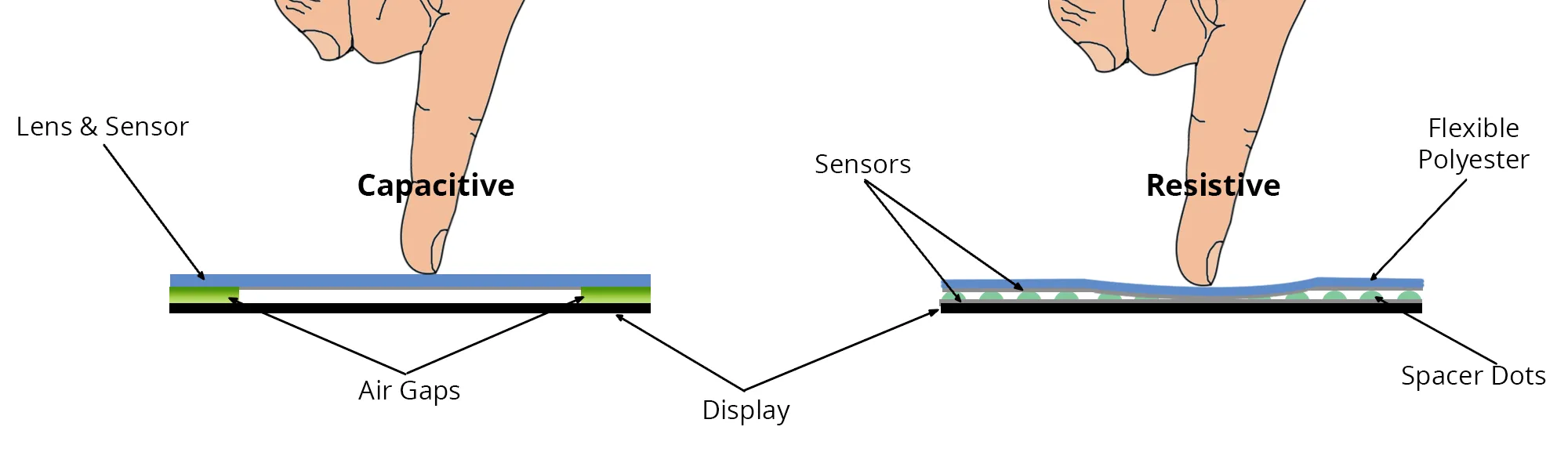
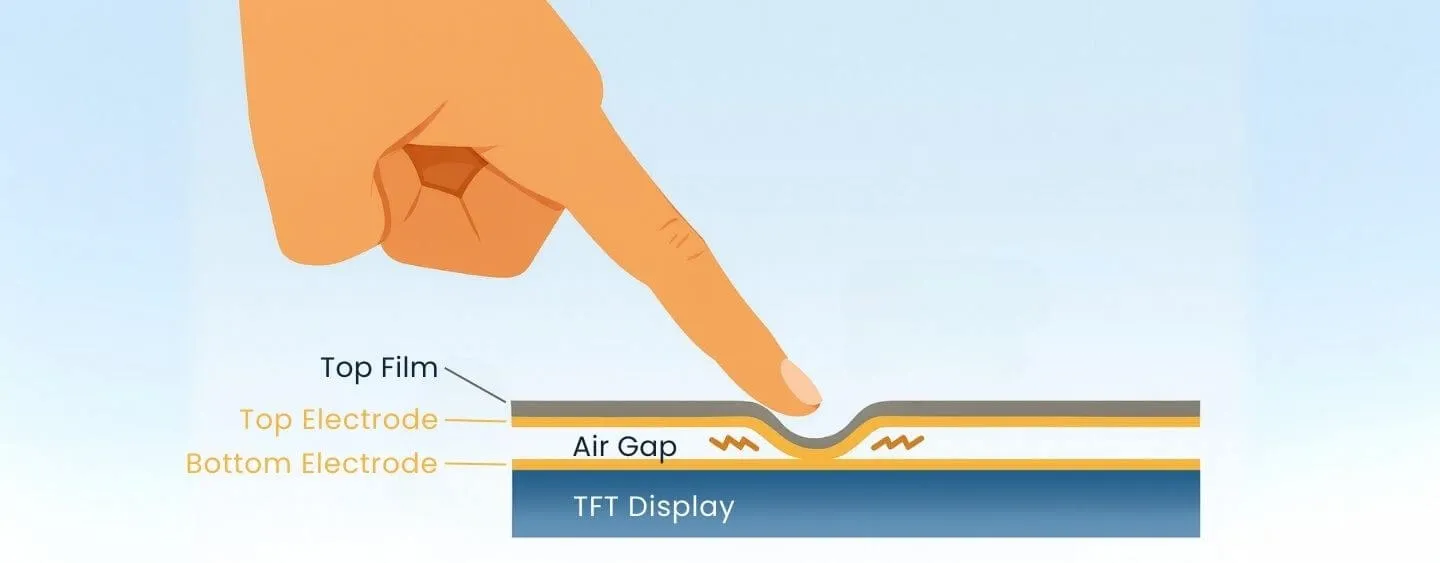
Resistive touchscreens: Consist of two conductive layers separated by an insulating spacer. When a finger or stylus presses the screen, the two conductive layers make contact, forming a current. The touch coordinates are determined by measuring this current.
Capacitive touchscreens: The screen surface is covered with a capacitive material, such as glass or a conductive film. When a user touches the screen, the body's charge changes the capacitance at the touched area. Measuring this capacitance change determines the touch location.
Surface acoustic wave (SAW) touchscreens: A set of transmitters and receivers are arranged on the screen. The transmitters emit ultrasonic waves and the receivers detect the reflected waves. When a user touches the screen, the touch point scatters the ultrasonic waves; the receivers capture this and processing determines the touch coordinates.
Applications
Touchscreens are widely used in the following areas:
- Smartphones and tablets: Touchscreens are the primary input method for smartphones and tablets, enabling gesture controls and text input.
- Computers and laptops: Some computers and laptops include touchscreens, allowing direct interaction similar to smartphones or tablets.
- Public information kiosks and self-service terminals: Touchscreens are commonly used in public kiosks and terminals, such as in banks, airports, and stations, for information queries and transactions.
- Digital signature pads: Touchscreens are used for signature capture, enabling electronic signing with a stylus.
- Industrial control and user interfaces: Touchscreens are widely applied in industrial control systems and interactive interface designs, providing convenient operation and monitoring.
In summary, touchscreens use various sensing principles to detect and locate touch points, and they are extensively applied in smartphones, tablets, computers, public kiosks, and industrial interfaces to provide convenient interaction methods.