ALLPCB


Overview
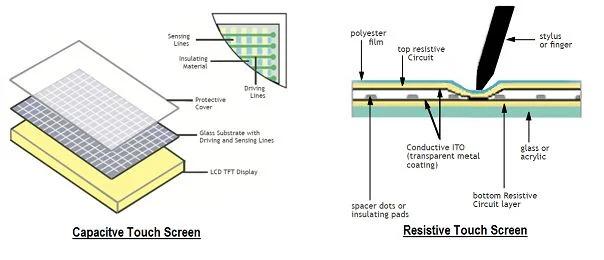
A capacitive screen is a common touchscreen technology that uses capacitive sensing to detect touch. In a typical design, a layer of transparent conductive material, usually a metal oxide, is applied to the display and a grid of small capacitive sensors forms a capacitor array.
How capacitive sensing works
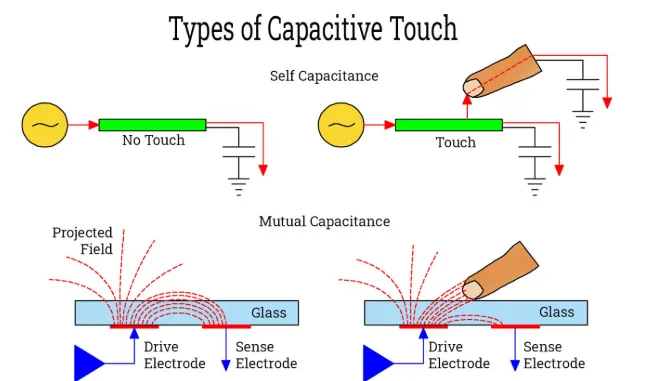
When a user touches a capacitive screen, the finger and the conductive layer form a capacitive coupling that alters the electric field distribution beneath the sensors. The capacitive sensors detect the change in the local electric field and convert it to electrical signals. By precisely measuring the capacitance changes across the sensor array, a capacitive screen can determine touch position and gestures such as taps, swipes, and pinch-to-zoom.
Capacitive screens are sensitive and accurate, support multi-touch, and enable fast, smooth gesture interactions. For these reasons, they are widely used in smartphones, tablets, and touch-enabled laptops, providing an intuitive and interactive user interface.
Touchscreen as a general concept
A touchscreen is a broad category that includes multiple technologies, such as capacitive, resistive, and pressure-sensing screens. Each technology has its own characteristics and suitable applications, and capacitive screens are among the most commonly used.
How phone touchscreens detect input
Phone touchscreens detect input through capacitive or pressure-based methods. Common touchscreen technologies include:
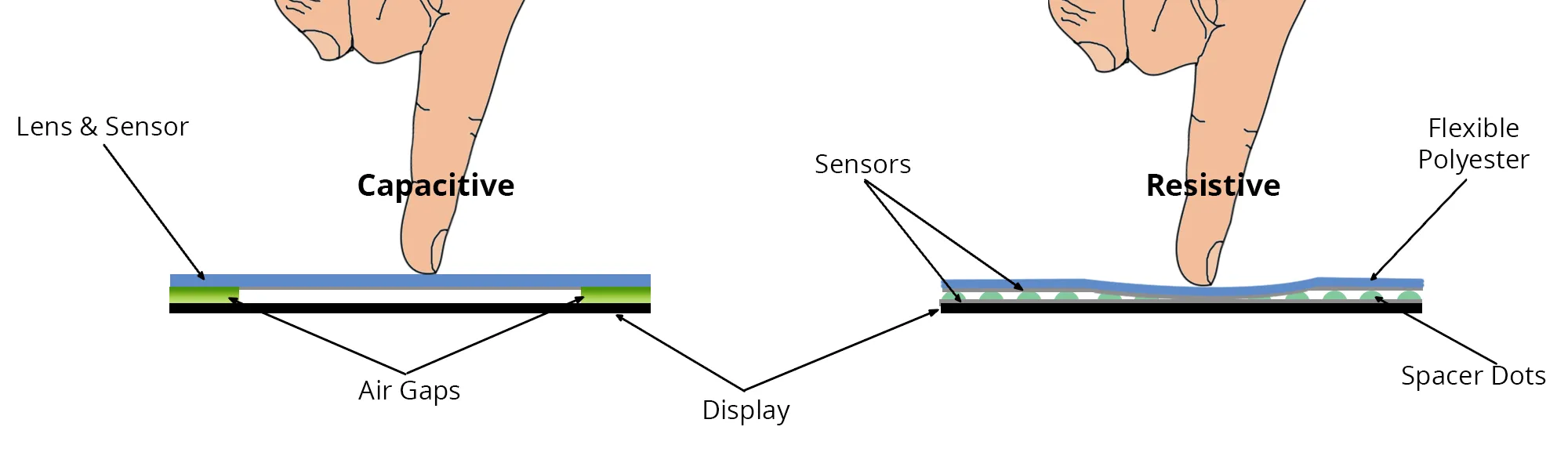
- Capacitive touchscreens: These rely on changes in capacitance between the user (or another charged object) and the conductive surface of the screen. When a finger contacts the conductive layer, a small capacitance change is generated and converted by sensors into electrical signals that the controller interprets as touch input.
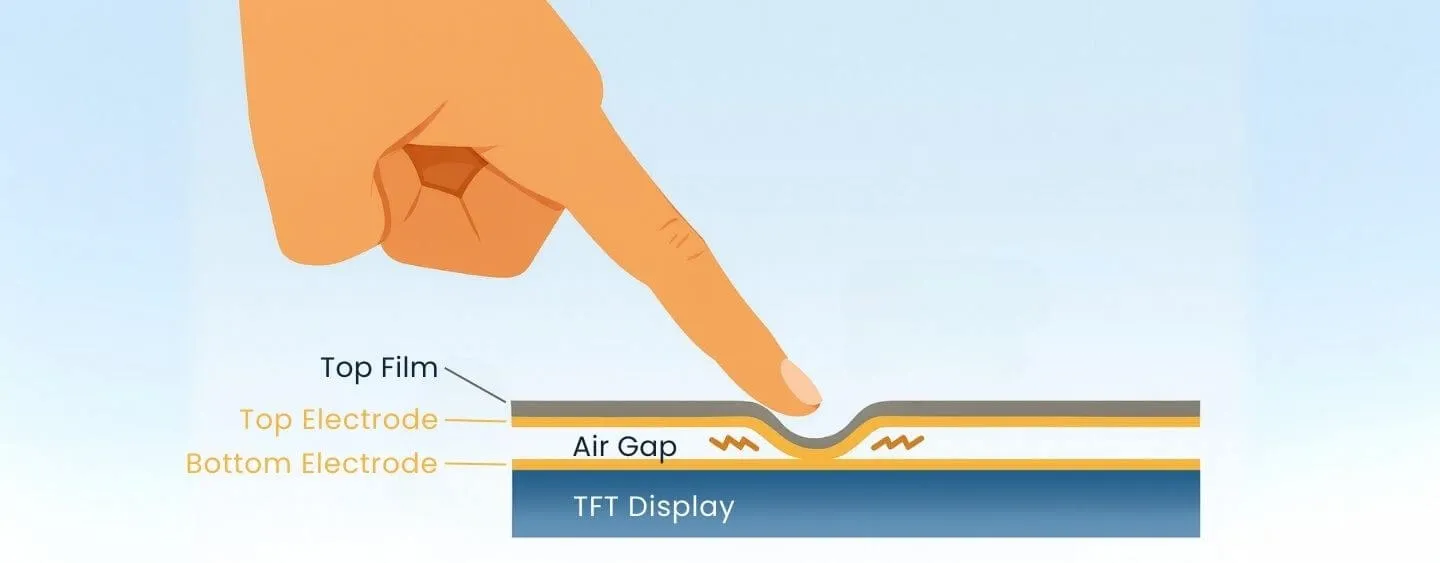
- Resistive touchscreens: These consist of two thin, transparent conductive films separated by a small gap. When a stylus or finger presses the surface, the two films make contact at a point, creating a measurable current. The controller detects the change in current to calculate the touch coordinates.
- Pressure-sensing screens: These use pressure sensors or an LED array beneath the display to detect applied force. When pressure is applied, the pressure sensors or LED array detect the change and convert it into a touch signal for processing.
Regardless of the specific technology, touchscreens work by sensing either contact or pressure changes between the user and the screen, then converting those changes into electrical signals for the device to process.