ALLPCB


Overview
FPGA and embedded systems are both widely used in electronic design, but they differ in architecture, functionality, and typical applications.
Architecture
FPGA is mainly composed of a large number of logic elements, registers, and a programmable interconnect network. Designers use a hardware description language (HDL) to organize logic elements into circuits that implement specific hardware functions. Embedded systems are typically built around a specific processor or microcontroller and rely on software programs to control and execute designated tasks.
Functionality and Use Cases
FPGA offers a high degree of programmability and flexibility, allowing designers to reconfigure internal logic and interconnects to implement different functions and algorithms. This makes FPGA suitable for applications that require high performance and parallel processing, such as digital signal processing, image processing, and cryptographic algorithms. Embedded systems, by contrast, emphasize control and execution of specific tasks; their software is usually written for a particular application and often has deterministic and real-time requirements.
Integration and Collaboration
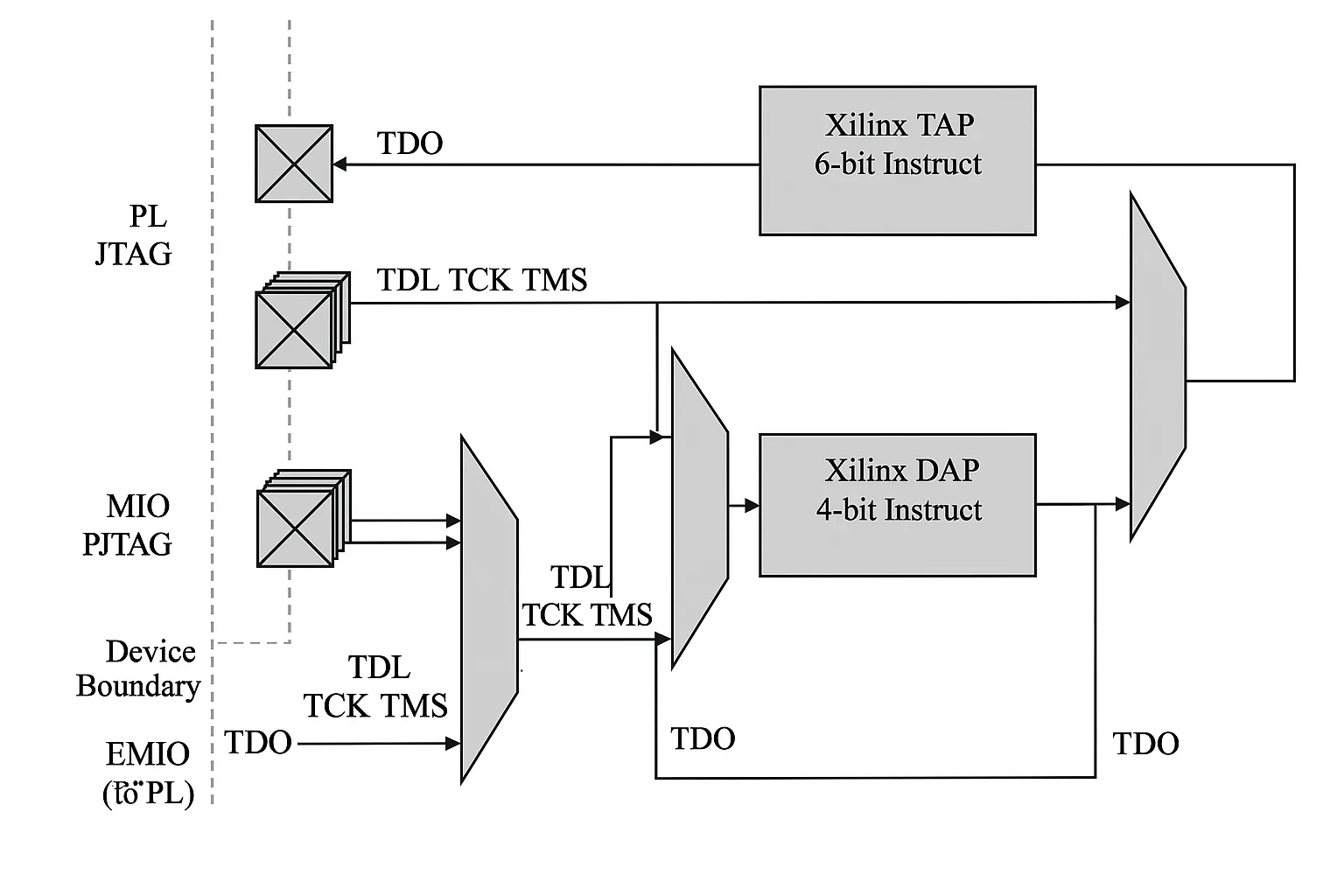
Although FPGA and embedded systems differ in structure and function, they can complement each other. FPGA can serve as a hardware accelerator or coprocessor for embedded systems, providing additional computational capacity and flexibility. For example, FPGA can implement complex digital signal processing algorithms to offload the embedded processor and improve overall system performance.
With technological development, the convergence between FPGA and embedded systems has become more pronounced. Some modern FPGA products integrate processor cores and other embedded components, enabling a single device to perform both hardware acceleration and software control tasks. This integration facilitates tighter cooperation between hardware and software, resulting in more efficient solutions.
Conclusion
FPGA and embedded systems each have distinct strengths and applicable scenarios in electronic design. Their differences and interconnections allow them to complement one another and support the development and application of electronic technologies.