ALLPCB


Overview
Since the 21st century, through the joint efforts of numerous specialists in information theory, communications, and electromagnetics, MIMO technology has progressed from theoretical derivation and simulation verification to practical engineering deployment and large-scale commercial adoption. During this process, the number of antennas and channels in MIMO systems has increased, and spatial resource exploitation has yielded significant spectrum efficiency gains. Massive MIMO with large antenna arrays has become a hallmark technology of 5G wireless communications.
Looking forward, to meet demands for greater capacity, wider coverage, improved user experience, and new vertical-industry applications, the next-step evolution of Massive MIMO has become a key research focus in academia and industry. There is an urgent need to identify techniques that can provide sustained performance improvements for future wireless systems. In response, research into new antenna forms, new electromagnetic properties, new wireless system design methods, and new system modeling approaches has proliferated. Two unavoidable questions arise in this research: first, how to accurately characterize and evaluate the theoretical performance limits of new technologies; second, how to perform engineering system design to achieve the optimal performance of those technologies. Without solving these two questions, it is impossible to determine whether new approaches offer advantages over Massive MIMO and thus to identify critical technological paths.
However, solving these questions is not straightforward. Classical information theory is a mathematical framework based on statistics that can provide the maximum information transmission rate for a given channel environment, but it does not provide the actual physical transmission channel. In traditional Massive MIMO systems, under ideal assumptions such as plane waves, far-field conditions, and no coupling, the research community has constructed channel models that approximate real environments and enabled performance evaluation. These ideal assumptions, however, may no longer hold or remain accurate for new antenna forms and architectures that exploit novel electromagnetic properties. To address the two key questions, it is necessary to integrate information theory, electromagnetic theory, and circuit theory to build a physically consistent, next-generation theoretical framework—electromagnetic information theory. This framework aims to evaluate system performance, guide system design, provide new theoretical analysis methods and design paradigms for future wireless communications, and reveal additional performance gains.
Research Framework Summary
At present, there is no unified understanding of the definition and research scope of electromagnetic information theory across academia and industry. This white paper summarizes experts' perspectives presented at Huawei's December 2022 Second "Electromagnetic Information Theory and Advanced MIMO" technical forum and provides a preliminary outline of the electromagnetic information theory research framework. Specifically, it comprises three fundamental questions, five foundational theories, six core methods, nineteen key technologies, and five representative application scenarios, shown in Figure 1:
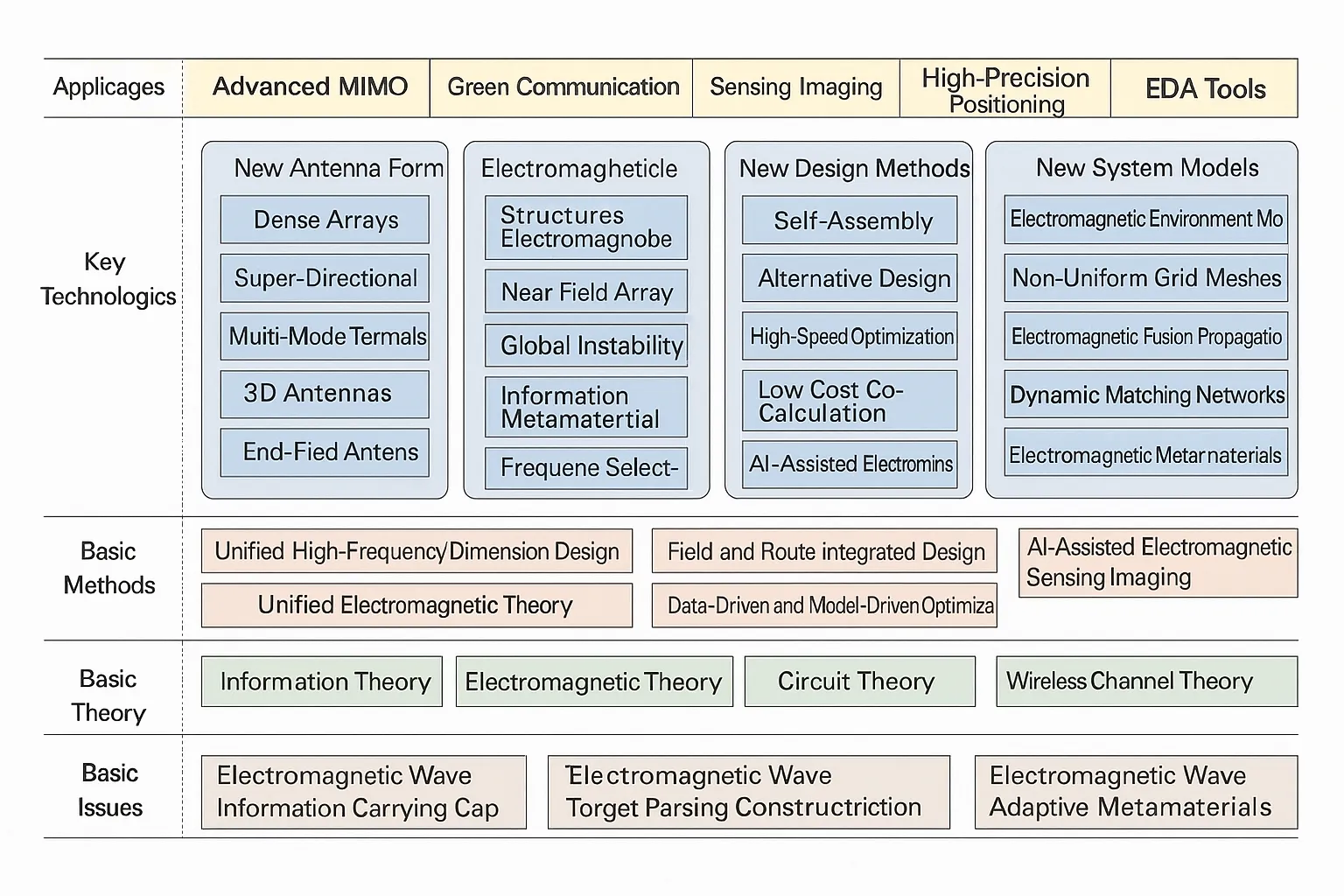
Figure 1: Electromagnetic information theory research framework
First, electromagnetic information theory will serve multiple application scenarios in future wireless communications and provide theoretical support for the evolution of key technologies. These scenarios include advanced MIMO for next-generation systems, energy-efficient or green communications, sensing and imaging to extend wireless capabilities, high-accuracy positioning, and new EDA tools tailored to wireless requirements.
Second, considering the role of electromagnetic waves in these typical scenarios, three basic questions are abstracted: (1) the information-carrying capacity of electromagnetic waves, i.e., how to fully utilize electromagnetic waves for efficient information transmission; (2) the reconstruction capability of electromagnetic waves for targets, i.e., how to use electromagnetic waves for high-accuracy positioning, sensing, and imaging; and (3) the interaction mechanisms between electromagnetic waves and the environment, i.e., how to model, characterize, and analyze electromagnetic-wave interactions with the environment—for example, incorporating electromagnetic propagation mechanisms into channel modeling for new frequency bands and scenarios so that electromagnetic waves better match the environment and improve utilization. Chapter 2 of this document discusses these basic questions in detail.
Third, five foundational theories needed for electromagnetic information theory are summarized. Problems encountered in next-generation wireless systems are often complex, and single-discipline theoretical tools may be inadequate. Therefore, integrating foundational theories is required to address complex problems. The foundational theories to be integrated include information theory, electromagnetic theory, circuit theory, wireless channel modeling theory, and electromagnetic metamaterials theory. Their interdisciplinary fusion forms the core of electromagnetic information theory. Chapter 3 provides detailed discussion of these theories.
Fourth, the fusion of foundational theories gives rise to new system-design methods. Interdisciplinary integration enables joint-design approaches that provide new ideas for next-generation wireless system design. These include joint time-frequency-spatial-elevation design, multi-scale electromagnetic structure design, integrated field-domain and path-domain design, combined statistical and deterministic channel modeling, AI-assisted electromagnetic sensing and imaging, and data-and-model dual-driven optimization. Chapter 4 elaborates on these methods.
Key Technologies
Finally, applying the basic methods of electromagnetic information theory to the fundamental problems involves a variety of key technologies spanning many modules and stages of wireless systems. In this white paper, key technologies are classified into four categories: new antenna forms, new electromagnetic properties, new design methods, and new system models. New antenna forms include tightly coupled antenna arrays, superdirective antennas, multi-mode multiport structures, volumetric antenna arrays, and end-fire arrays. New electromagnetic properties include structured electromagnetic waves, near-field vector waves, spherical nonstationarity, information-carrying metamaterials, and frequency dispersion. New design methods include self-decoupling designs, surrogate-model-based design, high-frequency fast imaging, hybrid high-low-frequency computation, and AI-assisted electromagnetic design. New system models include electromagnetic-environment modeling, non-uniform Green's functions, electromagnetic coupling models, dynamic matching networks, and radio channel models. With advanced MIMO capacity improvement as a driving application, the positions and logical relations of these key technologies within electromagnetic information theory are shown in Figure 2. Chapter 5 gives detailed descriptions of these key technologies.
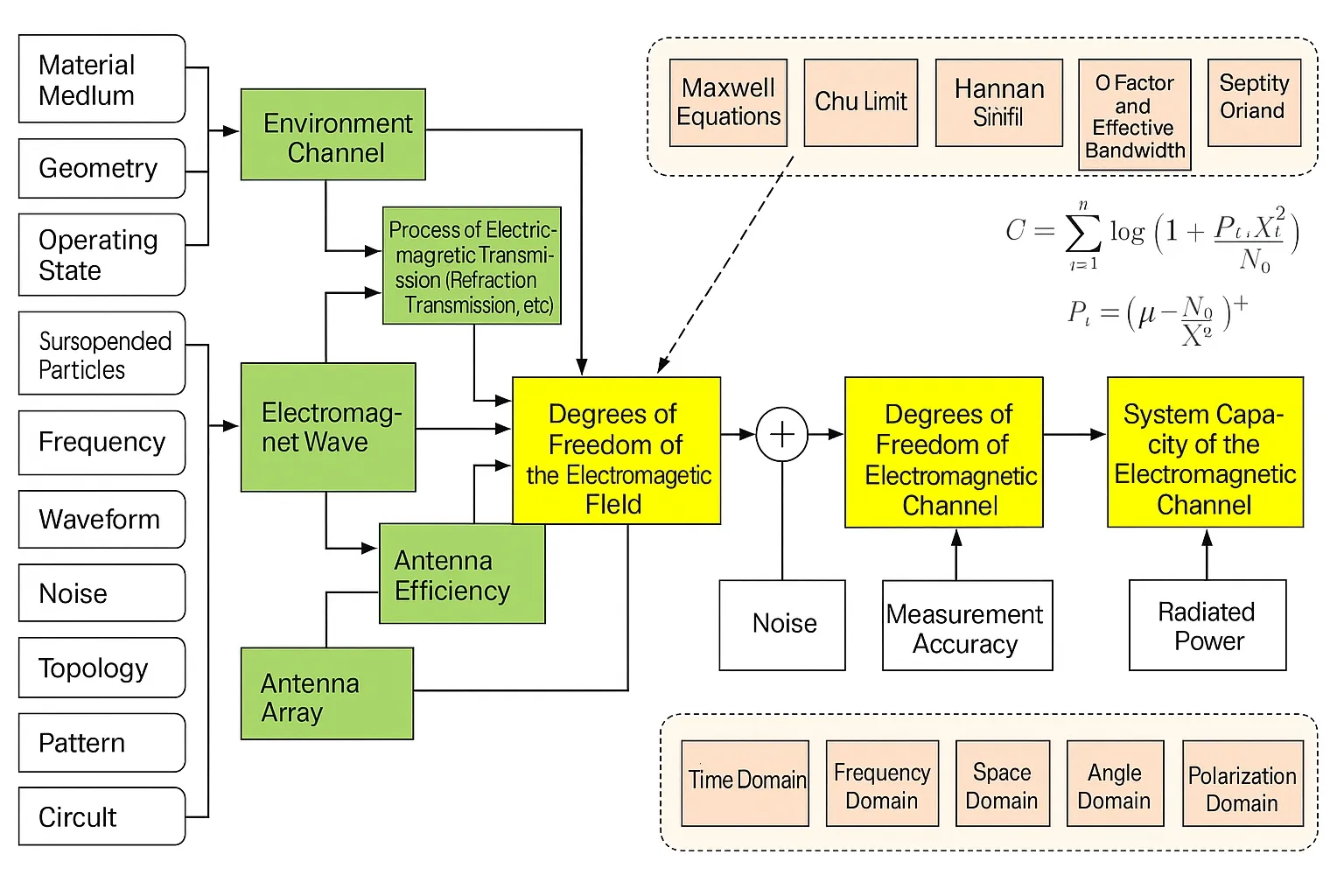
Figure 2: Electromagnetic information theory logical structure
Extended Study: Copilot Section
What is electromagnetic information theory?
Electromagnetic information theory is an interdisciplinary field studying the relationships and laws between electromagnetic waves and information. It involves electromagnetics, information theory, antenna theory, circuit theory, and channel theory. The goal is to exploit multiple physical attributes of electromagnetic waves to achieve efficient, reliable, and secure information transmission and processing while accounting for the joint responses and constraints of antennas, circuits, and channels.
Research challenges include unifying the mathematical and physical characteristics of information and electromagnetic waves, considering influences across physical scales and properties, and establishing scientifically sound system models and information-theoretic analyses. Research topics include determining the performance limits of finite-aperture communication systems and optimal antenna design.
Electromagnetic information theory is an emerging theoretical framework arising from the interdisciplinary fusion of Maxwellian electromagnetics and Shannon information theory. It offers new theoretical analysis methods and system-design paradigms for future wireless communications and can reveal additional performance gains for wireless systems.
What are EDA tools?
EDA tools refer to electronic design automation software used for the design, analysis, simulation, verification, and optimization of electronic circuits and systems. EDA tools help electronic engineers and designers improve design efficiency and quality, shorten development cycles, reduce costs, and support innovation. EDA covers areas including integrated circuits, printed circuit boards, programmable logic devices, and embedded systems, spanning front-end to back-end and analog to digital stages.
Common EDA tools in the market include:
- Protel: an integrated EDA suite primarily for schematic capture, PCB design, and circuit simulation, offering global editing and intelligent copper pour features and supporting multiple electrical connectivity formats and industrial PCB templates.
- EWB: a compact EDA tool for mixed-signal simulation of analog and digital circuits, providing waveform visualization, rich component libraries, and multiple circuit-analysis methods, with data exchange capabilities with other design tools.
- Altium Designer: an integrated electronic product development system for schematic capture, PCB design, FPGA development, embedded development, and 3D PCB design, featuring a rules-driven environment and support for mixed-signal simulation.
- OrCAD: a software suite for schematic capture, PCB design, and circuit simulation, with strong schematic capture, multi-layer PCB support, and mixed-signal simulation capabilities.
- MATLAB: a commercial technical computing environment for algorithm development, data visualization, analysis, and numerical computation, with powerful matrix operations, scientific visualization, modeling and simulation toolboxes, and interfaces to other languages and hardware.
What is a tightly coupled antenna array?
A tightly coupled antenna array leverages strong coupling between antenna elements to achieve ultra-wideband performance and low-profile array designs. It can improve gain, directivity, and beam-steering capability, and is applicable to communications, radar, and electronic warfare. The basic principle is dense element placement to form an approximately continuous current distribution across the aperture, using capacitive coupling between elements to counteract the equivalent inductance of the ground plane and applying dielectric cover layers to assist impedance transformation between the radiating aperture and free space. Design and optimization must consider element geometry, spacing, excitation, array truncation effects, and feed networks.
Follow-up question: What is low-profile antenna array technology?
Low-profile antenna array technology uses metasurfaces or tight coupling methods to reduce array thickness while widening impedance bandwidth. Metasurfaces are engineered structures that can manipulate electromagnetic waves through reflection, transmission, and refraction. Tight coupling exploits strong inter-element coupling to enhance impedance bandwidth and gain. Low-profile arrays are useful in radar, communications, and satellite applications and offer advantages such as low cost, light weight, and manufacturability.