ALLPCB


Dual antenna functions
Industrial routers often include two antennas. These antennas serve two primary purposes:
- Signal enhancement: Antennas transmit and receive wireless signals. Using two antennas enables multi-antenna techniques such as MIMO. MIMO can transmit and receive multiple data streams simultaneously, improving coverage and throughput. Two antennas help the router better cope with interference and obstacles, providing more stable and reliable wireless connections.
- Signal diversity: Two antennas provide diversity reception. The router can receive signals from different directions at the same time, reducing the chance of signal loss or fading and improving reliability. If one antenna is affected by interference or poor signal quality, the other can selectively receive a stronger signal to maintain the connection.
Internal structure of a 5G industrial router
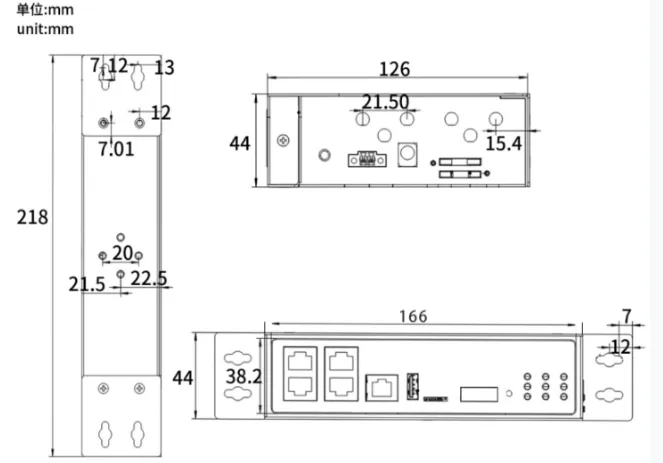
- External interfaces: 5G industrial routers typically provide various external interfaces to connect different devices and networks. These may include Ethernet ports, serial ports, USB ports, SIM card slots, and antenna connectors.
- Wireless communication module: As a 5G router, it contains a 5G wireless communication module that establishes the connection to the 5G network. The module may support multiple bands and bandwidths to accommodate different carriers and regions.
- Central processor (CPU): A central processor handles and manages the router's functions and tasks. It is responsible for routing data flows, enforcing security policies, and managing network connections.
- Memory: The router includes memory for configuration data, firmware, and log files. Storage may be implemented with flash, hard drive, or other media.
- Internal network switch: To enable data transfer among multiple devices, a 5G industrial router may integrate an internal network switch for local data switching and routing.
- Security features: Industrial routers include security features such as VPN support, firewalls, and intrusion detection/prevention systems to protect network operations.
- Remote management: Remote management and monitoring capabilities allow administrators to access the router remotely, change configurations, perform troubleshooting, and monitor performance.
Single-antenna vs dual-antenna routers
Key differences between single-antenna and dual-antenna routers:
- Coverage: Dual-antenna routers generally offer wider coverage. By using two antennas and MIMO, they can transmit and receive multiple data streams, improving coverage and penetration. Single-antenna routers typically provide narrower coverage, especially in environments with significant obstacles.
- Throughput: Dual-antenna routers usually achieve higher throughput. MIMO lets the router handle multiple data streams simultaneously within the same spectrum, increasing data capacity. This is beneficial for scenarios that require high data transfer or high-speed connections.
- Interference resilience: Dual-antenna routers better resist interference and multipath effects. Receiving signals from multiple directions allows the router to select stronger signals and reduce interference impact, improving stability and reliability in congested wireless environments.
Although dual-antenna routers often outperform single-antenna routers in coverage, speed, and interference resistance, actual performance depends on factors such as the network environment and device compatibility. Consider these factors when selecting a router.