ALLPCB


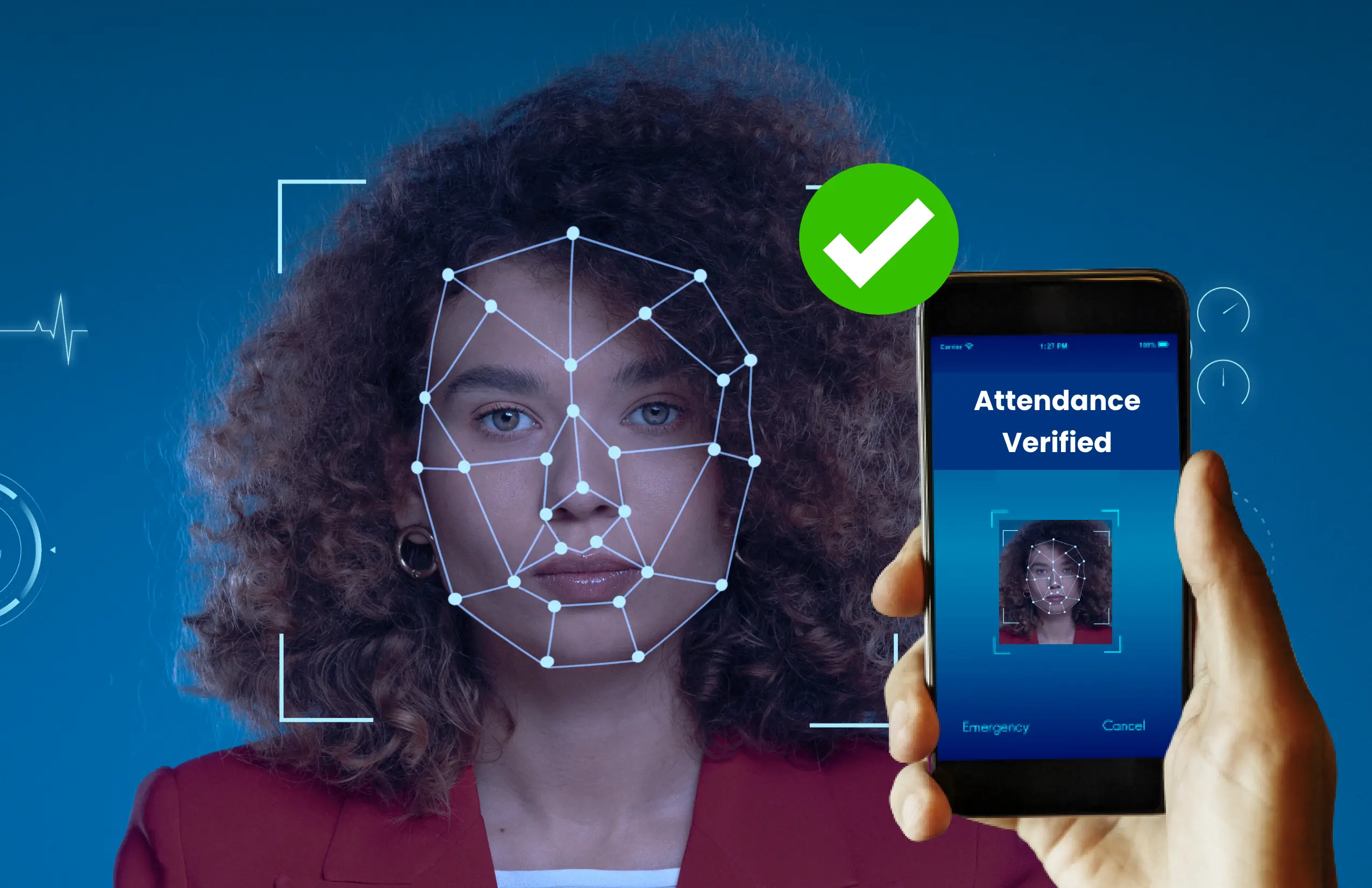
Over the past decade, progress in artificial intelligence has made it possible to add advanced features to embedded systems, such as face recognition. While face recognition can provide many benefits, it is sometimes perceived as problematic or controversial. This article clarifies several common misconceptions about face recognition.
1) Face recognition is very expensive
Some assume that face recognition requires high-end hardware. Since the mid-2010s, breakthroughs in deep learning for image classification have often relied on the compute power of graphics processing units (GPUs) used in tightly coupled clusters. However, face recognition for embedded systems (for example, home security and access control products) does not require research-level compute. Efficiently designed algorithms that focus on detecting faces and matching them to registered images need far less processing power.
2) Face recognition is very difficult
A major challenge in machine learning is matching the design flow to the application so training produces useful results. For face recognition, there is no need to build these structures from scratch. Developers can use proven machine learning platforms that deliver high performance quickly while allowing some customization to meet specific market needs.
3) Face recognition requires high-performance processors
Because cloud systems often use high-performance hardware for machine learning, it is easy to assume all machine learning workloads are heavyweight. Those systems must accommodate many applications and can leverage open-source tools that support a wide range of deep learning architectures. For inference on real data, models often contain substantial data and compute redundancy. Embedded solutions can significantly reduce that overhead, allowing complex face recognition algorithms to run on 32-bit MCUs.
4) Face recognition is not secure
One important embedded application for face recognition is access control. Systems must prevent unauthorized entry by means such as presenting a printed or digital photo. Integrated vision platforms that combine machine learning with image checks are important. Such platforms can validate image quality before feeding data to the recognition model. Using additional sensors that operate in infrared or other modalities can help the system distinguish genuine faces from spoofing attempts.
5) Face recognition violates privacy
Many consumer applications upload raw data to cloud servers for processing, which raises privacy concerns. Some platforms can perform all image processing and face recognition locally so data never leaves the device. Local processing reduces exposure to remote data breaches and helps protect user privacy.
6) Face recognition cannot work in the dark
Security systems and powered doors with integrated face recognition often need to operate under poor lighting. While visible-light imaging is common, combining visible-light sensors with auxiliary devices that work in the infrared spectrum, or using time-of-flight data to build 3D range maps, solves the problem. This approach allows operation without active illumination, improving practicality and lowering power consumption.
7) Face recognition requires AI expertise
Artificial intelligence is a broad, complex field. New research appears frequently, especially in deep learning. However, using platforms specifically designed for face recognition simplifies obtaining high-quality results. Such platforms provide not only machine learning models but also complete image-processing toolkits tailored to the task.
8) Face recognition consumes a lot of power
With optimized AI and image processing, face recognition can run on MCUs rather than on high-performance GPUs in server platforms. MCU-based solutions can use many low-power modes supported by modern microcontrollers. They do not need to boot heavyweight operating systems like Linux, so the main processor can remain off until activity is detected. When a motion sensor observes relevant activity, the processor can wake in a fraction of a second to perform full face recognition.
9) Training is burdensome for end users
Early embedded face recognition systems on tablets and smartphones required a range of poses to train neural networks effectively for a new user. Advances such as transfer learning reduce that burden: often a single frontal capture is sufficient to extract features and add a user to the authorized database.
10) Face recognition has limited applications
Like any technology, the eventual applications of face recognition depend on how innovators use it. Although security and access control are common uses today, smart appliances and power tools can adopt the technology for safety, for example by disabling functions to prevent child injury. Devices can also recognize expressions and read emotional signals such as disappointment, confusion, or happiness to improve the user experience.
11) Face recognition requires heavyweight operating systems
Many research-level deep learning tools are implemented for Linux, which leads to the assumption that face recognition requires Linux. Embedded systems that support the core techniques do not necessarily need the memory overhead or long boot times associated with Linux. MCU-based solutions can run lightweight operating systems with smaller memory footprints, shorter startup times, and support for advanced power optimization.