ALLPCB


Concept and Scope
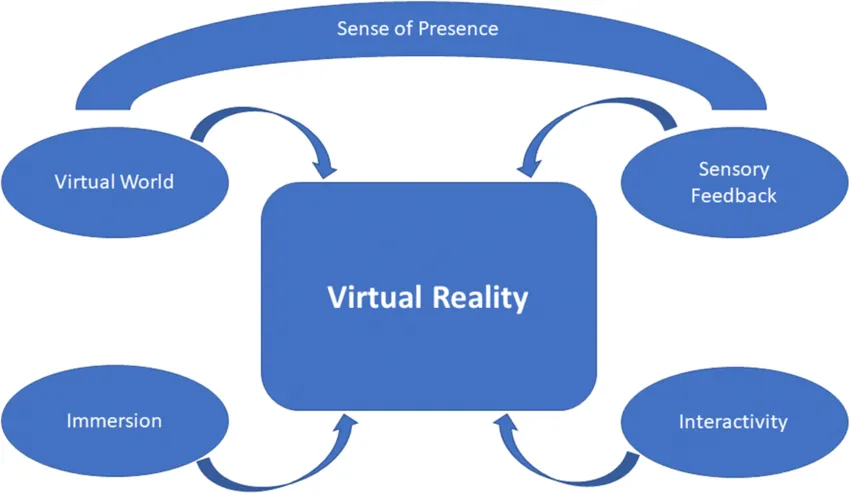
Traditional information-processing environments have long required people to adapt to computers. The goal is to progressively make computers adapt to people, enabling interaction with information-processing environments through vision, hearing, touch, smell, body posture, gestures, or voice commands to achieve an immersive experience. Such systems are no longer built on a single-dimensional digital space but on a multi-dimensional information space. Virtual reality technology is a key enabler of that multi-dimensional space.
Virtual Reality vs. Augmented Reality
Virtual reality places you inside a self-contained simulated "universe." Augmented reality overlays computer-generated information on the real world in real time. When you view an AR device or wear a device equipped with AR software and cameras, such as smartphones, tablet computers, headsets, or smart glasses, the software analyzes the incoming video stream, retrieves large amounts of scene-related information, and overlays that information on related data, images, or video, often in 3D.
Consumer and Professional Applications
Examples include vehicle rearview cameras and the mobile game Pokemon Go. Many consumer apps use AR to translate signs while traveling, allow students to dissect a virtual frog, or let shoppers preview how a sofa would look in their living room. Going forward, AR could enable museums to produce holographic tours, allow doctors to view subcutaneous tissue in 3D, help architects and designers collaborate in new ways, assist drone operators with enhanced imaging for remote control, and let apprentices in medicine or factory maintenance learn new skills more rapidly.
Industrial Adoption
In the coming years, more user-friendly software will expand consumer options. At present, AR's primary impact is in industry, where it is considered a key element of the Fourth Industrial Revolution, or Industry 4.0. Industry 4.0 refers to the systemic transformation of manufacturing through the integration of physical and digital systems toward higher quality, lower cost, and greater efficiency. Many companies are trialing AR on assembly lines. AR can deliver context-relevant information in real time to reduce errors, increase efficiency and productivity, visualize stresses on equipment, and generate real-time images of problem areas.
Market Outlook
Market research firms such as ABI Research, IDC, and Digi-Capital consider AR to be at a tipping point toward mainstream adoption. They estimate that the AR market could grow from about $1.5 billion to $100 billion by 2020. Major technology companies including Google, Apple, and Microsoft are investing significant resources in AR and VR products and applications. Venture capital activity has also increased; in 2017, around $3 billion was invested in AR and VR, with roughly half of that investment occurring in the fourth quarter. Recent analyses have characterized AR as a transformational technology that will affect many industries.
Challenges and Outlook
Barriers remain. Current hardware limitations and communication bandwidth constraints make it difficult to produce AR for widespread, everyday consumer use. For example, many museum and travel apps require pre-downloads, and the quality of augmented imagery often falls short of user expectations. As lower-cost, higher-performance mobile chips with AR capabilities are developed, as more feature-rich smart glasses reach the market, and as bandwidth increases, the field is expected to progress rapidly. At that point, AR could become as integrated into daily life as the internet and real-time video calling.