ALLPCB


Overview
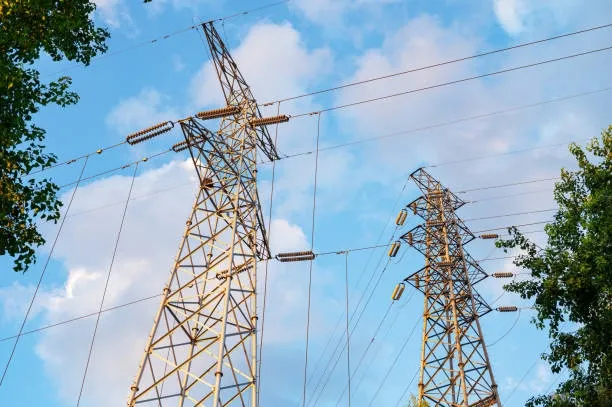
The smart grid itself is a form of the Internet of Things, and the distribution segment of the smart grid is especially a ubiquitous IoT. Yu Yixin, an academician of the Chinese Academy of Engineering, discussed his views on the ubiquitous power Internet of Things and the smart grid at a recent energy services workshop.
Intelligent technologies are spreading from research into industry. With the broad application of advanced technologies in power systems, intelligence has become an inevitable trend in grid development. Different countries have varying understandings of future grid models, leading to different development directions and technical routes, and there are differing views on the definition and direction of grid intelligence.
Smart Grid as a Bidirectional Energy and Information Network
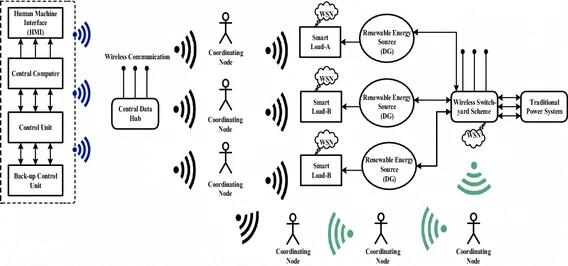
From its characteristics, the smart grid embodies bidirectional flows of electricity and information to establish a highly automated and widely distributed energy exchange network.
Dependence on Distributed Energy
Rifkin has claimed that society will enter a new era in which renewable energy and internet technologies merge to form a powerful new infrastructure, what he calls the third industrial revolution. In this vision, hundreds of millions of people will generate green electricity from renewables at homes, offices, and factories, and share it within an "energy internet" much like we currently create and share information online.
"The realization of an energy revolution depends heavily on the development and utilization of high shares of distributed, especially renewable, energy." Yu Yixin emphasized the logic behind this view, noting that the current major challenges include the intermittency, variability, and uncertainty of wind and solar generation, as well as the high cost of energy storage.
Given the characteristics of wind and photovoltaic generation, they cannot operate alone for extended periods and require power smoothing measures, including integration into the main grid, demand response, distributed storage, and small-scale diesel or gas generation. A well-functioning modern grid is needed to integrate high shares of solar and wind generation and to improve the efficiency of energy decarbonization, conversion, and utilization.
First, potential distributed power resources should not be ignored, and demand response and load control need further improvement. China's industrial electricity-saving potential is significant. At the same time, service-sector and residential loads have considerable flexibility (grid-friendly users), which can help reduce peak-to-valley differences, increase asset utilization and energy efficiency, and support the grid during emergencies, aiding better integration of high shares of wind and solar generation.
Second, electric vehicles are a major form of distributed storage. EV adoption is growing rapidly; by 2030 EV ownership is predicted to reach 80 million units, with battery capacity around 2.4 billion kWh. Electric vehicles are not only high-power electrical loads (for example, 7 kW charging over 4 h) but can also serve as energy storage devices for the grid.
"Managing these mobile storage devices well can lay a solid foundation for large-scale integration of wind and solar. In addition, in configurations that optimize gas, electricity, heating, cooling, and emissions, gas-dominated distributed energy systems can achieve energy utilization efficiencies above 80%," Yu Yixin said.
Managing Extensive Distribution
Current grid intelligence can be viewed as "Grid 2.0." The first wave of grid intelligence was driven by major blackouts, prompting governments to push utilities to make grids safer and more reliable. Today's drivers are stronger and include energy pressures, climate and environmental concerns, and a digital society's high demands for power quality, supply reliability, system safety, and resilience against low-probability but high-consequence events.
"Urban smart grids and their communications systems will form the infrastructure of smart cities. From this perspective, the smart grid is an integrated energy and information system, a network of connected things," Yu Yixin noted.
He also emphasized that the smart grid is a tiered, clustered distributed infrastructure. A core concept of the smart grid is to build a grid as intelligent as the internet, reflecting internet principles, so it can fully utilize renewable energy potential, support technological innovation, accommodate the rise of prosumer customers, and integrate nanogrids, minigrids, and microgrids.
The internet spirit in the smart grid manifests in four aspects:
- Openness: based on interoperability standards and plug-and-play capability;
- Peer-to-peer: peer interconnection among autonomous energy units;
- Collaboration: mutual support rather than centralized or strictly hierarchical command-and-control, which suits the distributed nature of renewables in the energy internet;
- Sharing: using decentralized, locally optimal actions to achieve globally optimized energy management and scheduling.
Yu Yixin highlighted the tiered "cluster" concept. "To seize future opportunities, I propose that differences among distribution networks, microgrids, building units (large buildings, factories, residences), and transmission systems will gradually disappear. With local generation and bidirectional power flow, each will be equipped with an energy management system (EMS) and implement near-real-time power balance according to a cluster concept."
Power networks and communication networks must converge. To enable real-time information exchange and achieve supply-demand balance at the societal level, distributed computing, cloud computing, big data, and artificial intelligence should be incorporated into the grid.
The envisioned smart grid will change how people live and work much like the internet and will spur similar transformations. However, because of the grid's complexity and the wide range of stakeholders involved, a long transition, sustained R&D, and prolonged coexistence of multiple technologies are required. In the short term, efforts can focus on making the current grid smarter using existing or soon-available technologies to improve efficiency and provide high-quality power while generating substantial social benefits.