ALLPCB


The smart grid promises to change the landscape of power delivery, but standards and deployment models are still evolving. Rapidly developing smart grid infrastructure is expected to reduce costs and support a range of consumer, industrial, and embedded devices.
Value Drivers and Early Use Cases
The smart grid could be transformative across the electronics industry, spanning consumer, industrial, and embedded applications. Innovation is value-driven: new products either reduce the cost of existing technologies or deliver new features users will pay for. While consumer willingness to pay for new features is not always predictable, potential reductions in operating cost are consistently attractive.
Consider lighting automation. Remote control of every light in a home has been technically feasible for more than a decade. High-end systems deliver features consumers often want, but they are not priced for broad adoption. X10 technology provided an economical route to lighting automation, but its lack of reliability limited consumer interest and slowed market growth. As smart grid technologies develop, the primary focus is on delivering significant cost savings through smarter monitoring and management of power consumption. For a few dollars, devices can accurately measure power consumption and switch themselves on or off based on power availability and time-based pricing. As smart grid deployments expand, they will also create an infrastructure that can easily support a wide range of automation features.
The best candidates for smart power management are devices that consume significant power and can decide when to operate. Major power consumers in homes and businesses are typically HVAC (heating, ventilation, and air conditioning) systems, followed by appliances with motors and heaters such as washers and dryers. Items like refrigerators and stoves consume power but are used in predictable ways, so their need for smart control is less urgent.
Trends Driving Smart Grid Adoption
Other major trends encouraging smart grid adoption include:
- More efficient management of grid capacity: Building new generation and infrastructure is expensive, so utilities defer upgrades where possible. Better peak load management through load-shedding and demand-response programs can reduce the need for new capacity. For example, consumers can receive discounts or rate incentives if they allow their utility to manage thermostats during peak periods.
- Energy awareness through visibility: For most people, electricity consumption is a single monthly number on a bill. Without knowing when or how power is used, it is hard to take responsibility for consumption. Providing real-time visibility into household and business usage lets consumers analyze and reduce consumption proactively.
- Devices able to monitor their own usage and support remote management: To give consumers access to energy information, that information must first be collected. While many meters now track usage and time, they typically only see total consumption. Without device-level tracking, consumers cannot determine whether usage is driven by a refrigerator, hot tub, dryer, or HVAC system.
- Sharing energy information across the home and to the cloud: When users can track whole-home usage, they can shift use to lower-rate periods. Two main challenges are sharing information across the home and transmitting that information to cloud services.
- Electric vehicles increasing grid load: EV charging consumes significant power and many drivers will plug in when they come home. Simultaneous charging of multiple vehicles on the same transformer can create issues for utilities. If charging can be spread across low-usage periods overnight, utilities can avoid costly equipment upgrades.
Tracking and Self-Monitoring
Accurate tracking of power usage and patterns requires metering at the appliance. Metering ICs allow devices to measure current and derive energy consumption, then provide this information to the device host processor. A key cost driver for metering devices is required accuracy. For some devices such as smart meters themselves, the dynamic range affects accuracy and calls for higher-resolution ADCs. For systems that operate within well-defined ranges, lower-resolution ADCs may be sufficient.
One benefit of self-monitoring is the ability to analyze device operation. With sufficient accuracy, a device can detect performance degradation and alert the owner that maintenance is needed to avoid failure. Major vendors such as Microchip, STMicroelectronics, and Texas Instruments supply a range of metering ICs to support smart grid components. IC prices range from about $1 for low-end applications to roughly $20 for high-current, high-accuracy applications. To support efficiency, devices also must support demand-response events and actively help consumers make usage choices aligned with tiered rates.
Traditionally, household HVAC systems must be adjusted manually to reflect pricing tiers. When a thermostat is connected to a smart meter, it can download real-time rate tables and adjust usage automatically. During peak demand, thermostats can raise setpoints or be directly controlled by utilities. Note that some devices, such as refrigerators, communication equipment (phones, routers, computers), and medical devices, cannot be turned off arbitrarily. Only devices that are managed should be controlled in this way.
Self-monitoring enables finer-grained control. Smart thermostats can let consumers create more complex schedules and even analyze occupancy patterns to determine whether a house or building is currently occupied, rather than relying only on weekday or weekend schedules to reduce programming complexity.
Designers must also consider that some devices require more graceful handling than simply being switched off. For example, a washing machine that is interrupted as part of a demand-response event could leave clothes sitting in water for hours unless the machine is instructed to drain before stopping. A washer should also surface status such as bleach use so it can refuse a shutdown that would damage clothing. Or a user might be washing a shirt needed for an important meeting and require a way to override the demand-response mechanism. Manufacturers need to anticipate these operational scenarios.
Connectivity
A core idea of real-time power tracking is to increase consumer awareness of consumption in monetary and temporal terms. Current billing systems give consumers one monthly number, making it difficult to identify even simple inefficiencies such as a stereo left on or a wall-wart charger drawing power. Real-time tracking lets consumers discover these loads by profiling major power-consuming devices in the home. If unprofiled consumption is high, that will highlight opportunities for behavioral change.
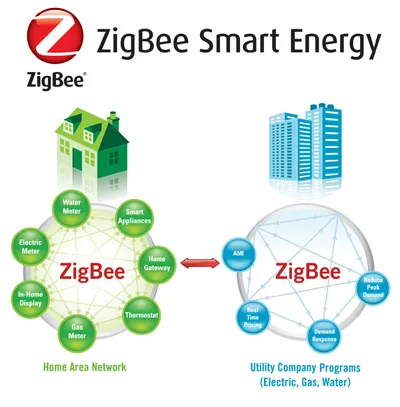
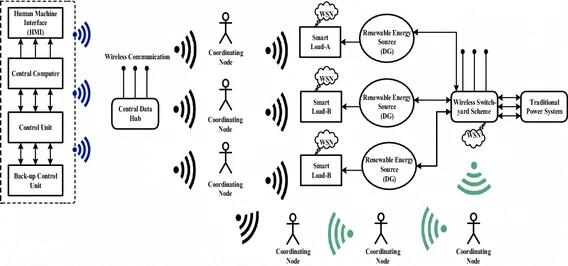
To provide remote access and automation, appliances need a connection to the home network and the internet. Candidates for the home network gateway include the smart meter, a separately purchased energy monitor, or a thermostat because it is already connected to one of the largest loads in the home.
The home network requires a connectivity technology that is low cost, easy to use, scalable, and energy efficient. Common smart grid application technologies include:
- ZigBee: ZigBee positions itself as the de facto smart meter standard and is present in many deployed smart meters. ZigBee provides Smart Energy and Home Automation profiles that define how devices communicate with meters, simplifying integration with the home network.
- Wi?Fi: Wi?Fi has a large installed base, is often available for internet connectivity, and is familiar to consumers. Connecting a device over Wi?Fi can be as straightforward as configuring a wireless printer. However, some find Wi?Fi too complex and prefer technologies that require no configuration.
- Power-line communication (PLC): PLC gives devices a wired connection over existing power lines, so most major devices are already physically connected to the smart meter.
- Proprietary wireless: Proprietary connections often support automatic configuration and offer a lower risk-to-market. They typically require more hardware, cost more than standard technologies, and can have limited scalability.
From a technical standpoint, no single connectivity technology is a clear winner. Many chip suppliers offer a range of off-the-shelf connectivity interfaces with the necessary software, hardware, and features such as encryption. Suppliers do not all support the same standard, because they sell multiple options. Depending on protocol differences, developers can sometimes migrate between interfaces with system design adjustments, allowing manufacturers to support different connectivity options based on the target product's tolerable cost and complexity.
All of these technologies are likely to coexist within the same home or business to connect different devices. ZigBee appears to have an advantage in many smart meter architectures, but there are concerns about devices being too far from the meter or other ZigBee nodes for reliable connectivity. PLC, by contrast, guarantees a connection. One possible approach is for meters to include both ZigBee and a PLC physical layer. From the perspective of appliance manufacturers, access to the meter is a major challenge because implementations vary widely between countries and regions. Utilities use different meter types and require different application programming interfaces to connect to them. Moreover, many utilities have not yet activated or opened their communication links for device use, which prevents meters from serving as energy gateways. Standalone energy gateways are an alternative, but they too support multiple protocols.
Given this uncertainty, appliance manufacturers have been cautious about integrating smart grid technologies into their products. Many appliances have long lifetimes, and deploying a device tied to a dead-end implementation could harm a brand. Regardless of the connectivity technology used, devices must be able to operate when connections are interrupted. Ideally, a device will track time locally and recall the last known energy rate profile. Devices may also be able to predict demand-response events and warn users ahead of potentially costly periods. These are important design considerations because manufacturers will be responsible for the robustness of energy management features.
Integration
An important design consideration for utilities and manufacturers is managing and integrating energy-flow information. Moving from one data point per month to several per half hour creates a large volume of data to collect and correlate. As more devices adopt metering, they can account for their own consumption. However, much of the value of energy tracking comes from coordinating all devices in a home or business from a central point.
While a thermostat, smart meter, or central energy monitor can act as a data gateway for connected devices, such devices may have limited user interfaces and cannot effectively convey the energy usage of every device in the home. One approach is to support access via a PC or smartphone over a wireless link that provides a full configuration and UI. Consumers typically want remote access to energy information and expect it to be available in the cloud. That approach requires back-end servers to collect and consolidate the information, which can add complexity and cost to device design.
To be most useful, whole-home energy information needs to be integrated into a single management platform so consumers are not forced to track individual devices. Consolidated savings are more persuasive; for example, a dryer reporting $5 monthly savings may not be compelling, but seeing $40 in monthly savings for the whole home is more impactful.
Some utilities and energy-monitoring companies have chosen Google Power Meter as an alternative to building their own management platforms. Google Power Meter can support consumers and businesses directly through participating utilities or via separately purchased gateway devices. As a standardized platform, Google Power Meter can ease the transition to consumer energy awareness by providing a common, easy-to-use API based on smart energy designs and may eliminate the need for utilities or appliance companies to develop proprietary management platforms.
The ability to track data raises privacy and security concerns: energy data can reveal occupants activities and presence in the home. A thornier unresolved question is who owns consumption data after it is collected. At the home level, meters or energy monitors can use standard security protocols and certificates to protect network communications. Similar mechanisms are needed between gateways and back-end management platforms. To support security, devices also need a simple and intuitive way to pair with an energy gateway, such as entering a gateway-provided PIN on the device.
Outlook
Smart grid technologies remain in the early stages. Fortunately, many of the underlying technologies required for smart energy management are mature and market-proven. The challenge for manufacturers is deciding which technologies to integrate and when to bring products to market. Products that support energy awareness are already reaching the market, and as appliance makers continue experimentation and testing, more devices will appear on store shelves. The potential benefits of smart energy management, particularly when combined with enhanced automation, are substantial, and in time the details of how devices connect are likely to become clearer.