ALLPCB


Recently, "palmprint payment" trended after Tencent announced that WeChat palmprint payment was launched. Once a user enrolls a palmprint pattern on a terminal, they can use their palm to pay. The technology is already deployed on the Beijing Daxing Airport line and is expected to expand to subways, high-speed rail, supermarkets, malls, and airports. Palmprint recognition may become another option for payment and unlocking after fingerprint and face recognition.
How are palmprints recognized?
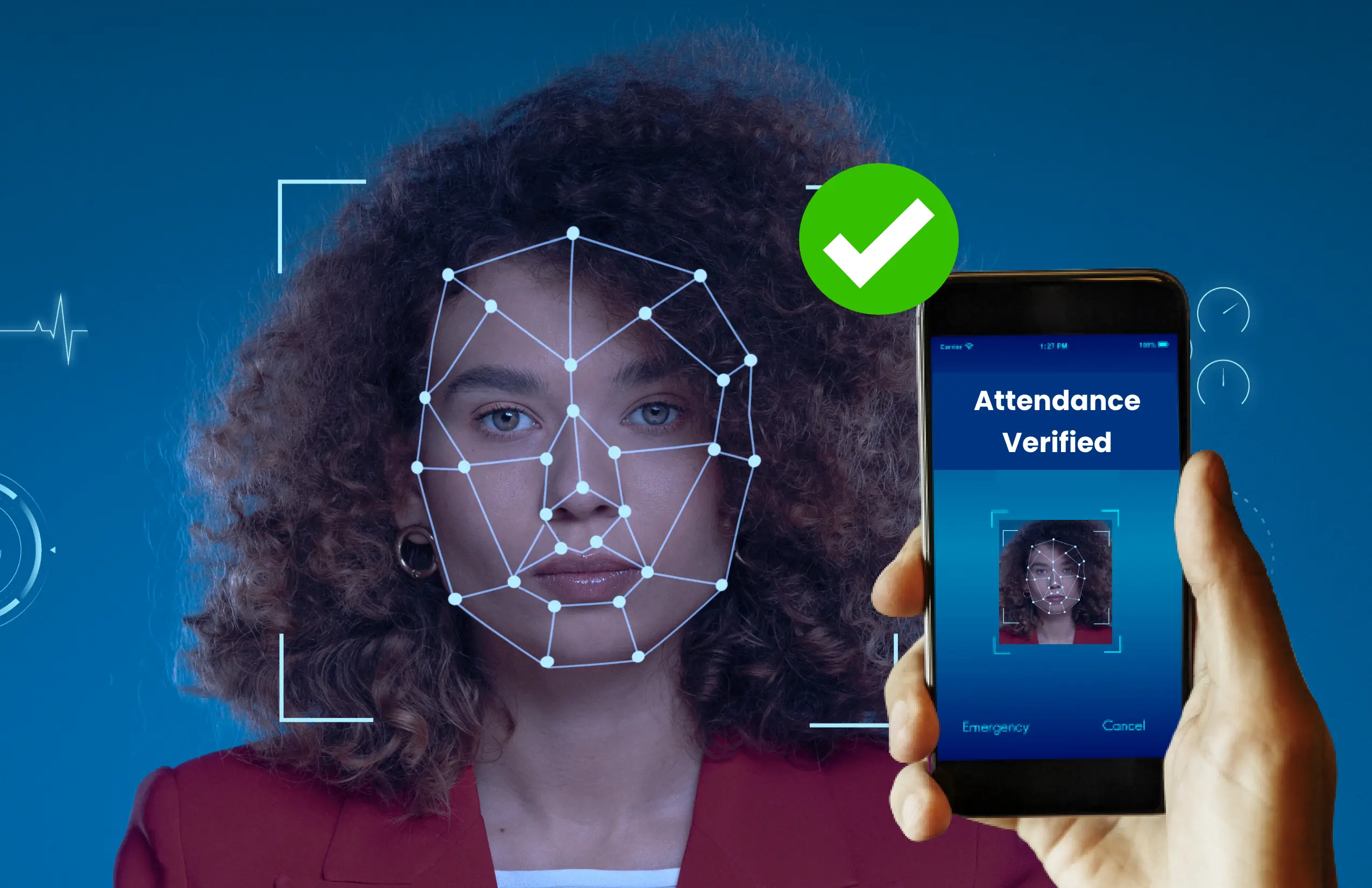
From a technical perspective, the core logic of palmprint recognition is the same as face and fingerprint recognition: use a unique biometric feature of the human body. Faces that look similar still have structural differences, and palms are similar: the unique arrangement of many lines and creases creates an individual palmprint pattern.
Palmprint recognition first uses image sensors to capture the palm pattern, then uses algorithms to preprocess the image and extract palmprint features, and finally stores templates in a palmprint database. During verification, the captured palmprint is compared against the database for an identification result. To improve security for palmprint payments, Tencent also added palm vein recognition for a dual-layer verification.
At the implementation level, the core components of palmprint systems are AI algorithms and sensing chips. These two technologies are mature in the Chinese market. On the algorithm side, several research groups and companies have worked on pretraining palmprint recognition models using synthesized data from geometric models. Engineering teams from major platforms have also researched palmprint payment algorithms. In practice, Tencent appears to have been among the first to deploy the technology.
From the sensing side, whether for palmprint, fingerprint, or face recognition, the core sensor is a CIS device. Several companies in China have been developing CIS technology for years.
CIS stands for CMOS image sensor. It converts optical images into electronic signals; in simple terms, the chip photographs a scene and converts the image into digital data. In biometric recognition, the CIS chip is responsible for "imaging" the fingerprint, face, or palm. The imaging approach varies with the modality.
Role of CIS sensors in biometric recognition
Fingerprint recognition uses a 2D imaging approach. For example, optical fingerprint sensors in smartphones capture a planar image when a finger presses the surface. A rolling-shutter CIS photographs the image and converts it into digital data for processing and matching. Typical optical fingerprint sensor resolution on smartphones is on the order of 50k–80k pixels, and an OLED display is often used as fill light to improve capture quality.
Face and palmprint recognition are non-contact, so they differ from fingerprint capture. To obtain accurate results, they require more advanced capture techniques. Face and palm systems typically use one to two CIS chips to acquire 3D information. Rolling-shutter CIS devices struggle to meet the speed and accuracy requirements for these non-contact scenarios; global-shutter CIS sensors are preferred. Payment-grade face recognition commonly uses a single 1.3-megapixel global-shutter image sensor combined with structured light to obtain high-precision 3D facial data.
Rolling shutter and global shutter differ in operation. Rolling-shutter exposure scans the frame as a sequence of strips, exposing and converting them sequentially. This approach is suitable for 2D applications like fingerprint capture, but it can introduce spatial distortion known as the "jelly effect." Global shutter exposes the entire frame simultaneously and converts it to digital data at once. Global shutter reduces motion-induced distortion and is better suited to non-contact recognition where the subject may not remain perfectly still.

Global-shutter sensors have a drawback: they generally have lower sensitivity than rolling-shutter sensors and often require additional illumination. Some companies have improved this at the chip level by combining back-side illumination (BSI) with global shutter design. An example is the SC132GS sensor from SmartSens, a Chinese image-sensor company. A BSI+Global Shutter CIS improves sensitivity and, when combined with structured light, can be widely applied to face and palm recognition. This approach is one of the mainstream solutions for payment-grade face and palm recognition.
The BSI+Global Shutter image-sensor technology first appeared at ISSCC 2019 in San Francisco, where it was presented by the Chinese company SmartSens as an opening paper in the image-sensor session.
How palmprint recognition could reshape the market
When a new biometric modality is introduced, it can change the competitive landscape. Two fundamental criteria determine whether a biometric technology will be accepted by markets and users: sufficient security and sufficient convenience.
Security is the baseline for biometric recognition. Fingerprint, palm, and face recognition systems used for payments must resist spoofing and unauthorized use. Convenience affects user adoption: if a method is inconvenient, it will struggle to reach mainstream usage and scale, remaining a niche solution.
From a security viewpoint, fingerprint, palm, and face recognition have reached payment-grade levels. However, face recognition has an inherent drawback: the face is often exposed and can be captured without a user's knowledge, raising privacy and replay concerns. That partly explains the shift in focus toward palmprint verification in some deployments.
Regarding convenience, fingerprint recognition requires contact and so is less suitable in contexts where non-contact is preferred; it also poses potential hygiene concerns during infectious-disease outbreaks. Face and palm recognition are non-contact and convenient, but face recognition can be so fast that it leaves users little time to review transaction options during authentication.
Overall, fingerprint and face recognition each have trade-offs in convenience and security; palmprint recognition combines aspects of both and offers a promising balance.