ALLPCB


Overview
The Freescale MPC8308 is a low-power PowerQUICC II Pro processor integrating DDR2, eSDHC, PCI Express, eTSEC, USB and IEEE 1588 support. It uses the e300 core and delivers higher MIPS/MHz performance. The processor is available at 266, 333 and 400 MHz and provides 1.92 DMIPS/MHz performance. Target applications include wireless LAN access points, residential wireless base stations, smart grid home gateways, data concentrators, industrial control and factory automation. The following describes the main features and advantages, block diagram, and the key characteristics, board photo and schematics of the MPC8308-RDB reference design platform.
Product Positioning
The MPC8308 is a cost-effective, low-power, highly integrated PowerQUICC processor designed for networked applications such as smart grid home energy gateways, data concentrators, wireless LAN access points, small wireless base stations, and industrial applications including factory automation. It extends the PowerQUICC II Pro family by balancing the higher MIPS/MHz performance of the e300 core with low power consumption and competitive cost.
Networking and Timing Support
For networking applications, the integrated gigabit Ethernet MACs support wired connectivity. PCI Express and eSDIO interfaces provide connectivity to wireless LAN, 3G and 4G modem devices. The MPC8308 includes integrated IEEE 1588 support for time-sensitive telecom services, industrial network switches, power line networks and test/measurement equipment. These applications are supported by the MPC8308 processor and a low-cost evaluation board with optimized Linux and drivers. Freescale also works with third-party partners to provide application software for user interfaces.
Core Subsystem
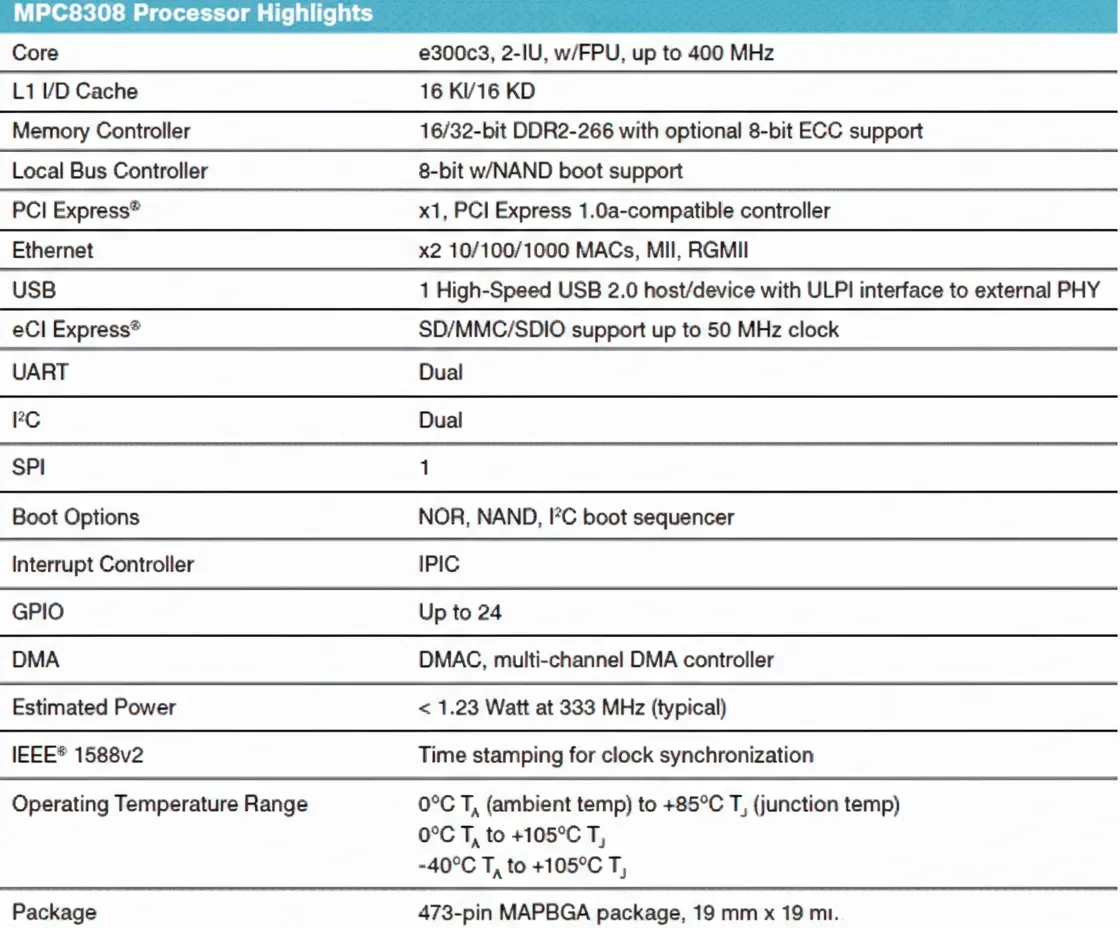
The MPC8308 uses an e300c3 core (compatible with the 603e core) running at 266, 333 or 400 MHz, delivering 1.92 DMIPS/MHz. The core is built on Power Architecture technology and includes dual integer units and modified multiply instructions. These architectural enhancements enable more effective parallel execution and significantly improve performance. The e300 core subsystem also includes 16 KB L1 instruction and data caches and an on-chip memory management unit with dual integer units and an SP/DP FPU.
Package
The MPC8308 is available in a very low-cost 473-pin MAPBGA package with 0.8 mm pitch and a 19 mm x 19 mm footprint. This compact package suits small-form-factor single-board computers and other embedded networking applications.
Cost-Effective Reference Design Board
The MPC8308-RDB reference design board is offered at a commercial price point. The kit includes Linux drivers supporting the board peripherals and a six-month evaluation license for the CodeWarrior development tools.
Processor Highlights
Applications
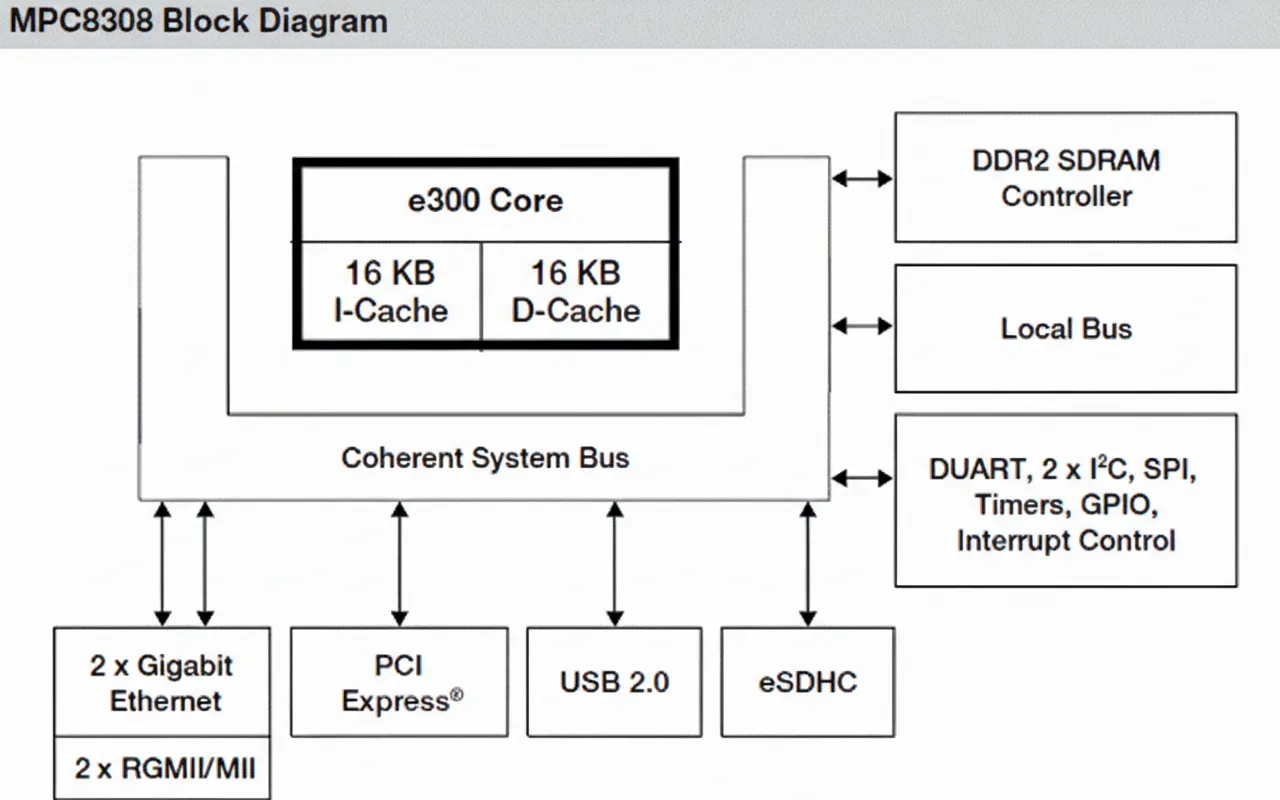
Figure 1. MPC8308 block diagram
MPC8308-RDB Reference Platform
The MPC8308-RDB reference platform is intended for hardware and software development of embedded applications including consumer printers, wireless access points, industrial control and factory automation. It leverages the low-cost MPC8308 PowerQUICC II Pro communication processor based on Power Architecture technology to meet the needs of several low-end embedded networking applications with low-speed peripherals, while minimizing power consumption and board area. The MPC8308-RDB integrates advanced external components: five gigabit Ethernet ports, one USB 2.0 port, one mini PCI Express connector and an SD/MMC card interface. The MPC8308 microprocessor supports dual 10/100/1000 Mbps Ethernet controllers, a single-lane PCI Express interface, USB 2.0 controller, enhanced SDHC controller for SD memory interface, dual UART (DUART), serial peripherals, general-purpose I/O and system timers. This high level of integration helps reduce overall system cost, improve performance and simplify board design. The combination of high-speed peripherals and cost effectiveness distinguishes the MPC8308 in the market.
The MPC8308-RDB includes a preinstalled board support package (BSP) containing a bootloader (U-Boot) and a Linux kernel. U-Boot and the Linux kernel reside in onboard flash memory and boot at power-up.
The MPC8308-RDB BSP uses the Linux Target Image Builder (LTIB) tool set, which assembles open-source configuration scripts and source packages into a BSP build package. The source packages include bootloader and Linux kernel source, plus many user-space source packages to construct a complete BSP. LTIB also provides the compiler packages required to build the BSP. Freescale developers use LTIB to create BSPs for a range of Freescale development platforms.
LTIB reuses as many BSP elements as possible across supported Freescale markets while providing the flexibility to customize platform-specific components that require modification.
The MPC8308-RDB supports many third-party applications built on the Freescale-provided BSP and can be installed on mass storage.
MPC8308-RDB Key Features
- CPU: Freescale MPC8308 running at 400/133 MHz; CPU/CSB system bus
- Memory subsystem:
- 128 MB unbuffered DDR2 SDRAM discrete device
- 8 MB NOR flash for single-chip storage
- 32 MB NAND flash
- 256 Kbit M24256 serial EEPROM
- Interfaces:
- 10/100/1000 BaseT Ethernet ports:
- eTSEC1, RGMII: one RJ-45 10/100/1000 BaseT interface using Realtek RTL8211B single-port PHY
- eTSEC2, RGMII: five RJ-45 10/100/1000 BaseT interfaces using Vitesse VSC7385 5-port L2 gigabit Ethernet switch
- USB 2.0 port:
- SMSC USB3300 USB PHY using external ULPI PHY interface; high-speed host/device/OTG USB interface
- PCI Express:
- One mini PCI Express connector; supports half and full-size mini PCIe cards
- eSDHC port:
- One SD card connector
- Dual UART ports:
- DUART interface: two UARTs up to 115200 bps for console I/O
- I2C:
- I2C connects to a Dallas DS1339 RTC with a battery holder and an Atmel AT24C08 serial EEPROM
- 10/100/1000 BaseT Ethernet ports:
- Freescale MC9S08QG8 MCU (20 MHz HCS08 CPU) for fan control and soft-start
- Low-power/WAKE-on-LAN support, which can be MCU-controlled or logic-controlled
- Board connectors:
- 4-pin power jack
- Dual RS-232C connectors
- JTAG/COP for debug
- IEEE 1588 signal support for test and measurement
- 8-pin SPI header for future expansion
Figure 2. MPC8308-RDB reference board
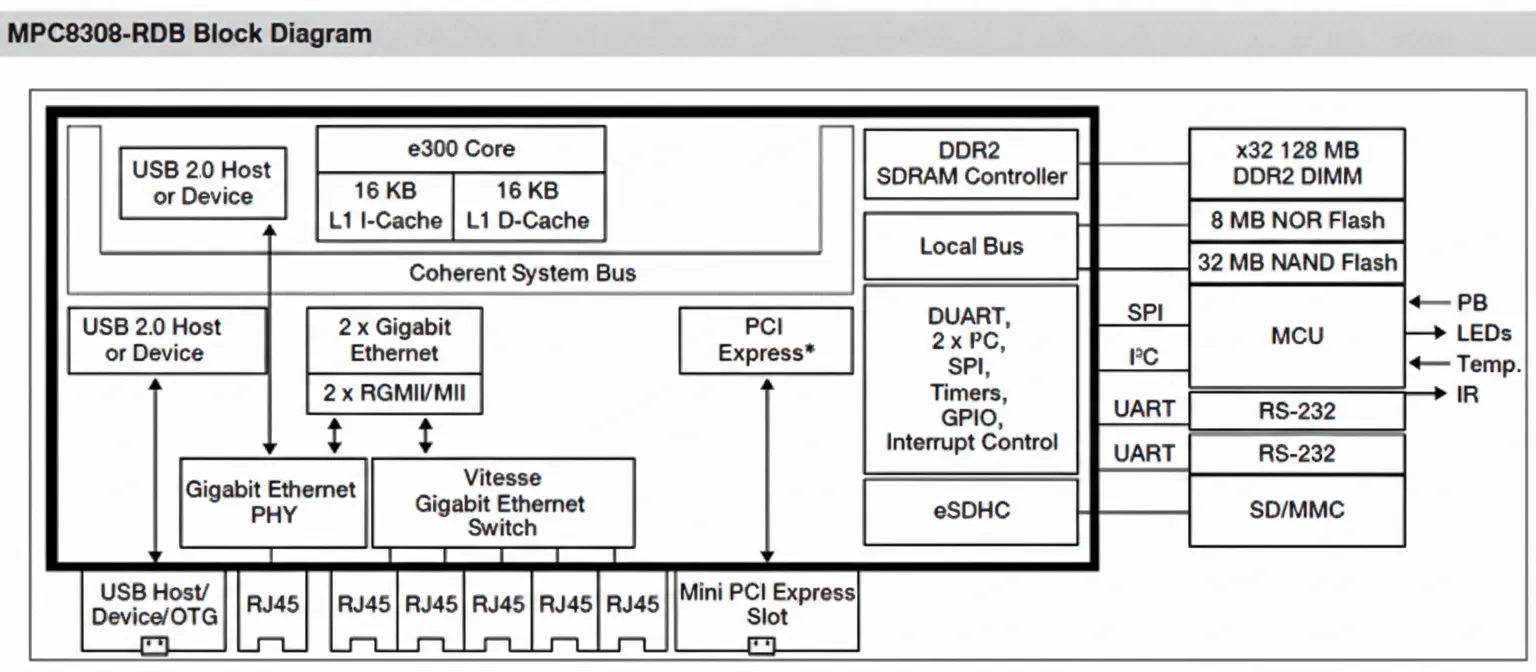
Figure 3. MPC8308-RDB block diagram
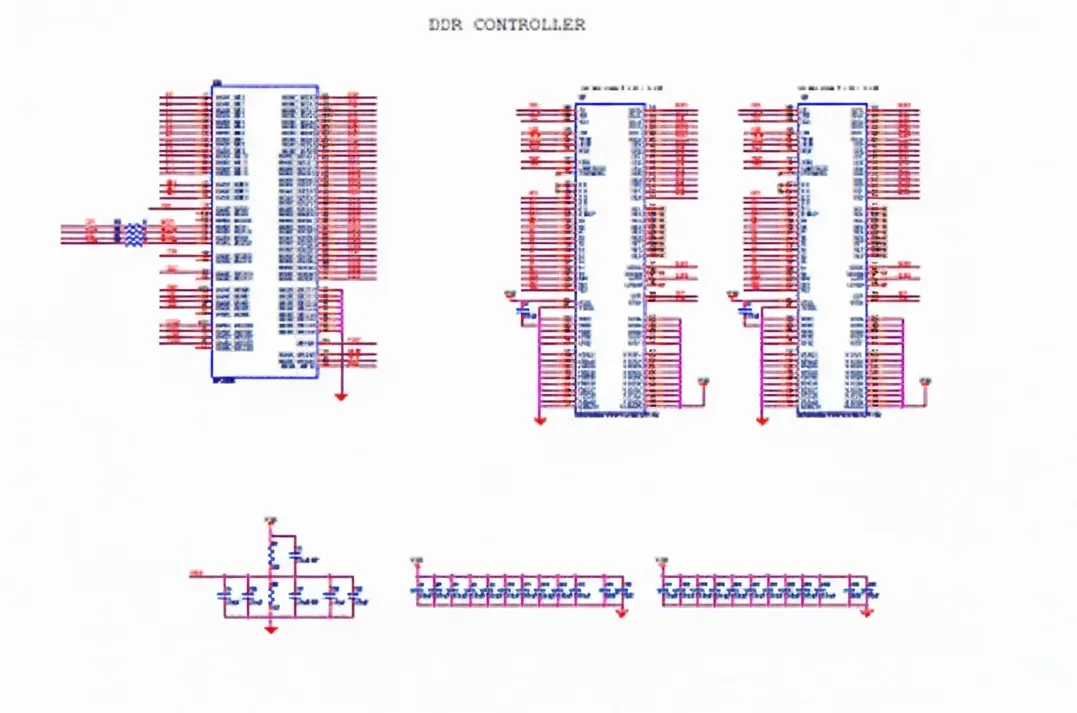
Figure 4. MPC8308-RDB schematic (1)
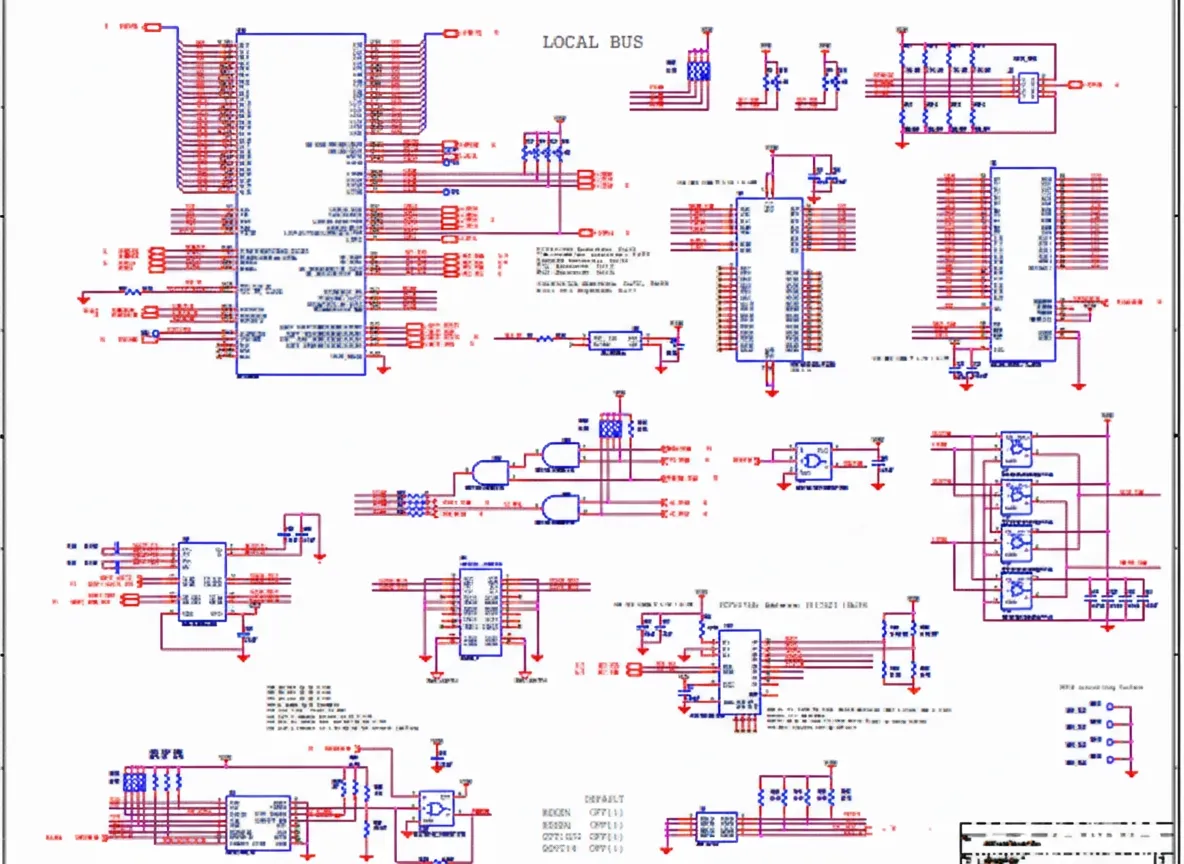
Figure 5. MPC8308-RDB schematic (2)
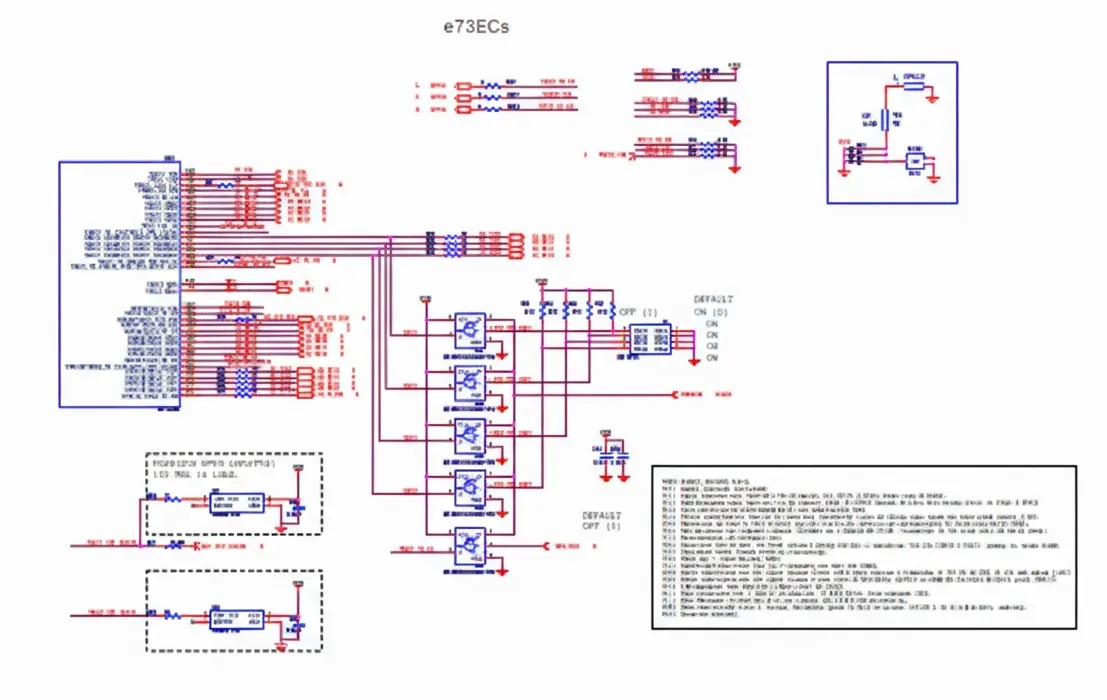
Figure 6. MPC8308-RDB schematic (3)
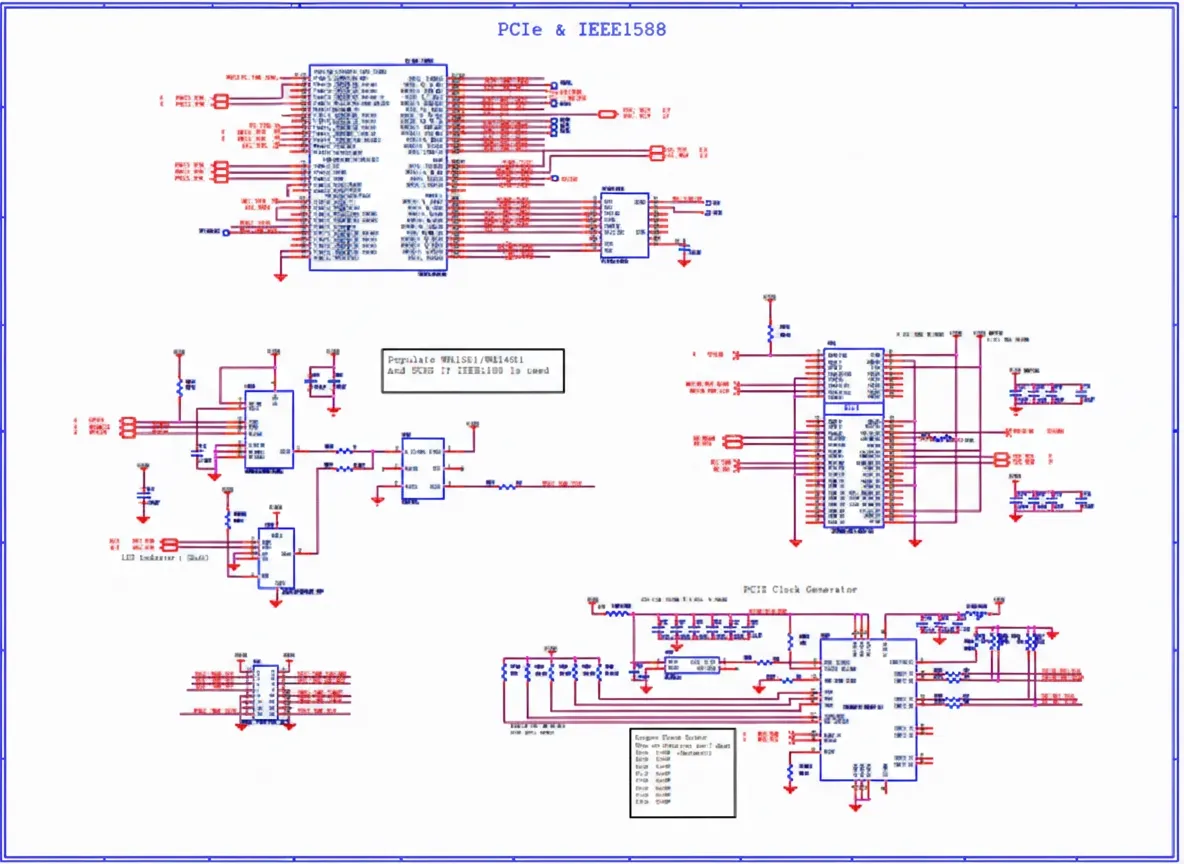
Figure 7. MPC8308-RDB schematic (4)
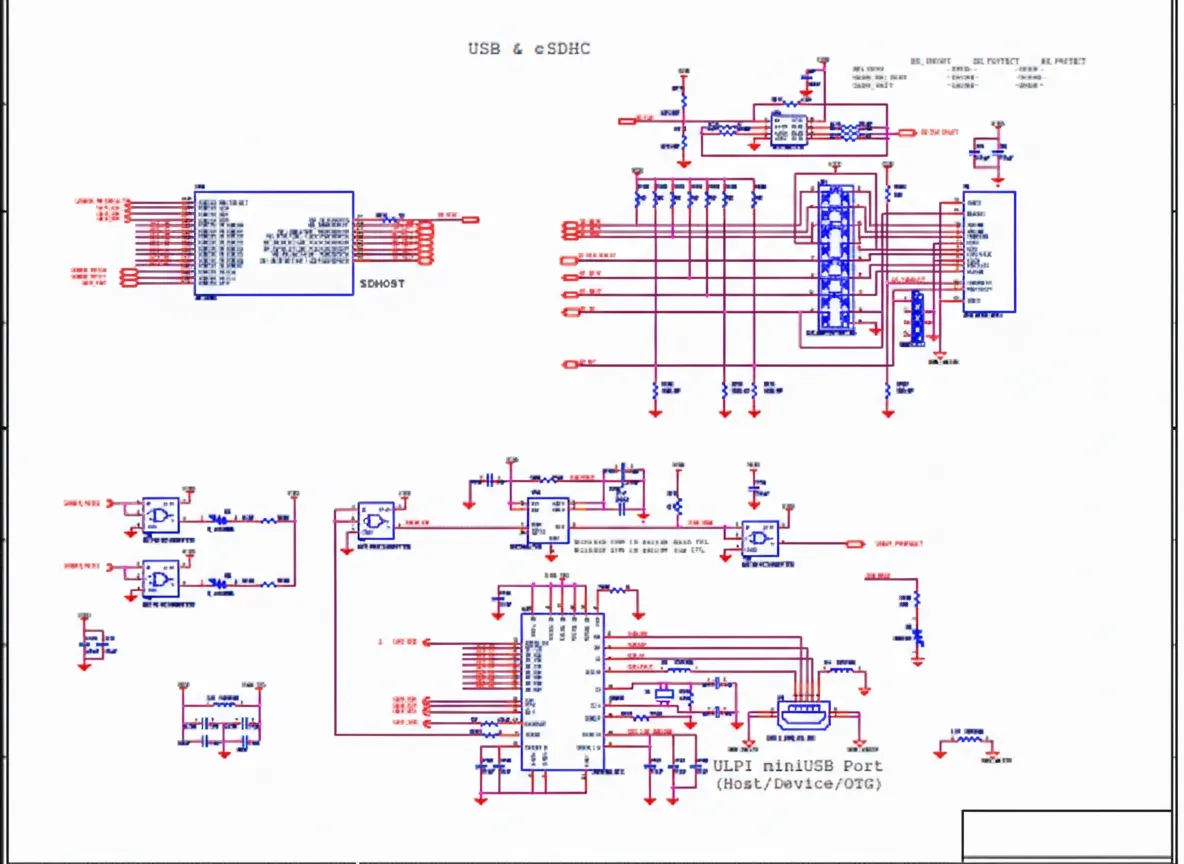
Figure 8. MPC8308-RDB schematic (5)
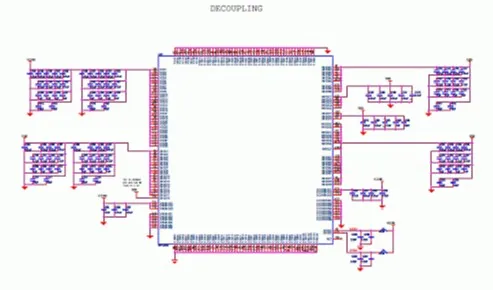
Figure 9. MPC8308-RDB schematic (6)
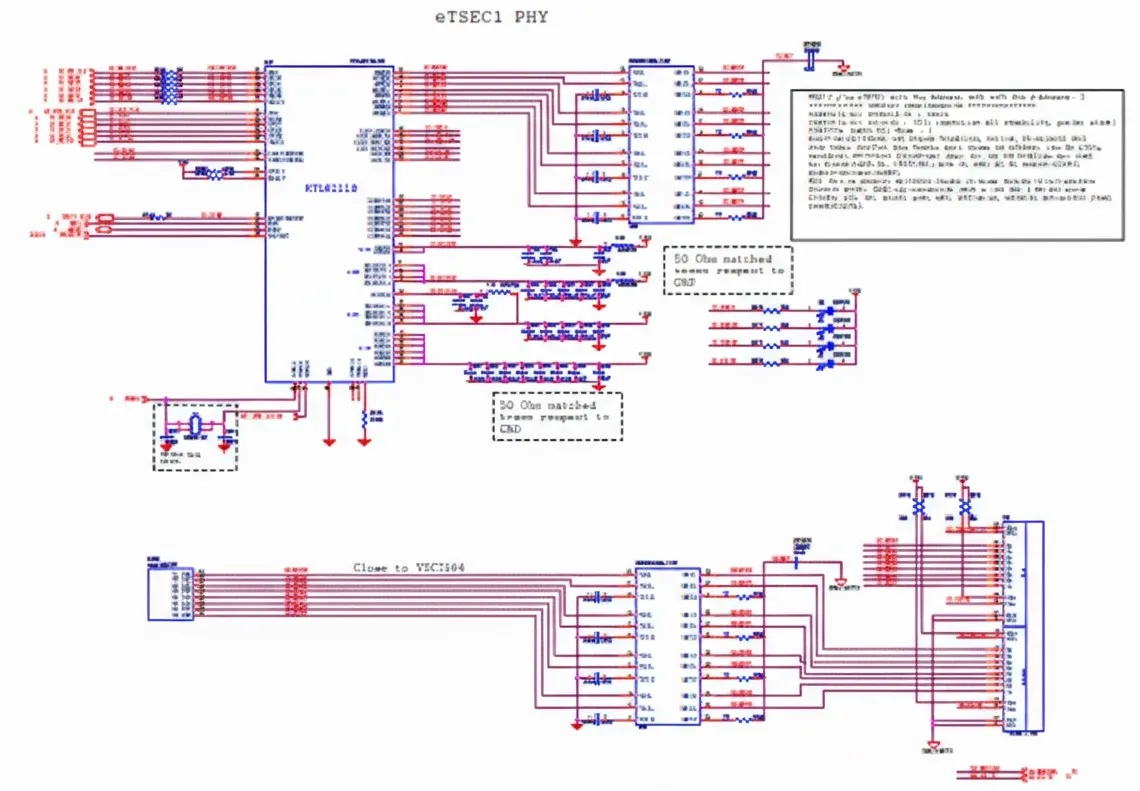
Figure 10. MPC8308-RDB schematic (7)
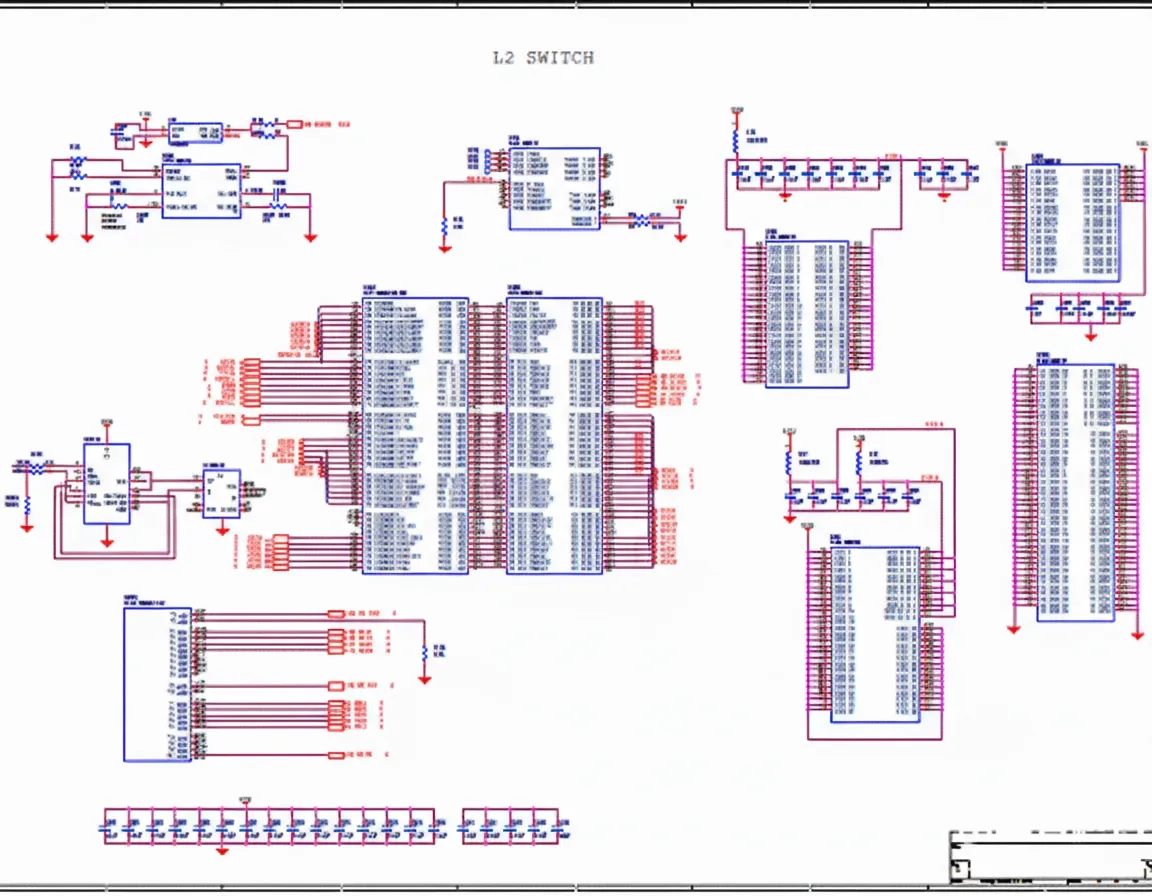
Figure 11. MPC8308-RDB schematic (8)
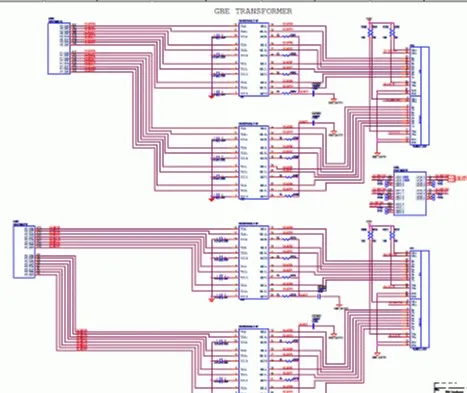
Figure 12. MPC8308-RDB schematic (9)
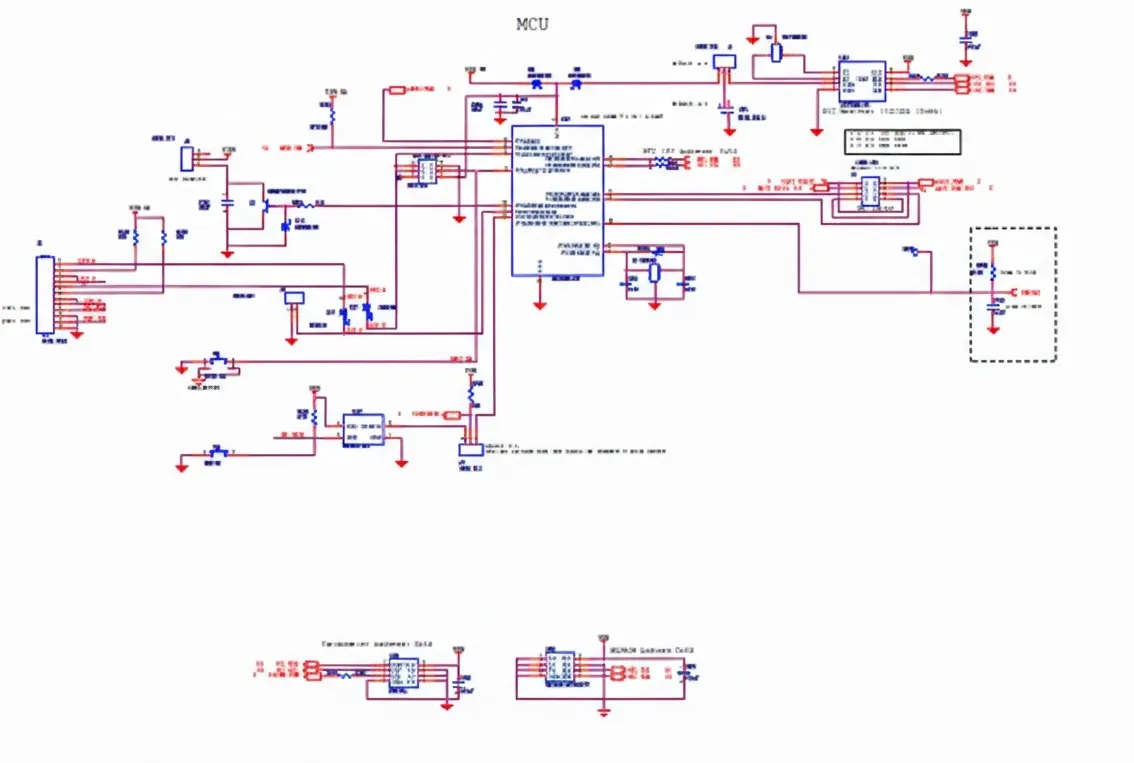
Figure 13. MPC8308-RDB schematic (10)
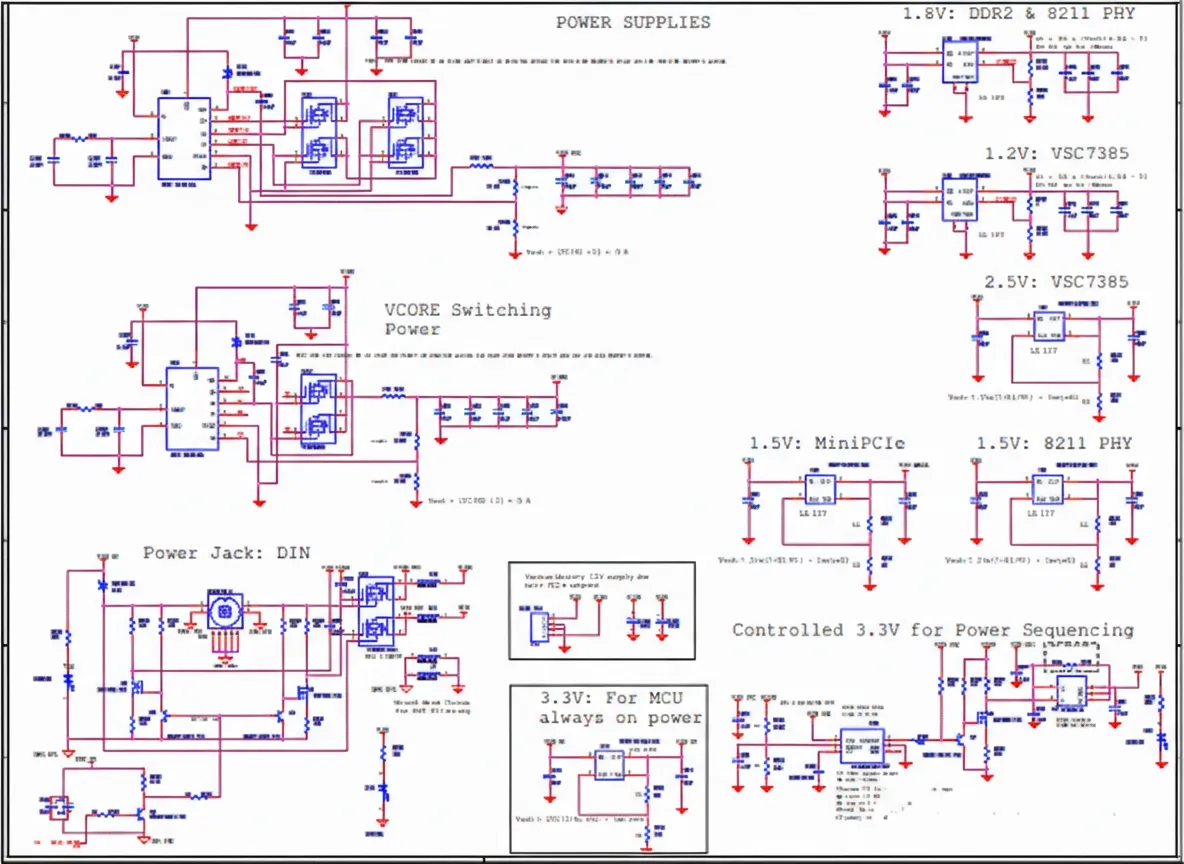
Figure 14. MPC8308-RDB schematic (11)