ALLPCB


Design Objective
With advances in technology, smart devices have become closer to everyday life. Demand for healthy lifestyles has driven the development of wearable devices such as smart wristbands. These devices primarily monitor activity, sleep, and support routines for daily life. This article describes an initial solution that can serve as a practical reference for design and development.
User Requirements
A smart wristband is a wearable device that records real-time data about exercise, sleep, and in some cases diet. The device can sync these data with phones, tablets, and PC clients, providing data-driven guidance for healthier living. It also supports social network sharing so users can share sleep quality, diet, exercise, and mood records to linked social platforms.
The smart wristband integrates a low-power Bluetooth 4.0 module to connect with phones, tablets, and PCs. Users can set personal parameters such as height, weight, and stride, and upload activity data. The device can also share records to social networks.
Performance Specifications
MCU and Bluetooth Module
The nRF51822 is a multi-protocol single-chip solution designed for ultra-low-power wireless applications. The chip supports BLE 4.0 and a 2.4 GHz protocol stack, and integrates RF transmit/receive circuitry, an ARM Cortex-M0 core, and 256 KB flash plus 16 KB RAM.
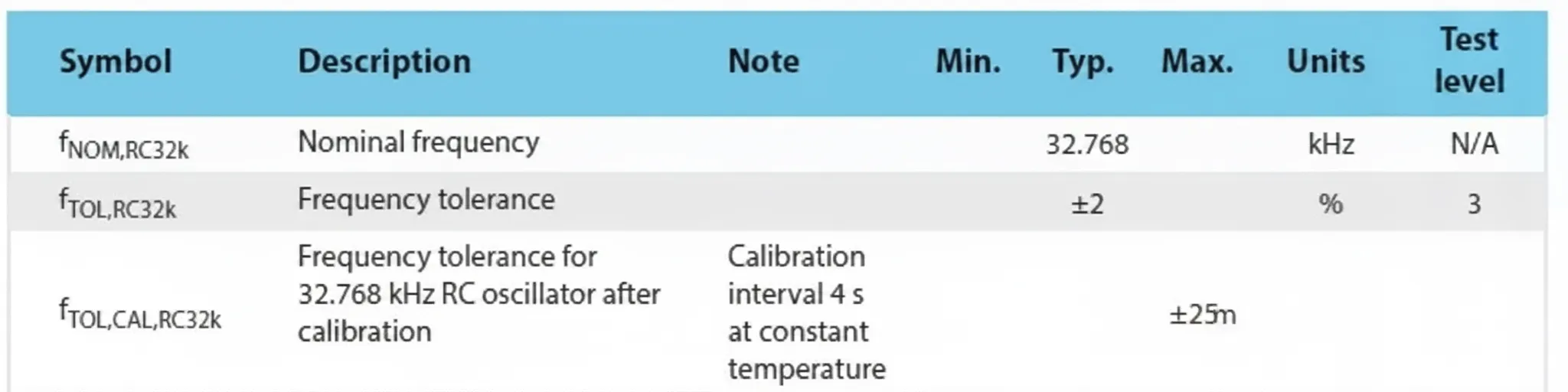
nRF51822 advantages:
(1) The internal RC oscillator has an error of 2% (about 30 minutes/day); even after calibration it reaches only 250 ppm (about 22 seconds/day).
(2) An external crystal oscillator typically achieves about 40 ppm (about 3 seconds/day), providing much smaller error.
The Bluetooth BALUN can use discrete components or ST's custom BAL-01D3. In this design the BAL-01D3 is used to ensure signal performance and to reduce board size. Note: if the nRF51822 package is changed, the custom component should be changed to BAL-02D3.
The BALUN output requires a pi network for impedance matching. Capacitors or inductors should be added at the three positions as needed. Adjustment is based on the Smith chart to bring the impedance to the center point for maximum power output.
System Architecture
The smart wristband consists of the following modules and components:
- Data connectivity module
- Motion sensor
- Three-axis accelerometer
- Battery (rechargeable or coin cell)
- Flash memory
- Bluetooth communication module
- Vibration motor
- Indicator LED or display (optional)
- NFC (currently present in some products such as Fitbit Flex)
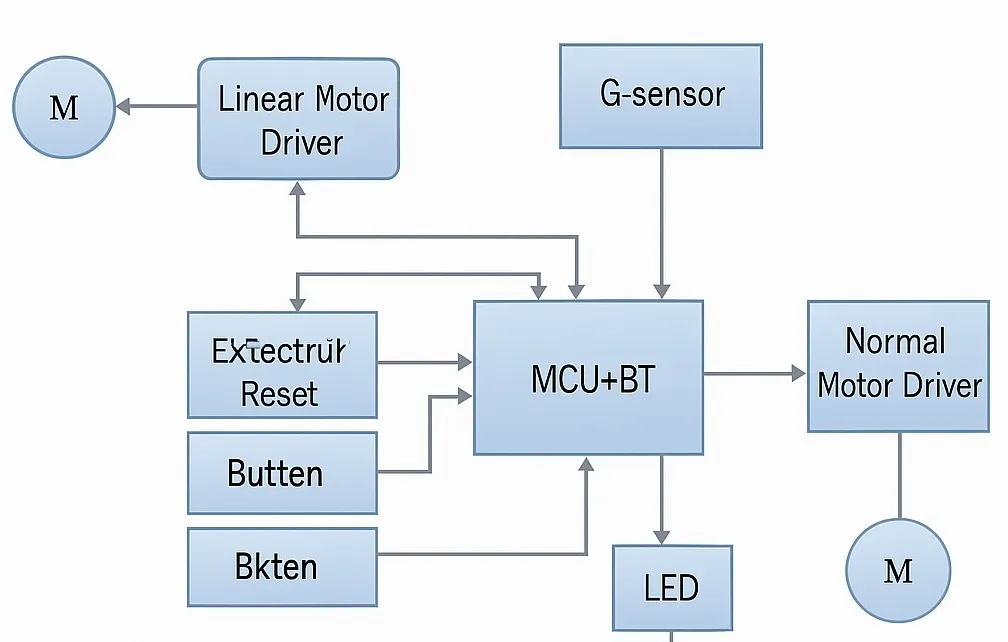
Core components include the Bluetooth sensor and activity monitors such as ActiGraph. System diagram: