ALLPCB


Overview
Since 2021 the "metaverse" concept has gained rapid attention, generating extensive speculation and exploratory work. As the digital economy evolves toward integrated virtual-physical forms, combining industrial digital transformation needs with these developments has made the industrial metaverse a focus of research and pilot projects. Technologies such as digital twins, the Internet of Things, digital design and simulation, and AR/VR/MR are maturing and creating new application scenarios and use cases that can add value to physical production and operations.
1. Core technologies for the industrial metaverse
The industrial metaverse can be viewed as the combination of digital twin technology and interactive technologies. The concept of the digital twin traces back to Michael Grieves at the University of Michigan, who in 2002 proposed ideas related to product lifecycle management. Grieves argued that data from physical devices can be used to construct virtual entities and subsystems in information space that represent those devices, and that the relationship should be bidirectional and maintained throughout the product lifecycle. Building on digital twins and integrating AR/VR/MR technologies offers a path to bridge the real world and virtual information space.
Several key technologies provide active support for the rapid development of industrial metaverse deployments.
(a) High-speed networks and compute infrastructure
High-speed transmission networks and compute infrastructure form the foundational layer for the industrial metaverse. The environment generates and moves large volumes of data, and systems such as artificial intelligence and image processing impose substantial hardware requirements. On the communications side, low-latency, wide-access, high-bandwidth technologies like 5G/6G and fiber networks enable data interconnectivity. On the compute side, high-performance servers, edge computing devices, and data centers satisfy processing and storage demands.
(b) Industrial control systems
Industrial control systems automate production, data acquisition, and process control. Typical components include sensors, information processing systems, and actuators. By collecting field data and comparing measurements to setpoints, these systems enable condition monitoring, process control, and anomaly alarms. Larger deployments often use SCADA systems or are implemented via distributed control systems (DCS) and programmable logic controllers (PLC). On the monitoring side, operators generally use HMI/configuration software to read information and issue controls. Industrial control systems are widely applied in chemical processing, manufacturing, power generation, oil and gas refining, and telecommunications.
(c) Computer-aided design and simulation
Computer-aided design (CAD) and computer-aided engineering (CAE) are well established in engineering design. CAD handles product design, while CAE verifies product performance. CAD has evolved from 2D drawings to 3D modeling capable of representing materials and structures. Designers can build complete virtual models that include shape, structure, function, and materials. CAE uses 3D models to simulate structural, physical, kinematic, and dynamic behavior, providing data for validating usability and reliability and driving design optimization.
With artificial intelligence and digital prototyping, simulation tools can now analyze complex products, systems, and environments such as robots, vehicles, and production lines. For example, NVIDIA's Isaac Sim platform integrates simulation and synthetic data generation tools, enabling virtual training of robots to accelerate development, testing, training, and deployment. Recent versions have focused on manufacturing and logistics robot use cases and support adding human avatars to simulations to improve efficiency and safety in human-robot collaboration.
(d) Artificial intelligence
Artificial intelligence can enable more realistic digital simulations and broader industrial metaverse applications. Machine learning models can learn from multiple feedback sources to present near-real-time digital representations of physical assets and anticipate future events. Learning can rely on sensor feedback as well as historical and networked data, and through iterative learning the fidelity and speed of simulations improve substantially.
An important AI application in the industrial metaverse is predictive maintenance. Predictive maintenance, also called condition-based maintenance, uses sensor and historical data with AI models to determine equipment health and predict when maintenance is required. Compared with routine preventive maintenance, predictive approaches reduce cost by scheduling interventions only when necessary. Typical steps include data collection and preprocessing, early fault detection, fault diagnosis, failure prediction, maintenance planning, and resource optimization. Predictive maintenance helps detect equipment issues, target repairs, reduce downtime, and improve productivity and just-in-time production.
For example, some defense and industry collaborations have trialed AI-based predictive maintenance for aircraft and armored vehicles, using equipment data and AI analytics to forecast component failures.
(e) Graphics, display, and interaction technologies
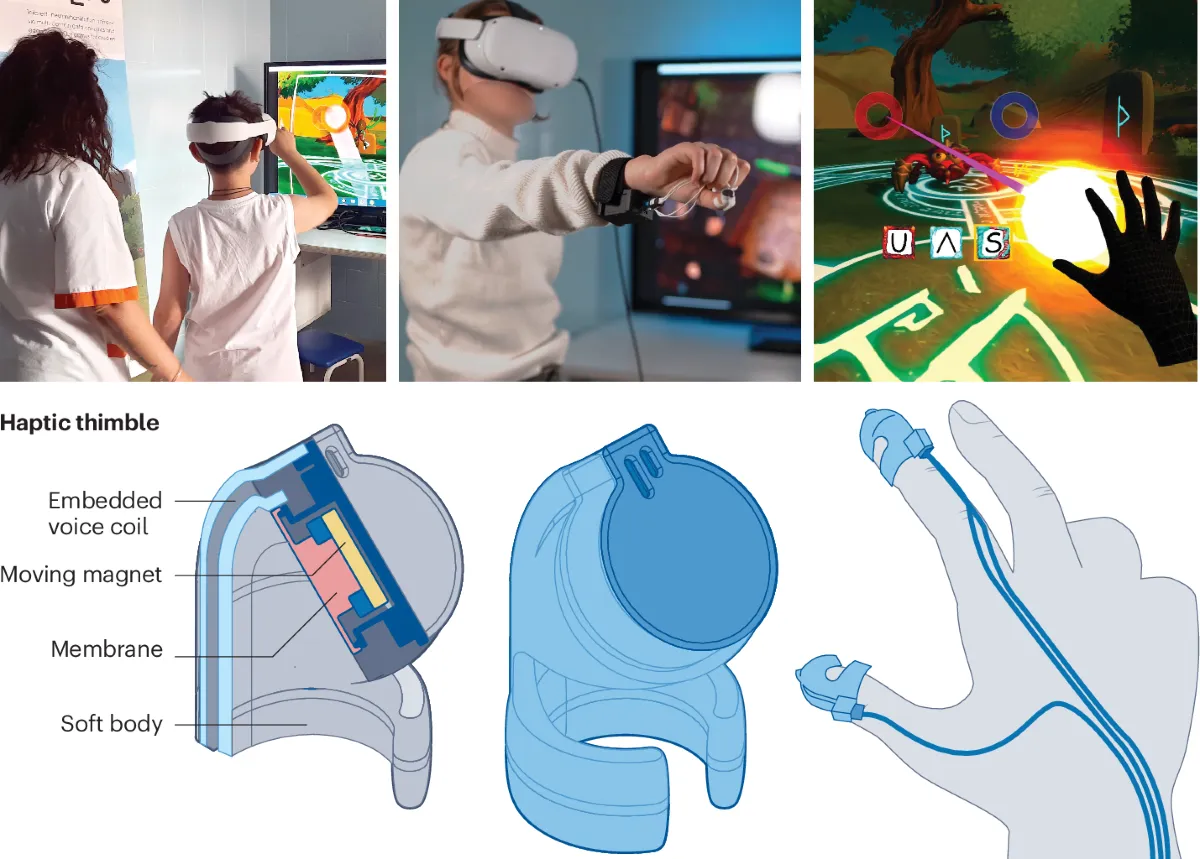
Operational and interaction capabilities in the industrial metaverse depend on graphics processing, display, and interaction technologies. Stereoscopic graphics and virtual interactions combined with AR/VR/MR require advanced graphics processing and rendering engines. Widely used engines include Unity, OGRE, OpenGVS, Vtree, and OSG. Unity, for example, drives a large share of global VR and AR content. Real-time rendering can be applied to vehicle design, operator training, production-line operations, autonomous driving simulation, and product demonstrations. Real-time ray tracing and high-definition rendering paired with AR/VR/MR devices produce interactive experiences that offline CG rendering cannot provide. During R&D, real-time rendering supports "what you see is what you get" workflows that let developers design and interact directly with models. Unity solutions can transform work instructions and documentation into interactive 3D models for immersive review across devices.
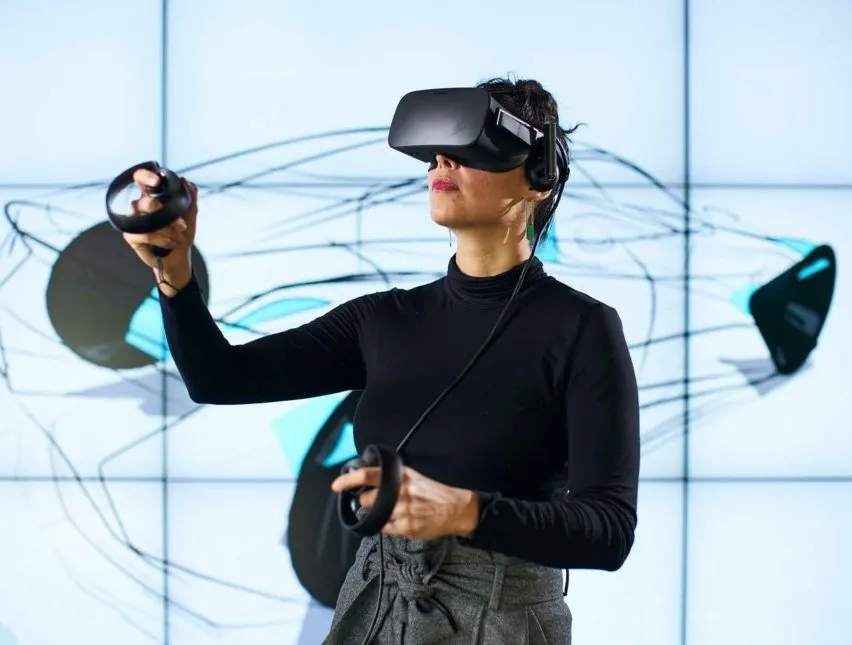
As enterprises accelerate digital transformation, AR/VR/MR technologies are increasingly used in design and production in sectors such as automotive, transportation, manufacturing, and construction. For example, Siemens has integrated VR into services to support collaborative design and production-line inspections.
Boeing has applied AR in aircraft manufacturing. AR headset positioning helped workers locate and replace temporary fasteners used in part assembly, improving routing and inspection tasks. Boeing reported production-time reductions of up to 30% on some models and cost savings of millions of dollars per aircraft in certain cases.
2. Application scenarios
The industrial metaverse can span the entire industrial value chain, including product design, manufacturing, inspection, remote operations, and management. Its potential industrial value may exceed that of consumer applications.
(a) Research, design, and collaboration
One major use case is collaborative design, where engineers collaborate in real time on online platforms to design, iterate, and modify products, simplifying workflows. NVIDIA's Omniverse platform, released in late 2021, is an extensible open platform designed for virtual collaboration and physically accurate real-time simulation. It enables creators, designers, researchers, and engineers to connect major design tools, assets, and projects for shared virtual collaboration and iteration. The platform supports multiple design and engineering software vendors and has potential to change workflows in art and engineering design.
(b) Manufacturing and construction
In manufacturing and construction, the industrial metaverse can be used to simulate and optimize infrastructure, equipment, and processes by combining 5G/6G, the Internet of Things, and AI. Applications include reconfiguring factory layouts to test different setups and evaluate worker movement and safety around mobile robots; analyzing sensor data to locate sources of vibration; and inspecting virtual physical model states to identify root causes of failures.
For example, BMW collaborated with NVIDIA on virtual factory initiatives. BMW used Omniverse to coordinate production across multiple plants and reported potential production-efficiency improvements.
(c) Logistics and supply chain management
In logistics and supply chain management, the industrial metaverse supports simulation and analysis to optimize turnover efficiency. By connecting logistics centers and factories worldwide via network services, supply chain and logistics information can be synchronized. Building end-to-end models that include environments, equipment, and goods enables simulation of time, efficiency, and cost, and supports intelligent picking and scheduling strategies to adapt flexibly to daily order changes. This approach can improve turnover efficiency and reduce costs.
3. Future outlook
(a) Industrial metaverse can drive industrial upgrading
Observers have noted that multiple factors could move the metaverse from concept to wider adoption, creating opportunities for industrial internet development. With digital technologies, the industrial metaverse can make production more collaborative, efficient, safe, intelligent, and precise while reducing costs. TrendForce projects that the industrial metaverse will drive the global smart manufacturing market to about $540 billion by 2025, with a compound annual growth rate of 15.35% from 2021 to 2025.
(b) Strengths differ across international markets
At present, foreign companies often have deeper technology accumulation. Firms such as NVIDIA, Intel, and Microsoft offer mature AI and industry digitalization solutions, and companies like Siemens and Schneider Electric have extensive industrial digitalization experience. China has a complete range of industrial sectors, abundant application scenarios, and strong capabilities among Chinese tech companies for applied development and deployment, so the Chinese market may offer especially rich use cases for the industrial metaverse.
As technologies and solutions mature, the industrial metaverse market will expand and produce scale effects. This presents opportunities for industrial firms seeking digital transformation and efficiency improvements. Enterprises should identify metaverse-suitable scenarios based on their capabilities and market conditions and pursue focused exploration and experimentation to gain early advantages.
(c) Standards and certification will take time
Because the industrial metaverse is an emerging concept, standards for interfaces, technical specifications, reliability certification, and application security remain underdeveloped. Standards should be created with attention to interoperability, security, and reliability, and promoted early to advance industrial information technology. Relevant institutions should progressively develop standards for priority areas and contribute to international standardization; aggregate testing resources and strengthen product quality testing, security evaluation, and certification to ensure the reliability and safety of intelligent products and services and to guide standardized industry development.