ALLPCB


Research overview
Recently, the research group led by Associate Professor Jian Linni in the Department of Electronic and Electrical Engineering at Southern University of Science and Technology reported findings on the integration of large-scale electric vehicles with future smart grids, wireless charging for electric vehicles, and other emerging technologies. Related results have been published online in leading journals in the electrical and energy fields. The group has been focusing on advanced electromagnetic energy conversion, energy-interaction technologies between electric vehicles and smart grids, and renewable energy industry policy.
Large-scale EV integration with smart grids
As the energy crisis and environmental pollution become more severe, vehicle electrification has become a key direction for the global automotive industry. Major vehicle-producing countries have adopted electric vehicle development as a strategic priority. With supportive industry policy, global electric vehicle sales are expected to continue growing rapidly over the next decade.
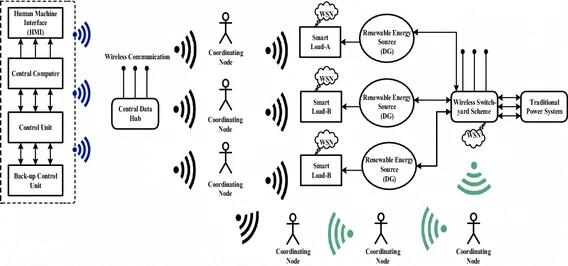
Widespread EV adoption and large-scale grid-connected charging will substantially increase power system loads and create stress across generation, transmission, distribution, transformation, and consumption stages. Specific impacts include: 1) higher peak demand; 2) voltage drop; 3) effects on frequency stability; 4) increased line losses; and 5) shortened equipment lifetime. Numerous studies show that intelligent charging and discharging of electric vehicles is a viable, economical, and effective way to mitigate grid stress from EV charging, and can even provide ancillary services such as frequency and voltage regulation. Vehicle-to-grid (V2G) technology is a technical means to enable bidirectional energy exchange between EVs and the grid.
In simple terms, V2G uses an EV traction battery as a distributed power resource within the grid. During peak demand periods, energy is returned to the grid via inverter technology; during off-peak periods, the grid charges EVs via rectification, thereby enabling friendly energy interaction between EVs and the grid.
Most prior work has focused on establishing optimization models for intelligent EV charging and discharging, with less attention paid to the design and solution algorithms. Few studies assess the feasibility of proposed methods for scheduling large-scale EV fleets. In this context, Jian Linni's group reviewed interaction modes and scheduling implementation methods between EVs and the grid, discussing the technical requirements of different vehicle-grid interaction modes, their effects on the grid, and battery degradation. The group provided a detailed introduction and comparison of two mainstream V2G scheduling approaches, emphasized the mathematical foundations of existing optimization methods, and evaluated current optimization models from a mathematical perspective.
Southern University of Science and Technology is listed as the first corresponding institution for the paper, and Jian Linni is the sole corresponding author. The paper's first author is research assistant Zheng Yanchong. Contributions were also made by collaborative doctoral researchers including Niu Songyan and Shang Yitong.
Wireless charging for electric vehicles
Vehicle electrification continues to be a major trend in the automotive industry. As EV fleets grow, addressing shortages of charging infrastructure and uneven distribution of charging locations becomes increasingly urgent. Wireless charging breaks the cable-plugging paradigm. It uses an electromagnetic field as the medium to transfer energy between the supply side and the vehicle without electrical contact, offering a contactless means of power transfer that can improve safety and user experience. This approach has attracted attention domestically and internationally.
The research group focused on the EV wireless charging application scenario and provided a comprehensive survey of the field. The team considered practical charging requirements and reported on recent advances in supporting technologies such as parking alignment, magnetic shielding, and foreign object detection. Connecting theory with engineering practice, the group conducted a comparative study of several mainstream wireless charging standards used in China and internationally, analyzing similarities and differences in performance metrics, technical approaches, and installation environments. Based on this analysis, the group offered an outlook on future development directions for EV wireless charging technology.