ALLPCB


Overview
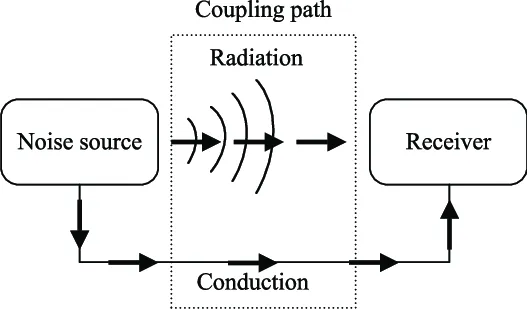
Analyzing an electromagnetic compatibility (EMC) issue requires examining three factors: the noise source, the victim (sensitive device), and the coupling path. After identifying these three factors, decide which one to remove. Eliminating any one of them resolves the EMC problem. For example, if the noise source is lightning and the victim is an electronic circuit, the practical option is to eliminate the coupling path, since the noise source cannot be removed.
Coupling Paths
Coupling paths are classified as conducted coupling and spatial (or radiative/near-field) coupling. The victim is often the easiest to identify, because most EMC investigations start from observed interference symptoms. Next, the noise source can usually be identified through testing and analysis. The most difficult to determine is the coupling path, that is, how the noise source transfers energy to the victim. The coupling path is crucial because in many cases the noise source and the victim are hard to change.
Common Coupling Paths
- Power line coupling: The most common. The noise source and the victim share a power line, so noise energy couples into the victim via the power line.
- Ground coupling: Ground is the reference for circuits, and many circuits tie into the same ground return, providing a coupling path through the ground network.
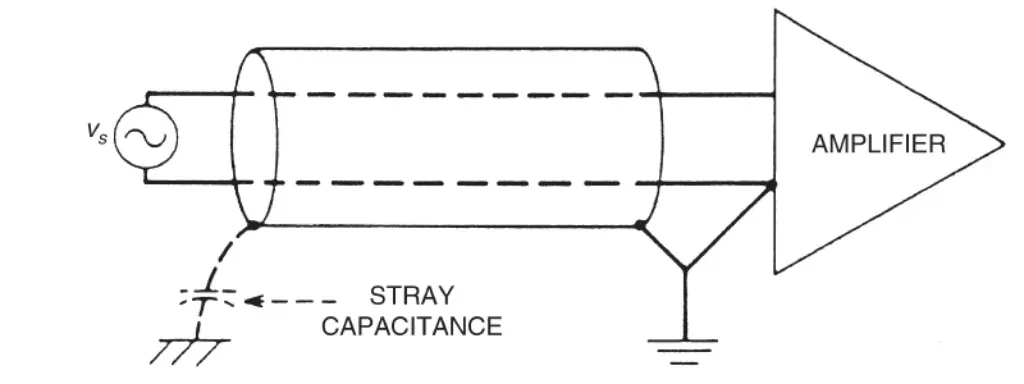
- Near-field coupling: Parasitic capacitance and mutual inductance between the noise source and the victim allow energy transfer.
- Radiated electromagnetic waves: The noise source radiates electromagnetic waves that can interfere with nearby radio receivers or other equipment.
How to Determine the Coupling Path
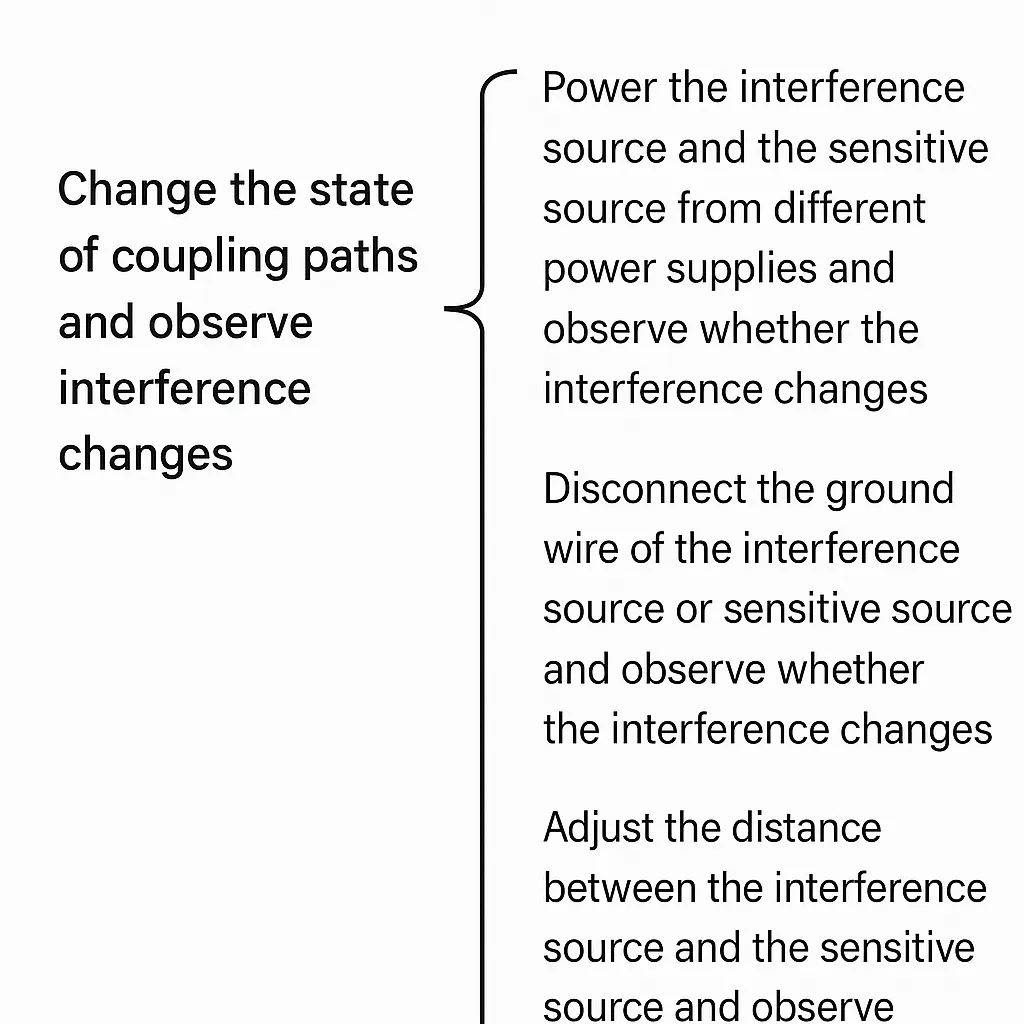
To distinguish whether the coupling is conducted or spatial, change the state of possible coupling paths and observe how the interference changes.
Tests
- Suspected power line coupling: Power the noise source and the victim from separate power supplies or different power lines. If the interference disappears, the power line is the coupling path.
- Suspected ground coupling: Disconnect the ground connection between the noise source and the victim and observe whether the interference changes.
- Suspected spatial coupling: Change the distance between the noise source and the victim and observe whether the interference changes. Spatial coupling usually depends on distance; the further apart, the weaker the coupling, especially in the near field. Coupled energy often varies with distance according to an inverse-square or even inverse-cube relationship.