ALLPCB


Overview
Motion sickness has long been a challenge for virtual reality, most commonly occurring in first-person shooters and walking simulators where the player's real body and virtual body diverge significantly. Moving too quickly in a virtual environment can trigger queasiness, and playing in VR can also lead to collisions with real-world objects such as walls or furniture. VR game developers are aware of these issues and have begun addressing them with a variety of design approaches.
Industry context and hardware
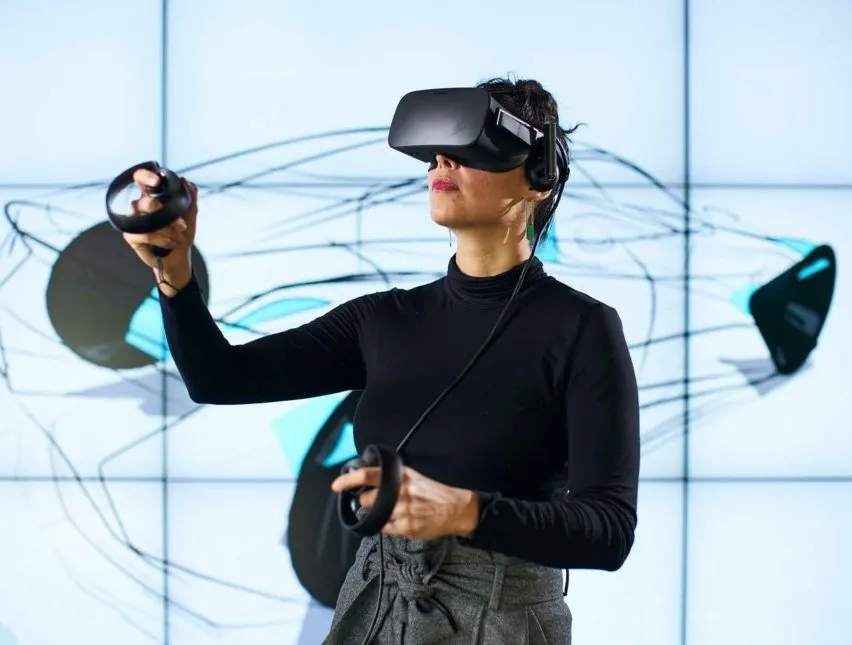
Developers showed results at the Oculus Connect 3 developer conference. The upcoming Oculus Touch motion controllers mean Rift designers can implement increasingly natural body movements in VR. For example, Lone Echo is a Rift-exclusive title that uses pulling and pushing motions for locomotion in a zero-gravity environment.
Example: Lone Echo's zero-gravity locomotion
Ready at Dawn emulates the sensation of floating in space, particularly during mining operations in Saturn's rings, by creating a persistent drifting system rather than constraining the player to a limited play area. In real microgravity you cannot remain perfectly still unless you are anchored to something. In Lone Echo the player continuously drifts and uses grab-and-push motions to move. While drifting, the player can press a button on the Touch controllers to fire thrusters and adjust direction.
At first this can feel disorienting. Although VR has made progress in reducing motion sickness, occasional discomfort remains. Once players acclimate to Lone Echo's locomotion, its movement model often feels natural, because the zero-gravity context bridges the mismatch between vestibular input and visual motion. After a few minutes many players report the sensation of motion sickness diminishing.
Ready at Dawn's art director Nathan Phail-Liff said, "When only the head and hands move symmetrically, moving through space can create nausea. We looked into how astronauts move aboard the International Space Station, so this is a fairly aggressive movement model, but it is comfortable."
Locomotion challenges in VR
Moving convincingly in VR is difficult. Doing so well requires careful handling of the camera placement. Even with proper camera setup, without suitable sensors and a sufficiently large physical space, you cannot walk freely in the virtual world the way you would in reality. This presents a problem for VR developers, many of whom are trying to create experiences that let players be active participants rather than passive standing or seated observers.
Future hardware and room-scale limits
More advanced wireless headsets could let users move freely in rooms of arbitrary size and even outdoors, while software may produce detailed virtual environments that align with the real world or mix the two. Oculus demonstrated a prototype codenamed Santa Cruz last week. However, these systems remain far from the fully immersive, motion-authentic simulations depicted in films like The Matrix or Ready Player One, where a user could move within a simulated environment while remaining physically motionless.
As hardware evolves, VR designers are developing smarter and more creative movement methods that avoid requiring the user to lift their feet. Lone Echo is notable because it addresses locomotion with a solution that is both practical and faithful to the virtual setting, enabling experiences not possible in the real world. Other developers of more traditional FPS titles are rethinking foundational design patterns to adapt to modern VR.
Teleportation and other movement techniques
Teleportation is a common locomotion mechanic in VR. Historically a special ability in games, teleportation in VR is not merely a gimmick: it replaces analog-stick movement and large-scale physical walking as a practical locomotion method.
Among recent VR releases, Epic Games' shooter Robo Recall arguably implements one of the best movement systems because its teleportation is very fluid and intuitive. As with other teleportation-based games, players do not need to rely on analog sticks or wander physically around the room; Robo Recall lets players teleport freely through the virtual environment.
What sets Robo Recall apart is its seamless teleportation. Most FPS games that use teleport operate by moving the player from one point to another on the map. Bullet Train helped popularize this system in 2015. The stealth title Budget Cuts borrowed the iconic Portal-style spatial teleportation mechanic, letting players open rifts and traverse space. Games like Superhot avoid player movement entirely by leaving the player stationary while enemies approach.
Robo Recall: teleportation with orientation control
Robo Recall uses a sophisticated teleportation system. Point to the desired destination, hold the controller, and a blue trajectory line appears on the map. Players can choose not only the destination but also the post-teleport orientation. The teleportation is fast and becomes intuitive after a few minutes of practice.
The game also provides players with a set of firearms to fight waves of hostile robots, reminiscent of classic arcade shooters. While it may sound simple, the combination of precise shooting, physical interactions such as reloading at the hip, and freedom to teleport creates an engaging VR experience. Players can take strategic positions and move rapidly around slow-moving bosses to dodge and attack.
Other design variations
Other Rift developers use teleportation with their own twists. 4A Games' FPS Arktika.1 emphasizes narrative. To keep the experience flowing and assist players during combat, 4A Games restricts teleportation to predefined positions.
Jon Bloch, senior creative director at 4A Games, explained, "If teleportation is completely free, players can put themselves in disadvantageous positions. That's true: in Robo Recall inexperienced players might teleport indiscriminately across the map rather than securing a tactical advantage. In Arktika.1 you can teleport to designated yellow points to move closer to the fight, and retreat to safer blue points if the area is crowded."
Practical limits and alternatives
Implementing full-body locomotion in VR remains technically difficult and expensive, so these movement mechanics are workarounds to avoid the problem. HTC Vive room-scale tracking still encounters limitations, and systems that allow unlimited walking, such as omnidirectional treadmills or redirected walking implementations, are still niche solutions.
Even so, these game designs let players experience freedoms unique to VR without putting their real-world bodies at risk.