ALLPCB


Overview
When discussing embedded systems and microcontroller programming, General Purpose Input/Output (GPIO) is a fundamental concept.
GPIO is a common digital interface used to connect a microcontroller and other digital devices. GPIO allows the microcontroller to read and write digital signals, controlling the state of external devices and reading input from them.
GPIO pins can be configured as inputs or outputs. In input mode, a GPIO pin reads the state of an external device, typically represented as a high level (1) or low level (0). In output mode, a GPIO pin controls an external device by driving a high or low level.
GPIO provides the interface for a microcontroller to communicate with the external world, enabling control of external devices and reception of external signals.
Basic Principles
GPIO pins can be configured as input or output. Common GPIO operating modes include the following:
| Mode Name | Type | Characteristics |
|---|---|---|
| Floating input | Digital input | Reads pin level. If the pin is floating, the level is undefined. |
| Pull-up input | Digital input | Reads pin level. Internal pull-up resistor connected; when floating the default is high. |
| Pull-down input | Digital input | Reads pin level. Internal pull-down resistor connected; when floating the default is low. |
| Analog input | Analog input | GPIO is disabled. The pin is connected directly to the internal ADC. |
| Open-drain output | Digital output | Can drive the pin. High level is high-impedance; low level connects to VSS. |
| Push-pull output | Digital output | Can drive the pin. High level connects to VDD; low level connects to VSS. |
| Multiplexed open-drain output | Digital output | Controlled by an on-chip peripheral. High level is high-impedance; low level connects to VSS. |
| Multiplexed push-pull output | Digital output | Controlled by an on-chip peripheral. High level connects to VDD; low level connects to VSS. |
Applications
In embedded systems, GPIO plays a critical role by enabling a microcontroller to interact with various external devices. Examples include:
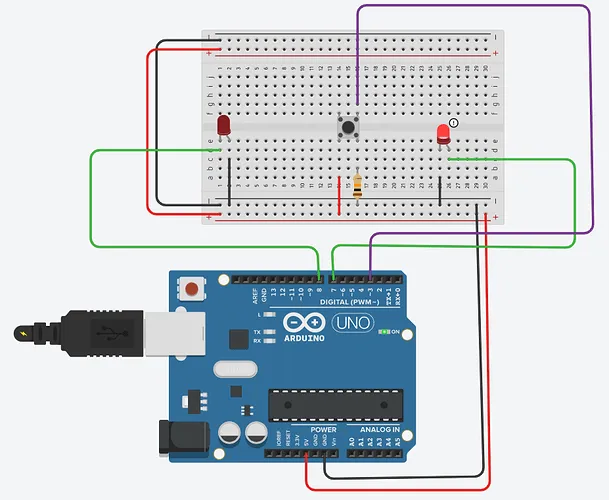
1. Basic input/output functions: using GPIO outputs to control LEDs or switches, and inputs to monitor temperature sensors or door/window states. In robotic control systems, GPIO can control motors and receive sensor data.
2. Interrupt mode: GPIO can provide asynchronous notification via interrupts or events. When an external event occurs, the microcontroller can be notified immediately and handle it, avoiding continuous polling. GPIO level changes can trigger an interrupt to notify the microcontroller. GPIO interfaces typically support configurable output types and pull-up or pull-down resistor settings.
3. Multiplexed communication peripherals: GPIO pins can be configured for communication interfaces such as SPI, I2C, and UART to enable high-speed data transfer with external devices.
In practice, GPIO should be configured and used according to specific requirements. Proper use of GPIO improves system performance and stability while reducing power consumption and resource usage. A thorough understanding of GPIO principles and flexible application is important.