ALLPCB


Concepts of smart grid and microgrid
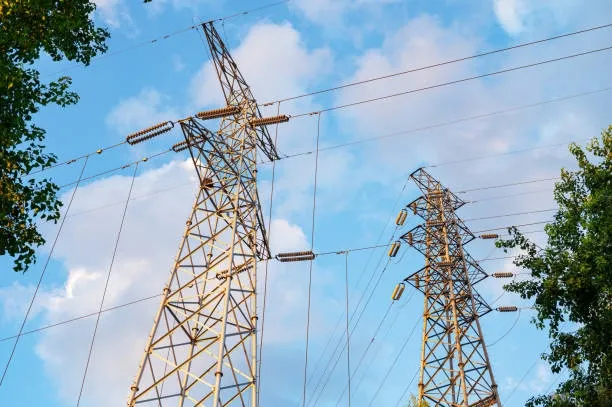
Smart grid refers to an intelligent upgrade of traditional power infrastructure using information and communication technologies to monitor, control, and dispatch the power system. A smart grid can more flexibly integrate renewable and other new energy sources, improve operating efficiency and reliability, and support sustainable energy use and reduced environmental impact. It assembles various devices in the power system using advanced technologies to achieve automation, interconnection, efficiency, and responsiveness.
Microgrid denotes a localized power supply system that uses renewable energy sources (such as solar and wind) together with conventional point-source generation, established via microgrid technologies. A microgrid directly converts renewable energy into electricity, stores it via energy storage and intelligent dispatch, and supplies power independently to users. Microgrids are typically deployed in small commercial buildings, public facilities, residential areas, and similar local contexts. They are adaptive, enable small-scale clean energy use, and can be energy-efficient and economically viable.
In short, a smart grid denotes the system-wide intelligent upgrade of the power system, while a microgrid denotes a localized energy network. Both relate to renewable energy development and aim to support more sustainable power and economic operation.
Working principles
Smart grid working principles
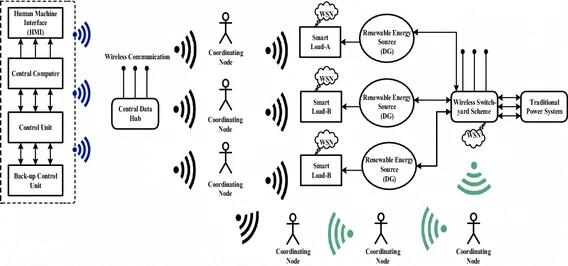
A smart grid integrates information technology, communication technology, and power engineering to achieve a highly automated and intelligent power system. Key principles include:
- Monitoring and data acquisition: The smart grid uses various sensors and devices to monitor power equipment and loads in real time and collect diverse operational data.
- Data transmission and processing: Collected real-time data are transmitted over high-speed, secure communication networks to a data center for analysis, processing, and storage.
- Intelligent control and dispatch: Relying on strong data analytics and artificial intelligence, the smart grid performs intelligent control and dispatch of power equipment and loads based on multiple data indicators.
- Health monitoring and diagnosis: Real-time monitoring enables timely diagnosis and prediction of equipment faults and status, providing accurate health assessments.
- Energy management and optimization: Energy management systems balance supply and demand, coordinate storage and dispatch, and optimize overall energy use.
- Protection and emergency response: The smart grid implements comprehensive protection using remote telemetry and control devices, breakers, fuses, and similar equipment, and can respond rapidly in emergency situations.
Microgrid working principles
A microgrid is a small, autonomous power network formed by distributed energy resources to meet local demand. Its main operating principles include:
- Use of distributed energy: Microgrids generate electricity from distributed resources such as solar, wind, and hydro, and store energy via generators or storage devices for later use.
- Energy storage: Excess generated energy is stored to handle peak demand or supply variability. Storage devices include battery systems, pressure vessels, and other storage units.
- Distributed transmission: Microgrids distribute produced and stored power through a distributed network into low-voltage distribution systems, often avoiding long high-voltage transmission lines and central large transformers.
- Intelligent control and management: Microgrids use intelligent control technologies to regulate generation, storage, and distribution while continuously monitoring local supply and demand for flexible, precise energy management.
- Independent operation: A microgrid can operate autonomously without support from the main grid, maintaining local power supply even when the main grid fails.
Overall, microgrids rely on distributed generation, energy storage, distributed transmission, intelligent control, and autonomous operation. They can meet local demand while reducing dependence on the main grid and lowering environmental impact, making them suitable for remote areas and emerging urban developments.
Functional characteristics
Smart grid characteristics
Smart grids enhance system reliability, flexibility, sustainability, safety, and efficiency. Main characteristics include:
- Multi-energy complementarity: By integrating renewable and conventional energy sources, smart grids enable coordinated supply to match changing demand conditions.
- High efficiency and energy savings: Advanced information technologies allow complex energy management and scheduling, reducing transmission losses and peak-valley gaps to improve overall energy utilization.
- Reliability and stability: Intelligent control strategies enable remote monitoring and fault diagnosis, ensuring safe and reliable operation.
- Flexible coordination: Smart grids can adapt to supply-demand variations by adjusting delivery capacity, balancing regional demand, and scheduling storage systems based on forecasts.
- Sustainability: Prioritizing renewable energy and using storage to store power at low prices supports more sustainable energy use and reduces reliance on fossil fuels.
Microgrid characteristics
Microgrids consist of distributed power sources, storage, loads, and interconnection networks, using inverters, intelligent controllers, communications, and energy management systems for automation. Key features include:
- Multi-energy integration: Centered on distributed generation, microgrids integrate solar, wind, hydro, gas, and storage to select optimal local energy supply.
- Intelligent control: Intelligent control monitors and manages devices to optimize energy use and improve efficiency.
- High reliability: Distributed resources form resilient supply structures so that a failure in one part does not compromise overall supply.
- Islanded operation: Microgrids can operate independently from the external grid, maintaining normal operation during external outages.
- Flexibility: Small scale and modular structure enable adaptation to diverse demands, such as rural grids and neighborhood lighting.
- Cost savings: Microgrids can reduce construction and supply costs by avoiding duplicated infrastructure and improving energy efficiency.
Key differences
Smart grids and microgrids are distinct concepts. A smart grid is an evolutionary approach for the overall power system using information technology to enable diversified renewable integration, interactive operation, and optimized dispatch. A microgrid is a regional, small-scale, autonomous power system that uses renewables, storage, and energy management to meet local supply and demand.
- Scale: Smart grids typically operate at larger scales, serving regions, cities, or broader areas. Microgrids are smaller and serve a specific area or single facility.
- Function: Smart grids focus on system-wide energy management, dispatch optimization, and integration of storage. Microgrids combine generation, storage, and supply to deliver local energy services.
- Operation model: Smart grids are generally centralized systems managed by grid operators. Microgrids are decentralized and often operated by communities, enterprises, or individuals.
- Application scope: Smart grids suit large-scale power systems and system upgrades. Microgrids are suited to specific local contexts or single buildings aiming to establish independent power systems.
In summary, although both involve renewables, storage, and information technologies, they differ in objectives, scale, operation, and application scenarios.