Panel For Example Panel For Example Panel For Example

Basic Structure of VR Headsets

Author : Adrian September 30, 2025

Overview

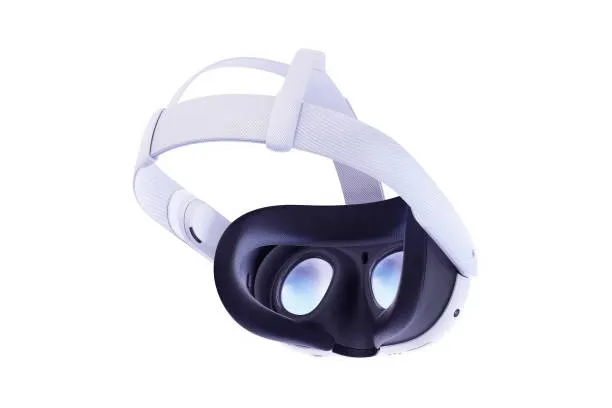
A display is placed over a user's eyes so that the display shows the scene corresponding to the direction the user is looking. This creates the sensation of being located inside a large virtual space.

Key components

  1. Processor
    The core of computation, used to generate images and to compute orientation and positioning from gyroscope data. To prevent motion sickness, VR headsets typically require a display refresh rate of 90 Hz. This imposes high demands on processing performance, so the performance characteristics of the headset's processor chip are critical.
  2. Display
    Displays images separately to the left and right eyes. When a VR headset display is described as "2k", it usually refers to the long side of the entire panel, for example 2k x 1k. If specified as 2k per eye, it means the short side is 2k. In 2017, mainstream configurations in the market were around 1.5k per eye. Higher panel resolution requires more powerful processors.
  3. Convex lenses
    If the display is placed directly in front of the eyes, the human eye cannot easily focus on such a near object. Convex lenses refract light to shift the apparent position of the display toward the retina, allowing the eye to comfortably focus on a screen that appears very close.
  4. Gyroscope
    For the scene shown on the display to change in real time with head movement, the headset must know the head's orientation. For example, when a VR user looks upward, the display must immediately show the virtual sky; this "looking up" action must be detected by a gyroscope. The detailed operating principle of gyroscopes is not discussed here; they detect an object's orientation in space.
Recommended Reading
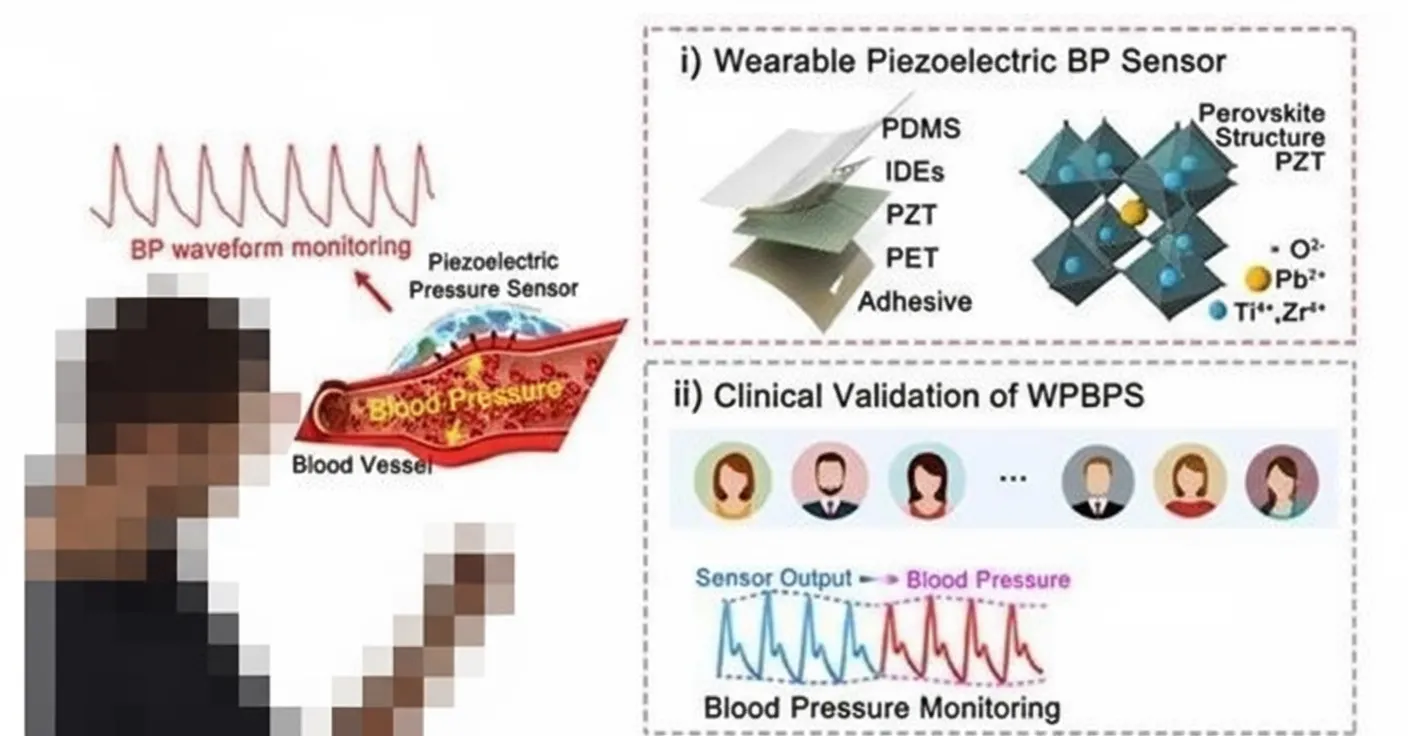
Smartwatch and Patch Using a Piezoelectric Blood Pressure Sensor

Smartwatch and Patch Using a Piezoelectric Blood Pressure Sensor

October 31, 2025

KAIST-developed wearable piezoelectric blood pressure sensor validated in clinical trials, meeting accuracy standards and integrated into smartwatch and patch prototypes.

Article
How Smartwatches Monitor Sleep

How Smartwatches Monitor Sleep

October 31, 2025

Overview of how wearables use actigraphy and cardiopulmonary coupling (CPC) to infer sleep stages, assess deep sleep accuracy, and enable at-home physiological sleep monitoring.

Article
Wearable Sensor for Detecting and Monitoring Muscle Atrophy

Wearable Sensor for Detecting and Monitoring Muscle Atrophy

October 31, 2025

Ohio State researchers developed a wearable sensor to detect and monitor muscle atrophy using conductive e-threads and coil-based sensing for volumetric limb tracking.

Article
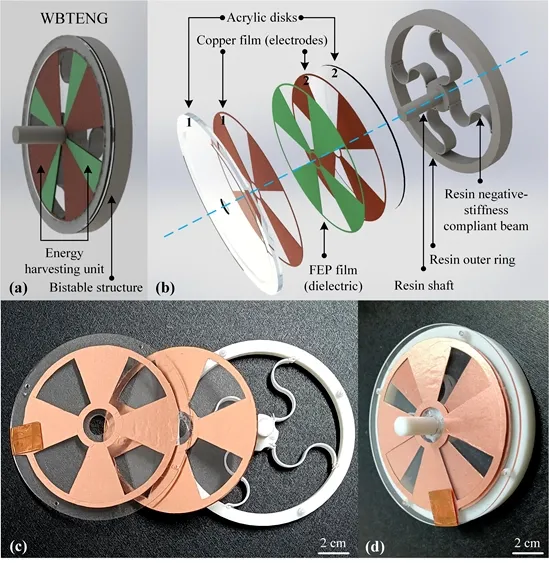
Wearable Bistable Triboelectric Generator for Low-Frequency Harvesting

Wearable Bistable Triboelectric Generator for Low-Frequency Harvesting

October 31, 2025

Wearable bistable triboelectric nanogenerator using a flexible negative-stiffness mechanism to harvest low-frequency torsional energy from human motion and power low-power sensors.

Article
Skin-Integrated PPG-ECG Multimodal Sensing Patch Design

Skin-Integrated PPG-ECG Multimodal Sensing Patch Design

October 02, 2025

Skin-integrated PPG-ECG patch using ultraflexible organic photodetectors and hydrogel electrodes to monitor HR, RR, cuffless BP and SpO2 with high NIR responsivity.

Article
Multimodal Wearable Sensor Patch for Continuous Plant Monitoring

Multimodal Wearable Sensor Patch for Continuous Plant Monitoring

October 02, 2025

Multimodal wearable sensor patch for continuous plant physiology monitoring detects leaf VOCs, temperature and humidity; PCA-based ML enables earlier disease and stress detection.

Article