ALLPCB


Introduction
For readers unfamiliar with VR technology, VR headsets can seem like a striking device. The following provides a concise introduction to the concept, common categories, and basic display principles of VR headsets.
What is a VR headset
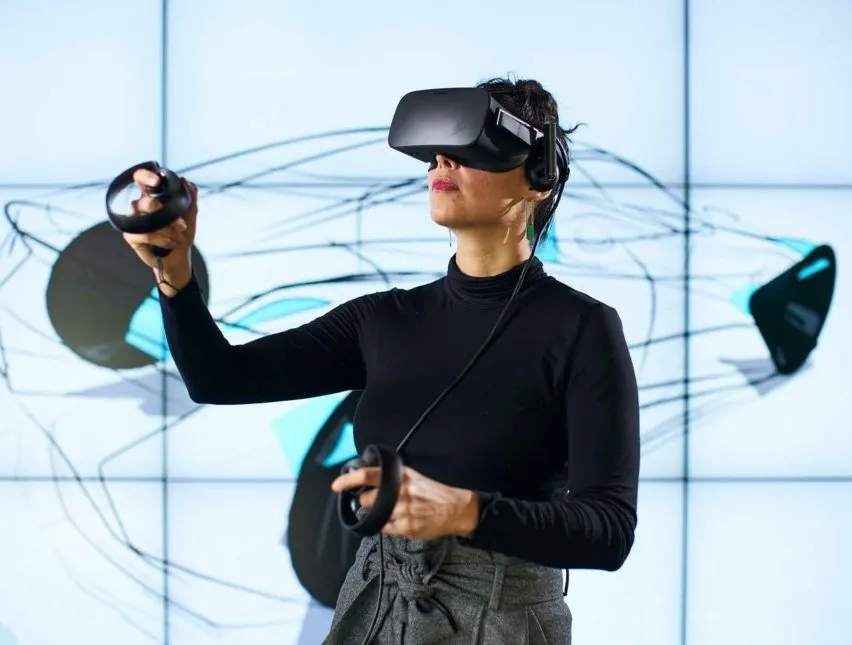
A VR headset, or VR head-mounted display, is a virtual reality head-mounted display device. Early nontechnical names included "VR glasses", "VR mask", and "VR helmet". A VR headset encloses the user's vision and often hearing, guiding the user to feel present in a virtual environment. The display principle is to present separate images to the left and right eyes; the brain fuses these differing images to produce a sense of depth.
VR headset categories
VR headsets are generally divided into three categories: tethered (external) headsets, standalone headsets, and mobile headsets.
Tethered (external) headsets: These provide a higher-quality experience and typically include dedicated displays and complex internal structures. They have higher technical requirements but are constrained by data cables, limiting the user's freedom of movement. Examples include HTC Vive and Oculus Rift.
Standalone headsets: Also called all-in-one VR headsets. These devices contain the necessary compute and display hardware, so they can operate without external input/output devices while delivering a 3D stereoscopic experience.
Mobile headsets: These are structurally simple and low cost. A smartphone is inserted into the headset to serve as the display and processor, making them convenient for basic VR experiences. For example, some consumer mobile VR headsets follow this approach.
Display principles
Interlaced display mode divides a frame into two fields: the odd-line field (single-field composed of odd scan lines) and the even-line field (even scan lines). For stereoscopic imaging, the left-eye image and the right-eye image can be assigned to the odd and even fields respectively (or vice versa). This is called a stereoscopic interlaced format. When using active-shutter glasses together with interlaced mode, the vertical sync signal for the fields can be used to trigger the shutter switch. When the odd field (e.g., the left-eye image) is displayed, the shutter glasses occlude one eye; when the even field is displayed, the glasses occlude the other eye. By alternating in this way, stereoscopic imaging is achieved.
Frame-sequential display alternately presents left-eye and right-eye images on the screen. Using shutter glasses synchronized to the vertical sync signal achieves stereoscopic presentation: each eye only sees its intended image when its shutter is transparent while the other shutter is opaque. Other stereoscopic systems simply route the left and right images (separated by the vertical sync signal) to distinct left and right display devices.
Because a standard monitor is a single display while humans have two eyes, the images for the left and right eyes must be presented separately to achieve stereoscopic vision. This is typically done by sending a stereoscopic signal to the display in the sequence left -> right -> left -> right, repeatedly, while simultaneously sending synchronization signals to active 3D shutter glasses so they switch in sync with the display. In practice, active 3D shutter glasses use liquid crystal lenses controlled by circuitry: when set to opaque they block one eye, and when set to transparent they allow the other eye to see its image. By alternating the left and right images on the display in sync with the shutter glasses, and relying on the persistence of human vision, true stereoscopic 3D perception is produced.