ALLPCB


1. Introduction
As water resource management becomes more refined and the demand for water security increases, real-time accurate monitoring of flow velocity has become a critical support for hydrological surveying and flood control. Radar flow meters, as a representative non-contact measurement technology, use a unique operating mechanism and strong environmental adaptability, and are increasingly replacing traditional contact devices as mainstream monitoring tools to provide stable and reliable data across multiple industries.
2. Operating Principle
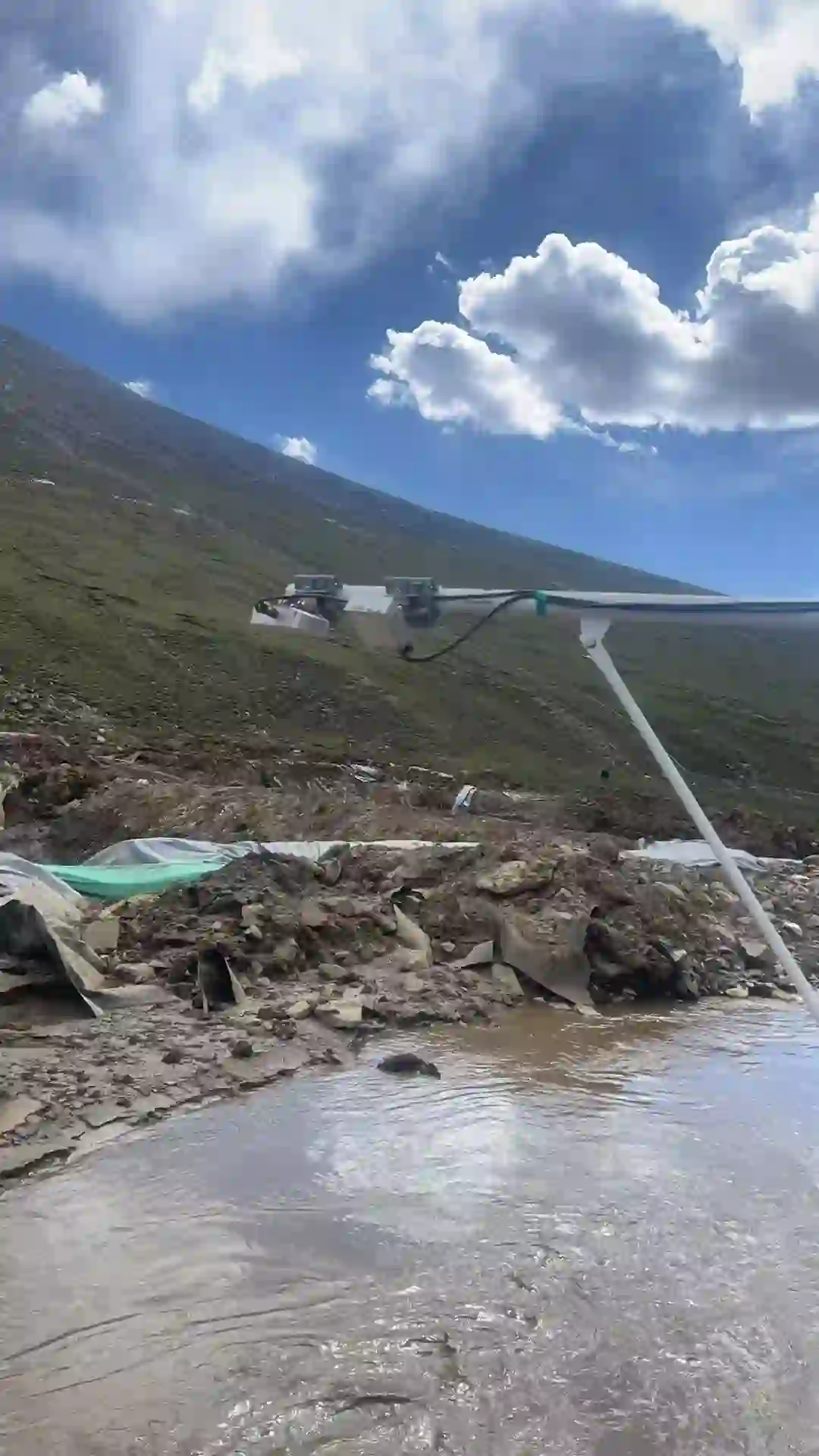
The DX-LLX-1 radar flow meter is a radar-based flow measurement device that uses Doppler radar velocity measurement to detect surface flow velocity. Microwave radar is not affected by temperature gradients, pressure, air density, wind, or other meteorological conditions, allowing stable all-weather operation. The radar can be configured with different transmit frequencies, which helps avoid beam interference when multiple units perform close-proximity, multi-point detection. Measurement systems can combine the obtained velocity values (multi-point measurements) with cross-section geometry information to determine flow rates for natural rivers, urban rivers, channels, culverts, and pipelines.
3. Technical Specifications
Key technical specifications form the basis for accurate monitoring. The velocity measurement range covers 0.1–40 m/s, with measurement accuracy of ±0.01 m/s or ±1% and a resolution as low as 0.001 m/s, enabling detection of small velocity changes. Effective detection distance can reach up to 40 m, supporting various rivers and channels. The power supply supports a wide input range of 9–24 V, and standby current is controlled below 10 mA, allowing compatibility with solar power for long-term field operation. Communication interfaces include RS485 serial and 4–20 mA analog outputs for easy integration with monitoring systems. Device protection ratings typically reach IP67 or higher, and operation is stable across a wide temperature range of -30°C to 65°C and humidity of 0–95% RH, maintaining performance in extreme weather.
4. Technical Advantages
Compared with traditional contact flow measurement devices, radar flow meters offer clear advantages in practical applications. The non-contact measurement mode eliminates direct contact with the water, avoiding issues such as abrasion from sediment, entanglement by floating debris, and zero drift caused by corrosion. A hydrological monitoring station on the Yellow River conducted a 30-day test in turbid water with sediment concentration up to 30 kg/m3; device data stability reached 99.7%, while similar contact devices had a failure rate up to 40%. The devices have fast dynamic response, with data output as fast as every 0.5 seconds to capture sudden changes in flow. Intelligent adaptive functions such as automatic gain control and tilt compensation help correct environmental influences. In extreme weather such as heavy rain or strong winds, the devices can continue operating without data interruption caused by circuit moisture or external vibration.
5. Applications
Radar flow meters have expanded from traditional hydrological monitoring to multiple sectors and scenarios, serving as key data support for decision making.
1. Flood monitoring: A radar speed network deployed on a river section in the Jingjiang area updates cross-section average velocity every 5 minutes. When a 20% velocity increase is detected, an alert is automatically triggered. During the 2024 flood season, the system predicted the flood peak passage 4 hours earlier, providing crucial time for levee reinforcement.
2. Irrigation flow measurement: An irrigation district in Ningxia province installed the device on the main canal and, combined with channel cross-section parameters, implemented automatic flow calculation. Measurement accuracy improved to 95%, increasing agricultural irrigation water use efficiency from 52% to 68% and saving about 120 million cubic meters of water annually.
3. Urban inundation control: Portable radar flow meters (weight <3 kg) are widely used to monitor flood-prone points. When surface flow exceeds 1.5 m/s, the system can link to traffic signals to issue road closure warnings, significantly reducing inundation-related incidents.
4. Hydropower operation optimization: Twelve large hydropower plants, including the Three Gorges Dam, installed array radar speed systems in tailwater channels. By monitoring outflow distribution and adjusting unit output, turbine efficiency improved by 1.2%, increasing annual generation by approximately 80 million kWh.
5. Other scenarios: The devices are also used in reservoir dispatch, pollution source tracing, and river regulation, providing comprehensive data support for scientific water resource management.
6. Conclusion
Radar flow meters address measurement challenges faced by traditional devices in complex environments through innovations in operating principles, parameter optimization, and performance upgrades. Their non-contact design and high-precision characteristics make them core equipment for modern flow monitoring. As technology continues to advance, improvements in real-time data transmission and extreme environment adaptability are expected to strengthen technical support for sustainable water use and water security, and to support development in water resources, environmental protection, and energy sectors.