ALLPCB


Introduction
Thermal management remains a critical aspect of printed circuit board (PCB) design, especially in high power and high density applications. The stackup configuration of a PCB directly influences its ability to dissipate heat generated by components. A well designed stackup can minimize thermal resistance, ensuring reliable operation and extended lifespan of electronic devices. For electrical engineers, understanding how PCB stackup impacts thermal performance is essential to optimize designs for heat dissipation. This article explores the relationship between PCB stackup and thermal management, focusing on how copper foil thickness and layer placement affect heat dissipation in multilayer boards. Key strategies, such as increasing copper foil thickness on specific layers and placing larger copper areas near heat sources, will be discussed to provide actionable insights for improved thermal performance.
What Is PCB Stackup and Why It Matters
PCB stackup refers to the arrangement of copper layers and insulating materials in a multilayer board. It defines the sequence of conductive and dielectric layers, which impacts signal integrity, power distribution, and thermal management. In thermal performance, stackup plays a pivotal role by determining how heat flows from components to the surrounding environment. A poorly designed stackup can trap heat, leading to component failure or reduced efficiency. For engineers working on power electronics or high speed circuits, optimizing stackup is crucial to manage thermal resistance. By strategically placing copper layers and adjusting their thickness, thermal resistance can be reduced to a certain extent by increasing the copper foil thickness of the bottom layer. This approach, along with other stackup considerations, ensures effective heat dissipation and maintains operational stability.
Technical Principles of PCB Stackup and Thermal Performance
Thermal performance in PCBs hinges on the principles of heat transfer, which occurs through conduction, convection, and radiation. Conduction, the primary mode in multilayer boards, depends on the thermal conductivity of materials used in the stackup. Copper, with a high thermal conductivity of approximately 400 W/mK, serves as the main pathway for heat dissipation. The thickness and placement of copper layers directly influence how efficiently heat moves away from heat generating components.
In multilayer boards, thermal resistance can be efficiently lowered by placing a larger copper foil area for heat dissipation on the same layer as the heat source or the adjacent layer. This minimizes the distance heat must travel through less conductive dielectric materials, such as FR4, which typically have a thermal conductivity of only 0.3 to 0.5 W/mK. When a heat source, like a power IC, is placed on the top layer, a thicker or larger copper area on that layer or the immediate inner layer can act as a heat spreader, reducing localized temperature rises.
Moreover, the bottom layer often serves as a primary heat dissipation surface, especially when connected to a heatsink or exposed to ambient air. Increasing the copper foil thickness of the bottom layer enhances its ability to conduct and spread heat across a larger area, thus lowering thermal resistance. Inner layers, if connected via thermal vias, can also contribute to heat dissipation by providing additional pathways for heat to escape. The effectiveness of these strategies depends on the stackup design, including layer count, copper weight, and via placement.
Dielectric materials between copper layers also impact thermal performance. Thinner dielectric layers reduce the thermal barrier between copper planes, improving heat transfer. However, this must be balanced with electrical isolation requirements and impedance control. Standards like IPC-6012E provide guidelines for layer thickness and material properties to ensure reliability under thermal stress. Understanding these principles allows engineers to design stackups that optimize heat dissipation while meeting electrical performance needs.
Factors Influencing Thermal Resistance in PCB Stackup
Several factors within the PCB stackup configuration affect thermal resistance. First, copper foil thickness plays a significant role. Standard copper weights range from 0.5 oz/ft2 to 3 oz/ft2 or higher in heavy copper designs. Thicker copper reduces electrical resistance, which in turn lowers heat generation from current flow. It also enhances thermal conductivity, allowing heat to spread more effectively. For bottom layers exposed to cooling mechanisms, thermal resistance can be reduced to a certain extent by increasing the copper foil thickness of the bottom layer.
Second, the placement of copper planes matters. In multilayer boards, thermal resistance can be efficiently lowered by placing a larger copper foil area for heat dissipation on the same layer as the heat source or the adjacent layer. This configuration ensures that heat is quickly conducted away from critical components before it accumulates. Inner layers with large copper areas can act as heat spreaders if connected to the heat source through vias.
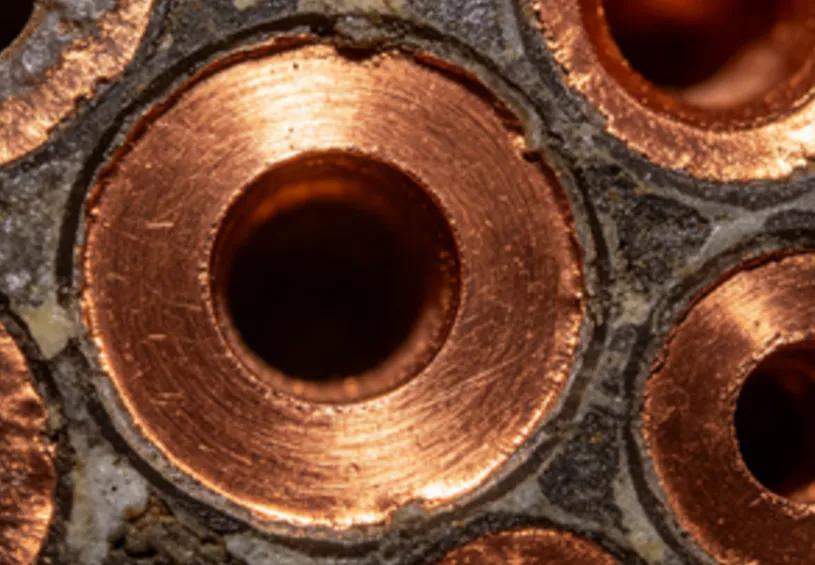
Third, thermal vias are essential in multilayer designs. These small plated through holes create vertical pathways for heat to travel from the top layer to inner or bottom layers with better dissipation potential. Their effectiveness depends on quantity, size, and placement, as outlined in standards like IPC-A-600K for via construction and reliability.
Finally, the choice of substrate material impacts thermal performance. Standard FR4 materials have limited thermal conductivity, while advanced substrates with higher thermal properties can improve heat transfer. Balancing these factors within the stackup design is crucial for managing thermal resistance effectively.
Practical Solutions for Optimizing PCB Stackup for Thermal Performance
Designing a PCB stackup for optimal thermal performance requires strategic planning and adherence to best practices. Below are actionable solutions for electrical engineers to enhance heat dissipation through stackup design.
-
Increase Copper Foil Thickness on Key Layers: Focus on the bottom layer, which often interfaces with external cooling solutions. Thermal resistance can be reduced to a certain extent by increasing the copper foil thickness of the bottom layer. For high power applications, consider using 2 oz/ft2 or thicker copper on outer layers to improve heat spreading.
-
Maximize Copper Area Near Heat Sources: In multilayer boards, thermal resistance can be efficiently lowered by placing a larger copper foil area for heat dissipation on the same layer as the heat source or the adjacent layer. This approach minimizes thermal bottlenecks and ensures rapid heat transfer away from components.
-
Incorporate Thermal Vias: Place thermal vias directly under or near heat generating components to create low resistance paths to inner or bottom copper layers. Ensure via density complies with guidelines in IPC-6012E to avoid manufacturing defects while maximizing heat transfer.
-
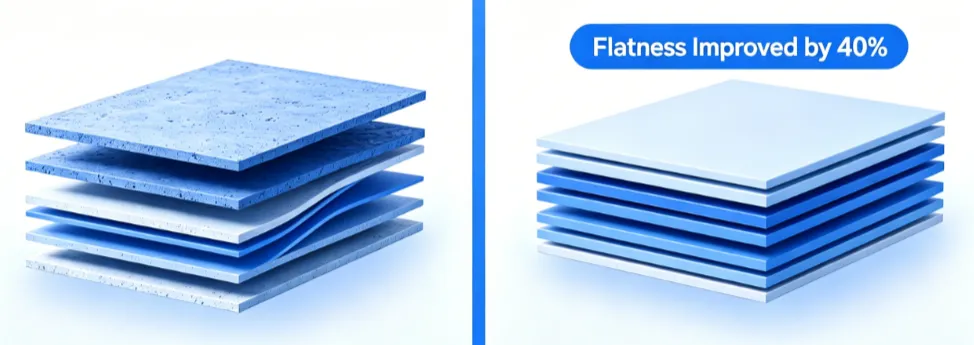
Optimize Layer Count and Dielectric Thickness: Use thinner dielectric layers between copper planes where possible to reduce thermal barriers. However, maintain electrical isolation as per design requirements. A balanced stackup with symmetrical copper distribution also prevents warpage under thermal stress.
-
Select Appropriate Materials: For applications with extreme thermal demands, consider substrates with enhanced thermal conductivity over standard FR4. Ensure material choices align with standards like IPC-A-600K for reliability and performance.
-
Simulate Thermal Behavior: Use thermal simulation tools during the design phase to predict heat distribution across the stackup. Adjust copper thickness and layer placement based on simulation outcomes to address potential hotspots.
Implementing these strategies can significantly improve thermal performance. Regular reference to industry standards ensures that designs remain manufacturable and reliable under varying thermal conditions.
Common Challenges and Troubleshooting in Thermal Stackup Design
Designing a PCB stackup for thermal management often presents challenges that require careful troubleshooting. One common issue is uneven heat distribution across layers, leading to localized hotspots. This can occur if copper areas are not adequately sized or positioned near heat sources. Engineers should ensure that in multilayer boards, thermal resistance can be efficiently lowered by placing a larger copper foil area for heat dissipation on the same layer as the heat source or the adjacent layer.
Another challenge is thermal expansion mismatch between materials, which can cause warpage or delamination during operation. Symmetrical stackup designs, as recommended by IPC-6012E, help mitigate this risk by balancing copper distribution across layers. If warpage occurs, reviewing the stackup for asymmetry or excessive copper thickness variation is a practical first step.
Insufficient thermal vias can also hinder heat dissipation. If simulations or testing reveal high temperatures near components, adding more vias or optimizing their placement can resolve the issue. Standards like IPC-A-600K provide criteria for via design to ensure effectiveness without compromising board integrity.
Conclusion
PCB stackup design significantly affects thermal performance, influencing how effectively heat dissipates from components to the environment. By understanding the principles of heat transfer and the role of copper layers, engineers can optimize stackups to minimize thermal resistance. Strategies such as increasing copper foil thickness on the bottom layer and placing larger copper areas near heat sources are proven methods to enhance dissipation. In multilayer boards, thermal resistance can be efficiently lowered by placing a larger copper foil area for heat dissipation on the same layer as the heat source or the adjacent layer. Adhering to industry standards ensures that designs remain reliable under thermal stress. With careful planning and simulation, thermal challenges can be addressed, leading to robust and efficient PCB designs for demanding applications.
FAQs
Q1: How does copper foil thickness impact thermal resistance in PCB stackup?
A1: Copper foil thickness directly affects thermal resistance in PCBs. Thicker copper, especially on the bottom layer, enhances heat conduction and spreading. Thermal resistance can be reduced to a certain extent by increasing the copper foil thickness of the bottom layer, as it provides a larger pathway for heat to dissipate to external cooling solutions, improving overall thermal performance.
Q2: Why is placing copper near heat sources important for multilayer boards?
A2: Placing copper near heat sources is critical for effective heat dissipation. In multilayer boards, thermal resistance can be efficiently lowered by placing a larger copper foil area for heat dissipation on the same layer as the heat source or the adjacent layer. This reduces the distance heat travels through low conductivity materials, preventing hotspots.
Q3: What role do thermal vias play in PCB stackup thermal performance?
A3: Thermal vias create low resistance paths for heat to move from heat generating components to other layers in the stackup. They are essential in multilayer boards to connect heat sources to larger copper areas, ensuring efficient dissipation. Proper via design, following industry standards, maximizes their effectiveness in reducing thermal resistance.
Q4: How can dielectric thickness affect thermal management in PCB stackup?
A4: Dielectric thickness between copper layers impacts thermal management by acting as a barrier to heat transfer. Thinner dielectrics reduce thermal resistance, allowing better heat flow to copper planes. However, this must balance with electrical isolation needs. Optimizing dielectric thickness is key to enhancing thermal performance in multilayer boards.
References
IPC-6012E — Qualification and Performance Specification for Rigid Printed Boards. IPC, 2020.
IPC-A-600K — Acceptability of Printed Boards. IPC, 2020.