ALLPCB


Introduction
System-on-chip (SoC) has multiple definitions because of its broad scope and applications. In a narrow sense, it refers to integration of the information system core on a single chip. In a broader sense, an SoC can be viewed as a compact system: if the central processor (CPU) is the brain, the SoC integrates brain, heart, eyes, and hands. Academic definitions typically describe an SoC as a single-chip integration of a microprocessor, analog IP cores, digital IP cores, and memory or off-chip memory interface. SoCs are usually customer- or application-specific standard products.
1 Hardware Design
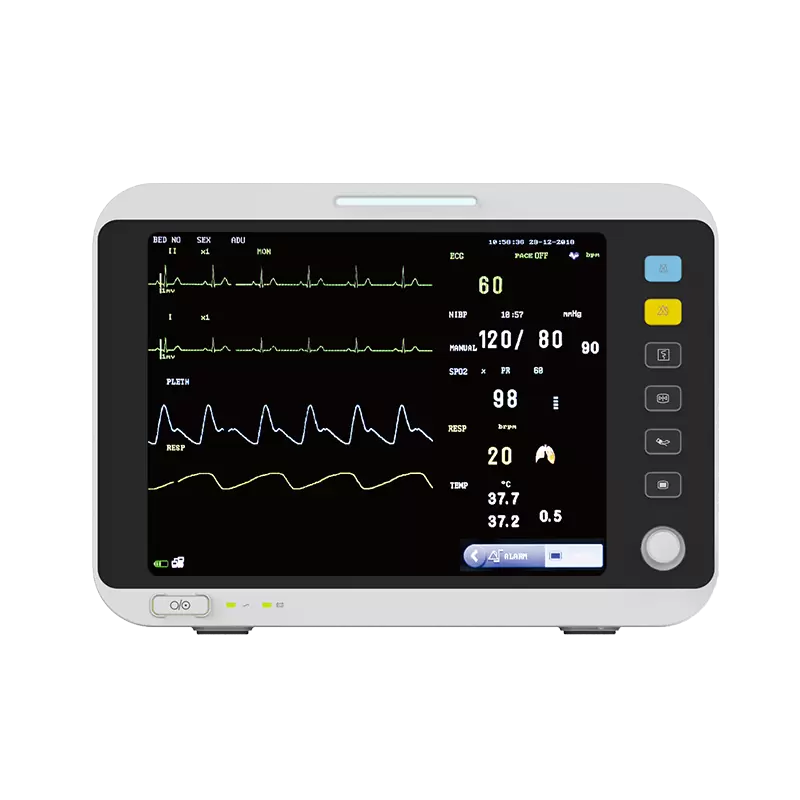
The oscillometric method for blood pressure measurement primarily acquires the pressure signal variations inside the cuff, extracts the pulse signal, and locates the positions corresponding to systolic and diastolic pressures to obtain the readings. Traditional oscillometric systems amplify the sensor signal, apply low-pass filtering to obtain the pressure waveform, and use an A/D converter to sample the pressure into a microcontroller. The pulse signal is then obtained by band-pass filtering the pressure waveform and sampled by another A/D converter.
An A/D converter converts analog quantities into digital values. The analog input may be voltages or currents, or non-electrical quantities such as pressure, temperature, humidity, displacement, or sound that are first transduced into voltages by sensors. After A/D conversion, digital outputs may have resolutions of 8, 10, 12, or 16 bits.
This design integrates a high-precision 16-bit sigma-delta (Σ-Δ) A/D converter whose reference voltage is programmable down to 10 mV. With this configuration, direct A/D conversion can meet precision and dynamic range requirements without requiring a front-end amplifier. Eliminating the amplifier reduces issues related to dynamic range change, noise, and offset, and reduces component count and cost.
The Σ-Δ A/D converter provides differential inputs, allowing the sensor's differential signal to be fed directly to the converter. In theory, this yields an infinite common-mode rejection ratio, significantly reducing common-mode interference caused by mismatches in front-end amplification.
Because the Σ-Δ conversion process includes a low-pass filtering stage, pre-A/D analog filtering is unnecessary; the sensor can connect directly to the A/D input and digital filtering can be applied afterward.
The AD μC848 used in the design integrates a standard constant-current source whose value can be adjusted by software. That allows sampling a standard pressure output, performing A/D conversion, and then adjusting the constant-current source based on conversion results to achieve automated calibration.
2 Software Design
After the hardware produces the cuff pressure waveform, software processing first separates the embedded pulse signal, removes interference points, fits the envelope, determines the mean arterial pressure, and finally computes systolic and diastolic pressures using amplitude coefficients.
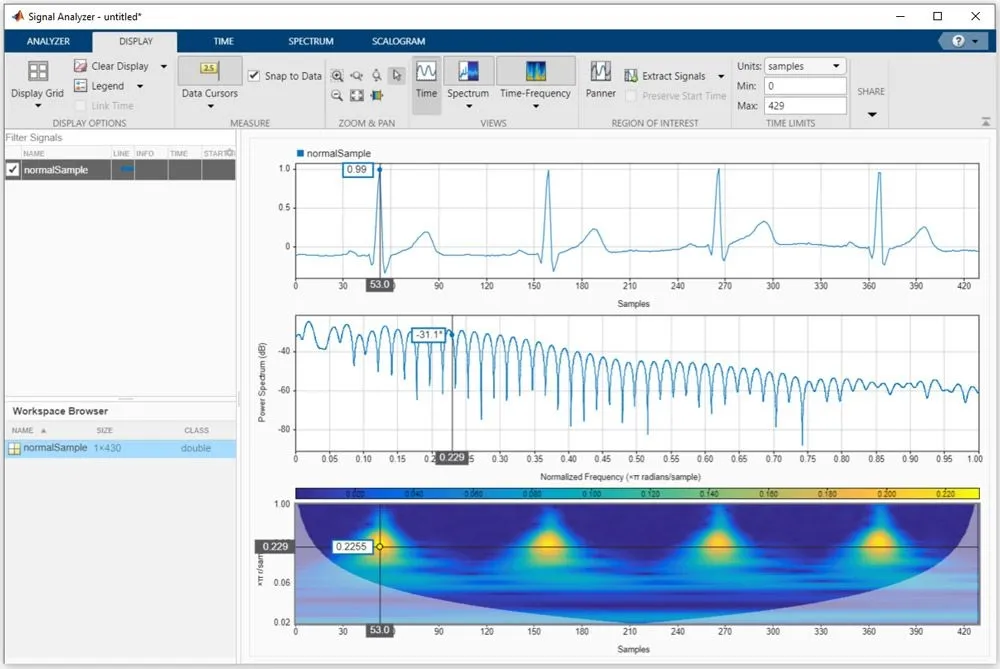
The pulse extraction uses a morphological filtering algorithm. Since the frequency bands of cuff pressure and pulse signals overlap, direct band-pass filtering reduces pulse amplitude and degrades SNR. Morphological filtering separates signals based on shape, enabling effective pulse extraction. To enable real-time processing, an opening operation is applied to flatten peaks in the raw signal; subtracting the opened signal from the original yields the extracted pulse signal.
To suppress interference and repair missing pulse waves, each pulse's reliability is assessed using the angle formed between its peak and adjacent peaks, combined with amplitude considerations. The resulting pulse weights are used for envelope fitting. Because the envelope is asymmetric, a weighted third-order least squares fit is applied. The pressure value at the envelope's maximum corresponds to the mean arterial pressure.
Finally, the appropriate amplitude coefficients are selected based on the mean arterial pressure, and those coefficients are used to calculate the positions corresponding to systolic and diastolic pressures, yielding the final systolic and diastolic values.