ALLPCB


MOSFETs are widely used in switching power supplies because of their low on-resistance and fast switching. Proper drive-circuit design is critical for MOSFET performance. The following describes several commonly used drive topologies.
1 Power IC direct drive
Direct drive from the power IC is the simplest approach. Pay attention to the following parameters and their effects.
- Check the power IC datasheet for the maximum peak drive current, since drive capability often varies between chips.
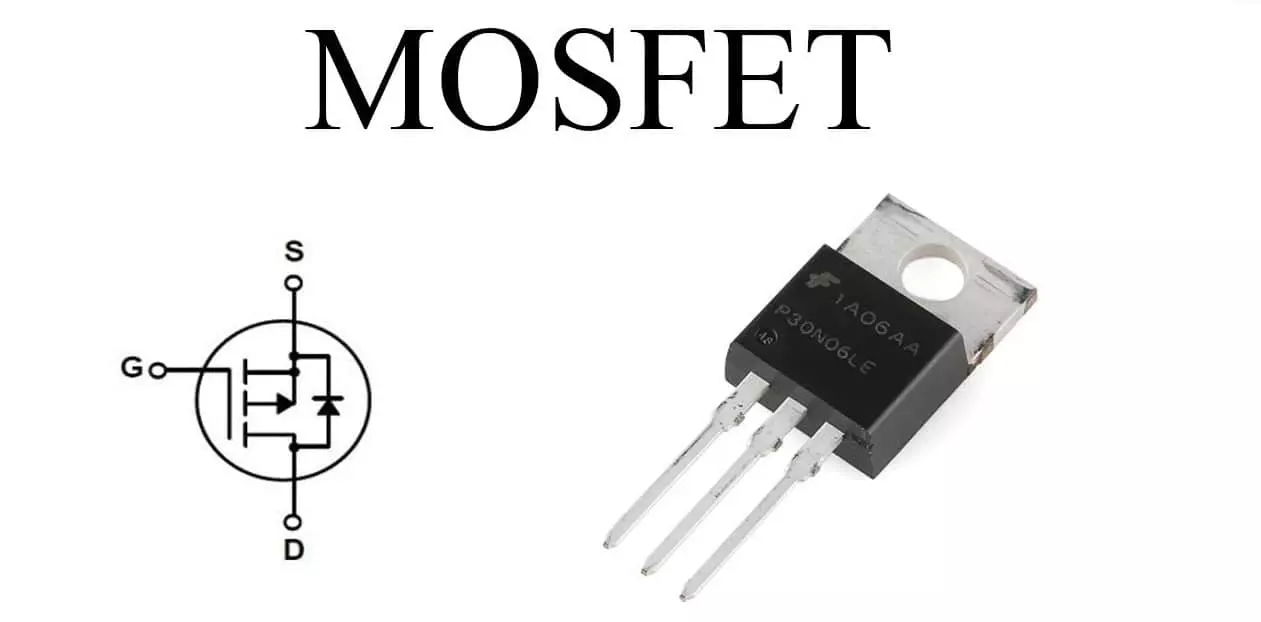
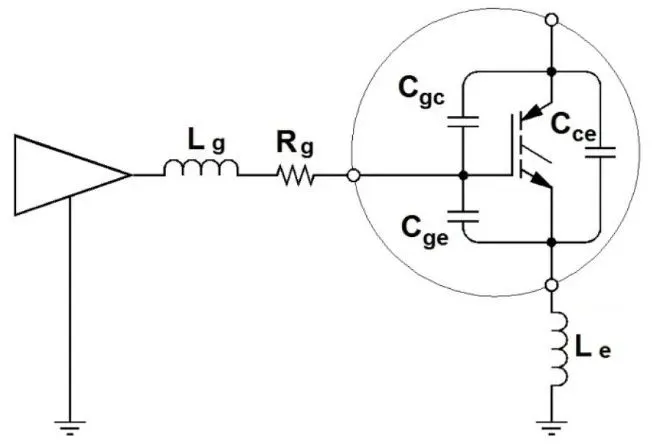
- Understand the MOSFET's parasitic capacitances, such as C1 and C2 in the figure. The smaller these parasitic capacitances, the better. If C1 and C2 are large, more energy is required to switch the MOSFET on; if the power IC cannot supply a sufficiently large peak drive current, the device will switch on slowly and will not achieve the desired performance.
2 Push-pull drive
When the power IC's drive capability is insufficient, a push-pull (totem-pole) driver can be used.
This driver topology increases the available current for charging the gate input capacitance, improving gate charge speed. It may change the effective turn-on duration in some implementations while reducing turn-off time. The topology helps avoid high-frequency oscillation on the rising edge.
3 Accelerated turn-off drive
MOSFETs typically turn on slower and turn off faster. At turn-off, the driver should provide as low-impedance a path as possible to rapidly discharge the gate-to-source capacitance, ensuring the switch turns off quickly.
To speed the discharge of the gate-to-source capacitance, it is common to parallel an additional resistor and a diode across the drive resistor, as shown in the figure. D1 is often a fast-recovery diode. This reduces turn-off time and turn-off losses. Rg2 limits excessive current during turn-off to protect the power IC.
4 Isolated drive
To drive high-side MOSFETs, transformer coupling is often used. R1 suppresses LC resonance formed by parasitic PCB inductance together with C1. C1 blocks DC while passing AC, and also helps prevent core saturation.